Neng Nana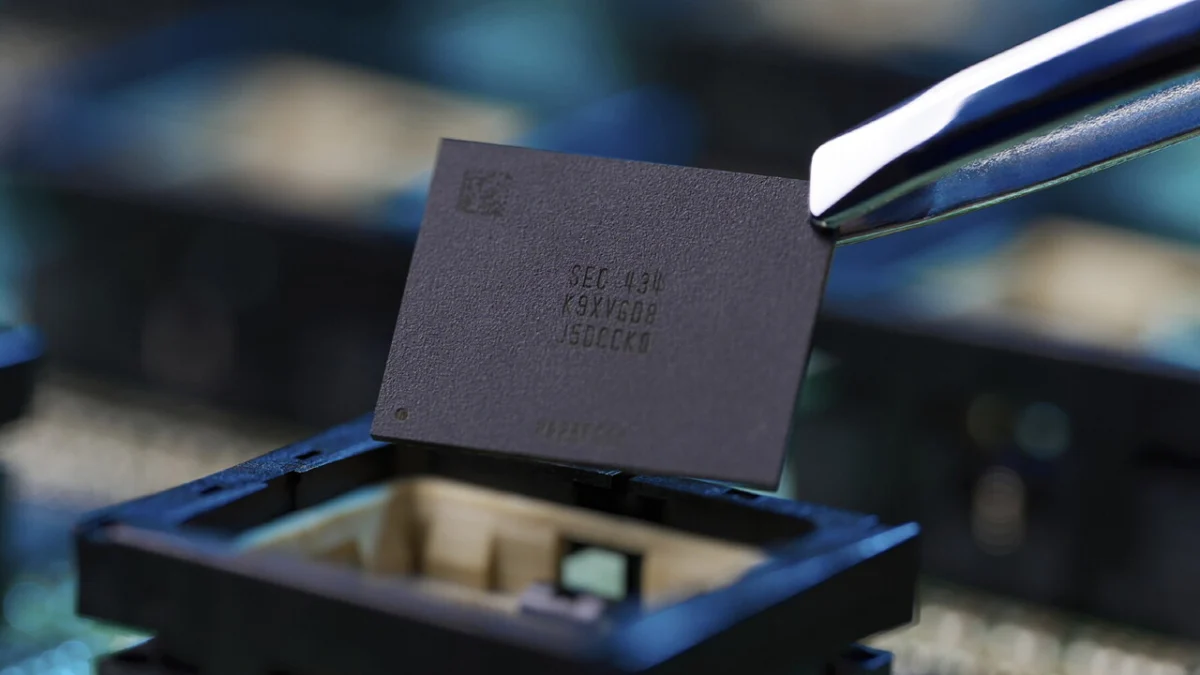
In the relentless pursuit of increasing storage density, the semiconductor industry has long treated the "1,000-layer barrier" as the holy grail of 3D NAND flash memory. Samsung, the world’s leading memory manufacturer, has recently moved a significant step closer to this ambitious goal. According to industry reports originating from South Korea, Samsung has successfully combined two 450-layer wafers to create a functional, prototype 900-layer memory stack. While this remains a laboratory success rather than a mass-production reality, it represents a pivotal validation of advanced wafer-bonding techniques that will define the next decade of data storage.
Main Facts: The 900-Layer Milestone
The core of this achievement lies in a manufacturing process known as Cell Multi-Bonding (CMB). By utilizing high-precision alignment and bonding technology, Samsung engineers were able to stack two separate 450-layer silicon structures.
For years, the industry has relied on monolithic stacking—building all layers on a single wafer—which creates immense mechanical stress and yield issues as the stack height increases. By splitting the manufacturing process, Samsung is experimenting with a modular approach. Crucially, the 900-layer prototype demonstrated "normal operating characteristics," proving that the physical connection between the two wafers does not degrade the integrity of the data signals or the endurance of the underlying memory cells.
A Chronology of Vertical Scaling
To understand the magnitude of this feat, one must look back at the historical trajectory of 3D NAND development.
- 2020: The 1,000-Layer Vision: Nearly five years ago, Samsung publicly outlined its long-term roadmap, setting the "1,000+ layer" mark as its ultimate target. At the time, this was dismissed by some analysts as speculative marketing, given the physical limitations of etching deep channels through silicon.
- 2023–2024: The Era of 200+ Layers: Samsung solidified its market position with the V8 and V9 generations, achieving over 200 and nearly 300 layers respectively. During this period, the industry shifted from single-string to multi-string etching, a necessary evolution to keep yields manageable.
- 2025: The Current Competitive Landscape: Currently, SK Hynix holds the record for the highest layer count in a commercial product with its 321-layer QLC (Quad-Level Cell) NAND, which has already begun shipping in specialized mini-SSDs.
- Mid-2026: The V10 Horizon: Samsung is currently preparing to transition to its 10th-generation (V10) NAND, which is expected to utilize approximately 430 layers. This will be the first time Samsung deploys its sophisticated wafer-bonding techniques in a mass-production environment.
Technical Methodology: From Xtacking to CMB
The success of the 900-layer experiment is rooted in the evolution of "Wafer Bonding." For years, the industry standard was a monolithic approach. However, as the aspect ratio of the holes (which must be etched through the stack to create contacts) became too high, the risk of structural collapse or misalignment grew exponentially.
The Rise of Wafer Bonding
Competitors like YMTC (with its "Xtacking" architecture) and the Kioxia/SanDisk partnership (with "CBA" or CMOS directly Bonded to Array) pioneered the separation of the periphery logic (I/O circuits) from the storage array. By manufacturing the control logic on one wafer and the memory cells on another, they significantly reduced the complexity of the manufacturing flow.
Samsung’s CMB approach takes this concept a step further. Instead of simply bonding logic to memory, Samsung is bonding memory-to-memory. This bypasses the physical limits of etching depth, allowing the company to build two separate "towers" of silicon and fuse them together. While this approach is currently too expensive for consumer-grade storage due to the cost of two full wafers for one chip, it serves as the ultimate "proof of concept" for scaling beyond the limitations of single-wafer etching.
Supporting Data: Density vs. Layer Count
While the race to 1,000 layers dominates the headlines, it is important to note that layer count is not the sole metric of success. The semiconductor industry is increasingly focused on "Bit Density" (Gbit/mm²).
Recent data suggests that the layer count game is becoming more nuanced. For instance, the upcoming BiCS10-NAND from Kioxia and SanDisk is expected to utilize roughly 332 layers. Despite having fewer layers than some of Samsung’s future roadmap targets, the Kioxia product is projected to achieve a storage density per square millimeter that is competitive with—or potentially superior to—Samsung’s 430-layer V10.
This indicates that internal cell design, the physical size of the bit cells, and the efficiency of the peripheral circuitry are just as important as the vertical height. Samsung’s 900-layer prototype, therefore, is a strategic move to ensure they have the physical headroom to increase density should shrinking the cells further become technically impossible.
Official Responses and Industry Sentiment
Samsung has remained relatively guarded regarding the specifics of the 900-layer experiment, characterizing it as a "machinability study." In official briefings, the company continues to emphasize its focus on the V10 rollout for the second half of 2026.
Market analysts at firms such as TrendForce and IDC have noted that Samsung’s aggressive R&D spending serves as a defensive moat. By proving they can hit 900 layers, they signal to competitors like Micron, SK Hynix, and YMTC that they have a clear path to maintain their lead in the NAND market. Micron, in particular, remains the "wild card" of the industry, with its G10 generation currently shrouded in secrecy, leaving the market to speculate whether they will opt for a more conservative or aggressive approach to layer stacking.
Strategic Implications
The implications of this breakthrough are far-reaching:
1. Cost Optimization
The immediate barrier to 900-layer NAND is the cost of wafer bonding. However, as the technique matures, the cost per gigabyte is expected to plummet. If Samsung can perfect the bonding process, they will be able to produce ultra-high-capacity SSDs (tens of terabytes for consumer devices) that would otherwise be impossible to manufacture.
2. Enterprise and AI Storage
The primary driver for this technology is not the consumer laptop, but the data center. AI training models require massive datasets to be held in "warm" storage. As the AI industry demands petabyte-scale storage arrays, the density provided by 500+ and eventually 900+ layer NAND becomes a necessity to reduce the physical footprint and power consumption of server farms.
3. The End of the "Single-String" Era
The success of the 900-layer experiment effectively marks the end of an era where memory was manufactured as a single, tall tower. Future NAND will be modular, stacked, and bonded. This transition fundamentally changes the supply chain, as manufacturers must now balance the yield of two different wafers to create a single finished product.
Conclusion
Samsung’s successful bonding of two 450-layer wafers is more than just a headline-grabbing experiment; it is a clear statement of intent. By validating the Cell Multi-Bonding process, Samsung has cleared the path toward the 1,000-layer threshold it set for itself half a decade ago.
As the industry pivots toward the 400-layer V10 generation in 2026, the focus will now shift from how many layers can be squeezed onto a wafer to how efficiently those layers can be connected. The race to the vertical limit is no longer about just going higher; it is about mastering the precision of the bond. For the consumer, this means that the dream of affordable, ultra-high-density storage is no longer a distant possibility—it is a manufacturing inevitability.


 Azzam Bilal Chamdy
 Reynand Wu