

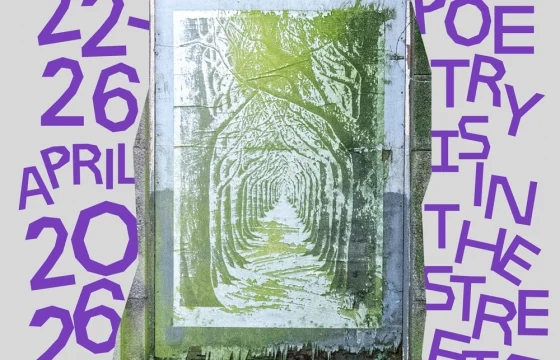
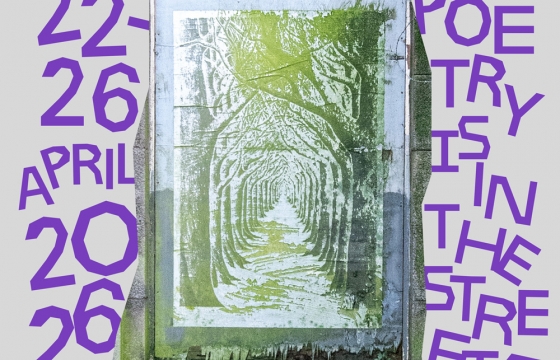
ABERDEEN, SCOTLAND — As the calendar turns to April 2026, the granite city of Aberdeen is preparing for a transformation that promises to challenge the very nature of street art. From April 22 to April 26, 2026, the Nuart Aberdeen festival returns, not with the typical fanfare of gargantuan, hyper-realistic murals, but with a sharpened focus on the raw power of language. In a bold curatorial departure, this year’s iteration is set to be the world’s first major street art festival primarily dedicated to poetry and text-based interventions.
A Shift in Philosophy: Beyond the Mural
For over a decade, the global street art movement has been dominated by the "muralist" aesthetic—massive, colorful, figurative works that drape city centers in artistic prestige. While these installations have undoubtedly revitalized urban landscapes, they have also created a barrier to entry.
Martyn Reed, the visionary founder and curator of Nuart, believes the movement has reached a critical juncture. "Large-scale murals are perhaps the least democratic form of art on the streets," Reed notes. "They require significant resources, state-level permissions, and often, a professional pedigree that excludes the average citizen. As curators, our responsibility is not just to showcase technical competence, but to ensure the culture’s survival by inspiring the next generation."
The fundamental question posed by the 2026 festival is simple yet profound: How can street art return to its roots as a grassroots, accessible form of expression? The answer, Reed suggests, lies in the text.
Chronology of a Curatorial Pivot
The conceptual evolution of Nuart 2026 was not a sudden decision, but a culmination of historical reflection and contemporary observation.
- Late 2025 (Planning Phase): The curatorial team began evaluating the festival’s impact on local engagement. Observations suggested that while massive murals draw tourists, they often leave local residents feeling like spectators rather than participants.
- January 2026: The theme of "Poetry and Text" was officially solidified, drawing inspiration from the 1968 Paris student uprising and the iconic slogan, “La poésie est dans la rue” (Poetry is in the Streets).
- February 2026: The festival confirmed its diverse lineup, mixing established text-based artists with emerging local talents.
- April 22, 2026: Official opening of the festival, featuring workshops and live interventions across the city.
- April 26, 2026: Conclusion of the festival, with a focus on long-term urban legacy.
The "ABC" Theory: Democratizing Creativity
The core philosophy driving Nuart 2026 is what the organizers refer to as the "ABC Theory." Citing a famous observation by pioneering UK graffiti writer Mode2, Reed highlights the barrier to entry for traditional fine art.
"If you couldn’t draw or paint realistically, you were bottom of the class in art school," Reed explains. "Then graffiti came along, and it struck everyone that all you had to know to create and engage with it was your ABCs."
By stripping away the pressure to produce photorealistic imagery, the festival aims to lower the psychological barrier for local residents. The organizers argue that stencils, paste-ups, and text-based interventions are inherently more reproducible and human-scaled than the massive, tower-block-spanning murals that have dominated the last decade. They want to inspire the bystander to think: "I could do that."
Supporting Data: The Impact of Scale
While muralism provides aesthetic value, Nuart’s internal research suggests that smaller interventions foster deeper community interaction. The festival organizers have observed that when street art is relatable—when it uses the tools of everyday life (a craft knife, cardboard, and a few choice words)—it encourages a more active, participatory relationship between the citizen and the city.
The festival’s move is also a response to the "privilege of the fine art degree." By focusing on text, the festival actively promotes a medium that relies on ideas, wit, and local context rather than expensive equipment or institutional approval. This is not a rejection of muralism, but a necessary expansion of the medium to ensure that the culture remains vibrant, accessible, and evolving.
Official Response: The Vision for 2026
The 2026 lineup features an eclectic mix of voices, including Alisa Oleva (UK), Ciarán Glöbel (SCT), dr.d AKA Subvertiser (UK), HICKS (UK), James Klinge (SCT), KMG (SCT), Molly Hankinson (UK), Remi Rough (UK), Robert Montgomery (SCT), The Rebel Bear (SCT), The Writing Is On The Wall (UK), Trackie McLeod (SCT), and V2k (LT-SCT).
In a joint statement, the festival’s partners and the Aberdeen City Council expressed their support for this conceptual pivot. "We are committed to making Aberdeen a city where art is not just an object to be viewed, but a living, breathing part of the social fabric," a council spokesperson noted.
Reed acknowledges the tension between commercial expectations and artistic exploration. "It is a lofty goal to balance the needs of sponsors with the radical impulse to inspire the next generation," he admits. "But a city without art—or a city where all art is hidden away behind the walls of institutions—is a city that has stopped dreaming."
Implications: The Future of Public Space
The implications of Nuart 2026 extend far beyond the five-day event. By shifting the focus to text and poetry, Nuart is essentially arguing for a more intellectual and linguistic engagement with the urban environment.
1. Reclaiming the Public Square
The use of text invites the viewer to read, interpret, and reflect. Unlike the purely visual experience of a mural, a poem on a wall demands a moment of cognitive engagement. This could lead to a more "literate" city, where the walls serve as a public forum for ideas rather than just decorative facades.
2. A Blueprint for Global Festivals
If Nuart 2026 succeeds in its goal of encouraging local participation, it could set a global precedent. Other cities struggling with the "mural fatigue" phenomenon may look to Aberdeen as a model for how to keep street art vital and democratic.
3. Sustainability and Artistic Survival
For street art to survive as a movement, it cannot remain stagnant. The shift toward text allows for rapid responses to current events, social commentary, and local grievances. It is a faster, more agile form of expression that aligns with the speed of modern life.
Conclusion: Poetry is in the Streets
As the festival kicks off, the streets of Aberdeen are set to become a vast, open-air library. The walls will speak, the city will read, and hopefully, the residents will be inspired to find their own voices.
"My hope," says Reed, "is that the festival sparks the public’s imagination in the same way that those early bubble letters and Banksy stencils did. We aren’t just here to put paint on walls; we are here to plant seeds of creativity that will grow long after we’ve packed up our equipment."
For those visiting Aberdeen this April, the experience will be one of rediscovery. The granite buildings, typically seen as cold and imposing, will be softened by the written word, transformed into a canvas for the collective human experience. Whether through a simple paste-up or a carefully crafted poetic intervention, the message is clear: the future of street art is not just seen—it is read.
For more information on the festival program, venue maps, and artist spotlights, visit the official Nuart Aberdeen website at 2026.nuartaberdeen.co.uk.









No comments yet. Be the first to join the conversation!