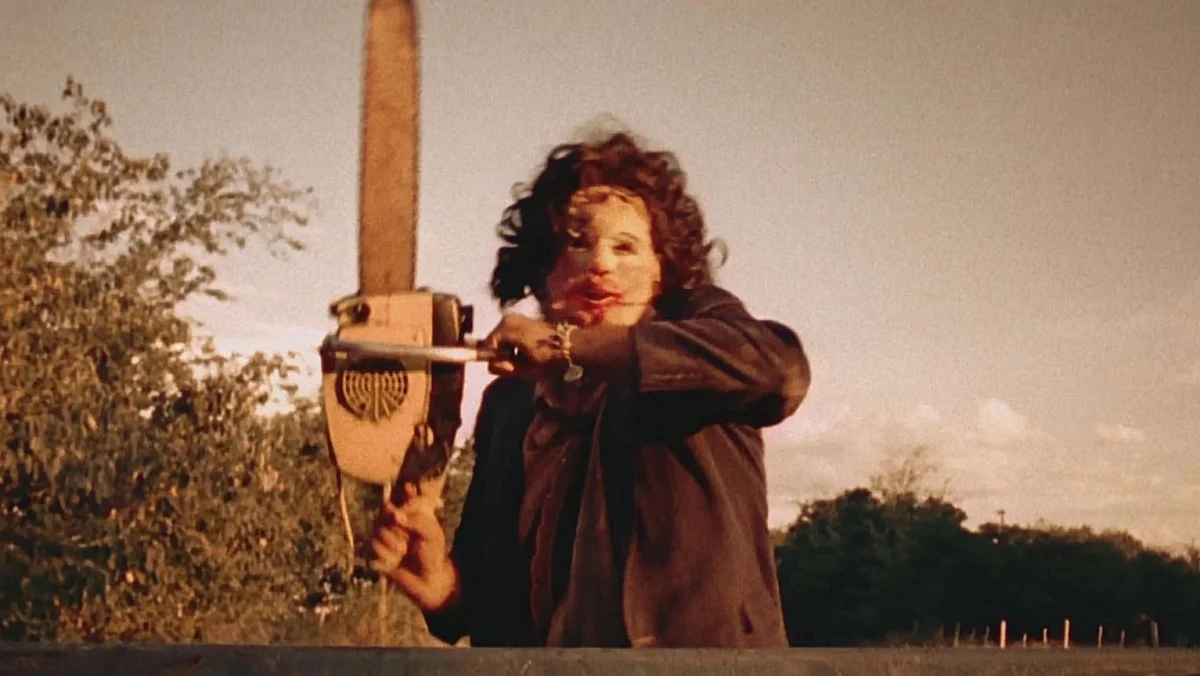
Half a century after it first tore through the cultural consciousness, Tobe Hooper’s The Texas Chain Saw Massacre (1974) remains the gold standard of visceral, low-budget horror. It is a film that refuses to age, largely because its dread feels as raw today as it did during the post-Watergate malaise of the mid-seventies. To celebrate this enduring legacy, Dark Sky Films and Fathom Events have officially declared August 18 as the annual "Texas Chain Saw Day." For one night only, the original nightmare will return to the big screen, inviting a new generation of viewers to witness the cannibalistic terror of the Sawyer family in high-definition restoration.
Main Facts: The Return of a Slasher Icon
The cinematic landscape of the 1970s was forever altered by the arrival of Leatherface and his buzzing implement of destruction. While the horror genre has seen countless iterations, reboots, and sequels, the 1974 original retains a uniquely suffocating atmosphere that modern CGI-heavy slashers struggle to replicate.
The plot is deceptively simple: five friends traversing rural Texas stumble upon a dilapidated farmhouse, only to find themselves hunted by a family of depraved, cannibalistic misfits. This premise, stripped of supernatural gimmicks, relies on the primal fear of the unknown and the isolation of the American heartland. As part of the annual "Texas Chain Saw Day" initiative, fans across the country will have the rare opportunity to experience the film’s grainy, heat-soaked cinematography and iconic sound design in a theater setting. Tickets for this nationwide screening event go on sale July 21, and with the cult following surrounding the film, sold-out auditoriums are expected.
A Chronology of Terror: From 1974 to the Modern Day
The history of The Texas Chain Saw Massacre is one of evolution and controversy. When it first premiered, the film was met with heavy censorship in several countries, including the United Kingdom, where it remained banned for years due to its intense, albeit surprisingly bloodless, violence.
- 1974: Tobe Hooper releases The Texas Chain Saw Massacre. Produced on a shoestring budget of approximately $140,000, it becomes one of the most profitable independent films in history.
- 1986: The Texas Chainsaw Massacre 2 arrives, trading the gritty realism of the first film for a darkly comedic, grand-guignol aesthetic.
- 1990–2017: The franchise expands through various sequels and remakes, including the 2003 Platinum Dunes version, which introduced a more polished, industrial aesthetic to the mythos.
- 2022: Netflix releases a direct sequel to the 1974 original, sparking intense debate among purists regarding the handling of legacy characters.
- 2024: As the film reaches its 50th anniversary, the industry recognizes its stature as a seminal work of art, solidifying the "Texas Chain Saw Day" event as a recurring fixture on the horror calendar.
The Architect of Nightmares: The Ed Gein Connection
To understand the enduring horror of Leatherface, one must look toward the real-world monster that inspired the screenplay: Ed Gein. The "Butcher of Plainfield" was a Wisconsin murderer and grave robber whose crimes were unearthed in 1957. While Gein did not use a chainsaw, his penchant for creating "trophies" from human remains—including masks fashioned from skin and furniture upholstered with human body parts—is the direct foundation for the Sawyer family’s home decor.
The psychological profile of Gein, marked by a bizarre and stifling maternal obsession, is reflected in the characterization of Leatherface. He is not a traditional slasher villain; he is a man-child, a victim of his environment who functions as an extension of his family’s collective madness. The dinner scene in the 1974 film—the pinnacle of the movie’s horror—is a masterclass in domestic dysfunction. It is here that the audience realizes that the antagonist is not just a masked killer, but a member of a unit that operates with its own perverse, internal logic.

Gein’s influence extends far beyond Texas Chain Saw. He served as the primary blueprint for Robert Bloch’s Psycho (Norman Bates) and Thomas Harris’s The Silence of the Lambs (Buffalo Bill). In each instance, the fascination lies not in the murder itself, but in the dehumanization of the victim through the appropriation of their physical form.
Supporting Data: The Business of Fear
The longevity of the Texas Chain Saw brand is a case study in intellectual property management. Despite the variable quality of its numerous sequels, the franchise has consistently proven to be a financial powerhouse. The original film’s success established a blueprint for independent horror—proving that a compelling narrative, a unique villain, and a sense of "real-world" danger could outperform major studio productions.
Current industry analysis suggests that the horror market is currently dominated by "prestige horror" and legacy sequels. A24, the studio behind critically acclaimed hits like Hereditary and Talk to Me, has recognized this shift. They are currently developing a "reimagining" of the franchise, tapping writer-director Curry Barker (known for Obsession) to lead the project. Furthermore, a television series is in the works, signaling that producers are moving away from simple sequels and toward deep-dive narrative expansions of the Sawyer lore.
Official Responses and Industry Sentiment
The decision to make "Texas Chain Saw Day" an annual event has been met with widespread enthusiasm from the horror community. Representatives from Fathom Events noted that the 2023 inaugural event saw record-breaking attendance, proving that the appetite for "analog" horror—films that rely on tension rather than digital effects—is higher than ever.
"The 1974 film is a piece of American history," says a spokesperson for the event. "It changed the way we think about the ‘final girl’ trope, the way we look at rural landscapes, and the way we experience fear in the cinema. Making it an annual tradition ensures that we preserve the film as it was meant to be seen: in the dark, with a crowd, and on the biggest screen possible."
However, not all industry commentary is purely celebratory. The recent influx of remakes and reboots, specifically the 2022 Netflix entry, has ignited a fierce debate regarding artistic integrity. Critics argue that The Texas Chain Saw Massacre is a singular, unrepeatable experience. When asked about the prospect of a reboot, many purists echo the sentiment: "If it ain’t broke, don’t fix it."
Implications: The Legacy of the Chainsaw
As we approach the 50th anniversary, the implications for the horror genre are clear. We are entering an era where the "legacy sequel" is the dominant form of storytelling. However, the success of the 1974 original reminds us that true terror is rarely found in the complexity of a franchise’s lore, but in the simplicity of a single, terrifying encounter.
The shift toward A24’s upcoming projects suggests that the franchise is looking to reclaim the "prestige" angle—moving away from the slasher-of-the-week formula and toward a character-driven study of the family that birthed Leatherface. Whether these new projects can capture the grit and the inexplicable, nauseating reality of Tobe Hooper’s work remains to be seen.
For now, the focus remains on the original. The upcoming August 18 screening is more than just a nostalgia trip; it is an opportunity to analyze why, in an age of high-speed internet and global connectivity, the image of a man in a mask, wielding a chainsaw in the middle of nowhere, still possesses the power to make us hold our breath.
On July 21, tickets will go on sale for what promises to be the most intense screening of the year. Whether you are a long-time aficionado of the Sawyer clan or a newcomer curious about the roots of the slasher genre, the message remains the same: The Texas Chain Saw Massacre is not just a movie; it is a permanent scar on the face of cinema. And fifty years later, the saw is still buzzing.