Suro Senen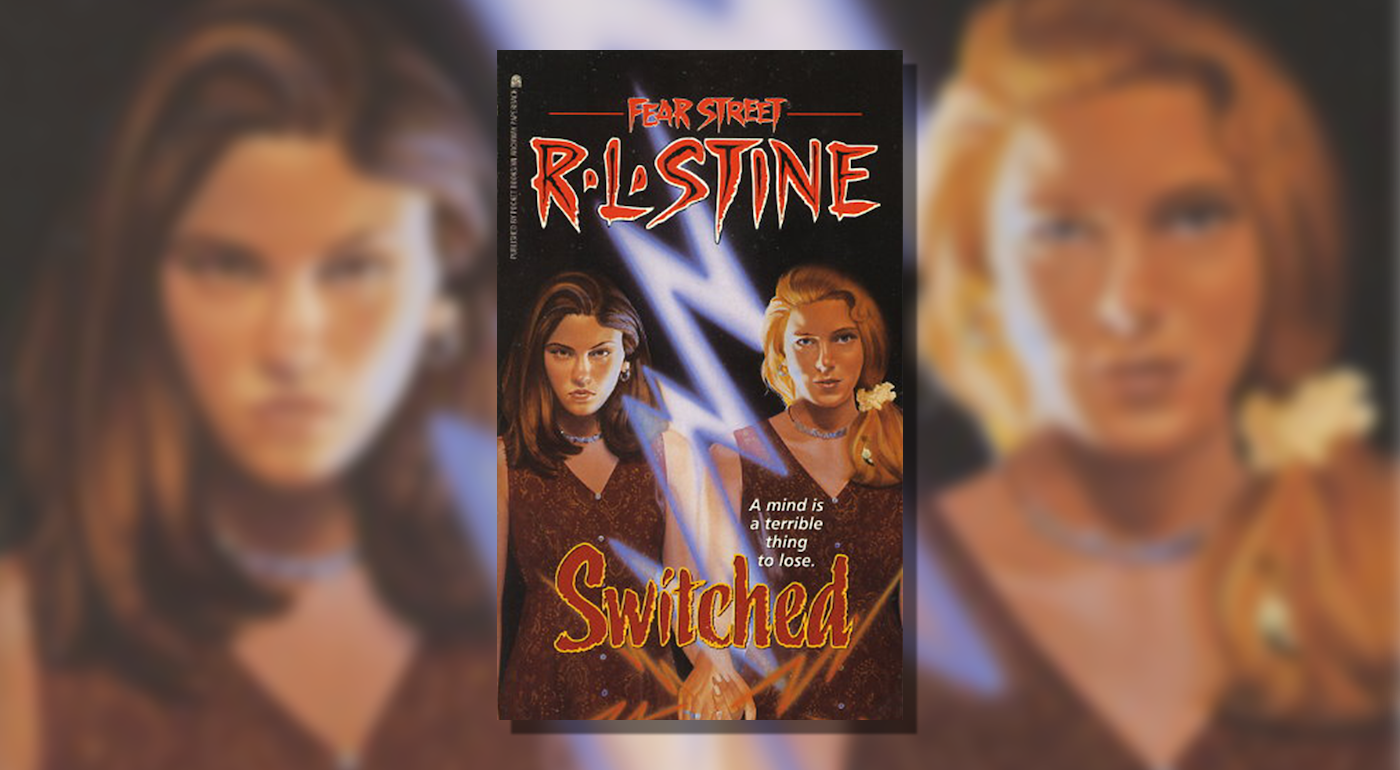
The Fear Street series has long served as a cornerstone of young adult horror, a literary funhouse mirror where the mundane anxieties of adolescence are reflected back through a lens of supernatural terror. While the series is best known for its relentless pacing and iconic slasher-movie tropes, a recurring thematic element transcends the typical ghost story: the disintegration of the self. From the spectral possessions of The Secret Bedroom to the identity-bending horror of the Fear Street Cheerleaders trilogy, R.L. Stine consistently challenges the reader’s perception of reality. Yet, nowhere is this psychological fracturing more poignant or narratively complex than in the 1995 novel Switched, a harrowing exploration of grief, dissociative identity, and the desperate, often destructive, lengths to which the human mind will go to avoid facing the truth.
The Anatomy of a Breakdown: Chronology of Switched
The narrative of Switched initially presents itself as a straightforward supernatural thriller. Nicole Darwin, a teenager buckling under the weight of an overprotective home life, an impending academic failure, and a recent, crushing breakup with her boyfriend, David, finds herself at a psychological breaking point. When her best friend, Lucy Kramer, suggests a body-swap ritual at the fabled "Changing Wall" in the Fear Street Woods, a vulnerable Nicole agrees.
The ritual itself is framed with the hallmark tropes of the genre: a mystical location, physical contact, and a jump into the unknown. However, the narrative trajectory immediately diverges from the supernatural into the realm of profound psychological trauma. Upon "swapping," Nicole returns to what she believes is Lucy’s home, only to discover the horrific murder of the Kramer parents. The ensuing narrative follows a frantic, high-stakes chase through Shadyside as Nicole attempts to navigate a world that simultaneously recognizes her as herself and as a stranger.
As the story progresses, the timeline of events becomes increasingly unreliable. Nicole’s search for Lucy takes her to a pizza parlor, her own home, and eventually her grandmother’s farm. Throughout this journey, the boundaries between reality and delusion erode. The climax occurs when Nicole discovers the bodies of her friends and family—or so she believes—leading to a confrontation with a spectral version of Lucy at a well. It is only in the final movement of the book that the true chronology is revealed: the body-swap was never a physical reality, but a manifestation of long-term, unresolved trauma following the death of the real Lucy Kramer in a car accident three years prior.
Supporting Data: The Mechanics of Denial
The brilliance—and the horror—of Switched lies in its unreliable narrator. Nicole’s descent is not marked by a sudden break, but by a series of rationalizations that highlight the "mental gymnastics" required to maintain her delusion.
The Logic of the Unstable Mind
Nicole’s internal monologue provides the most compelling evidence of her deteriorating mental state. When she attempts to "scare" her friend Kent into revealing Lucy’s location by brandishing a knife, she justifies the violence as an "act" necessary for a greater good. This detachment from the severity of her actions is a classic symptom of dissociative identity disorder, where the mind creates a fictional persona or narrative to protect the individual from the reality of a traumatic event.
Societal Perception and the "Ghost in the Machine"
A recurring motif in the book is the reaction of the townspeople. When Nicole encounters classmates and adults, they recognize her as "Nicole," yet she is convinced they are playing along with the body-swap narrative. This juxtaposition serves as a mirror for the reader: we are seeing the town’s genuine concern for a girl suffering a mental health crisis, while Nicole perceives their intervention as part of the "game" she has constructed to keep the memory of Lucy alive.
Official Perspectives: The Clinical Reality
The resolution of the book provides a jarring shift in tone. When the figures Nicole assumed to be police detectives turn out to be medical professionals, the veil is lifted. The arrival of Nicole’s parents and the "resurrected" victims clarifies the situation: there was no supernatural occurrence. The "detectives" were doctors, and the entire adventure was a fugue state triggered by extreme stress.
From a psychological perspective, Nicole’s condition is a textbook example of complicated grief. The "body-swap" is a subconscious mechanism, a defense against the finality of death. By imagining that she is Lucy, Nicole keeps her friend in a state of perpetual, albeit distorted, existence. The clinical implication here is severe: Nicole’s recovery is not a matter of simply "getting better," but of integrating the reality of loss into her psyche. The doctors’ optimism at the end of the novel is contrasted sharply by the final, chilling revelation that Nicole continues to "visit" with the ghost of Lucy. This suggests that the cycle of hallucination is not a broken phenomenon, but a deeply ingrained coping strategy that has not yet been dismantled.
Implications: The Legacy of Fear Street
The implications of Switched reach far beyond the borders of the Fear Street universe. By utilizing the framework of a supernatural horror novel to discuss mental health, R.L. Stine bridges the gap between escapist fiction and the grim realities of adolescent struggle.
The Ethics of the "Haunted Self"
The narrative forces the reader to confront the ethics of how we treat those suffering from mental health crises. In a real-world setting, Nicole’s behavior—her erratic movements, her brandishing of weapons, her inability to distinguish between the living and the dead—would necessitate immediate, intensive psychiatric intervention. The fact that her "adventure" lasts as long as it does is a testament to the isolation that can exist even in the most tightly-knit communities.
The Persistence of Grief
Ultimately, Switched is a cautionary tale about the refusal to process trauma. The most terrifying aspect of the book is not the "Changing Wall" or the possibility of body-swapping; it is the final sentence, confirming that Nicole has not let go. The hallucination remains, internalized and silent. This ending challenges the reader’s desire for a "neat" resolution. Stine posits that for some, the damage wrought by extreme trauma is not something that can be fixed with a few weeks of hospital care, but a persistent shadow that follows the individual, coloring their perception of the world long after the initial crisis has passed.
In the context of the broader Fear Street canon, Switched stands out as a unique entry. While other books in the series rely on external evils—ghosts, curses, and serial killers—this narrative looks inward. It suggests that the most formidable enemy a person can face is their own mind, especially when that mind is desperately trying to protect itself from the unbearable weight of reality. For the young adult audience, it serves as a stark reminder that the "monsters" we fear are often not waiting in the woods, but dwelling within the complexities of our own unresolved histories.

 Evan Lee Salim
 Nila Kartika Wati