Lina Irawan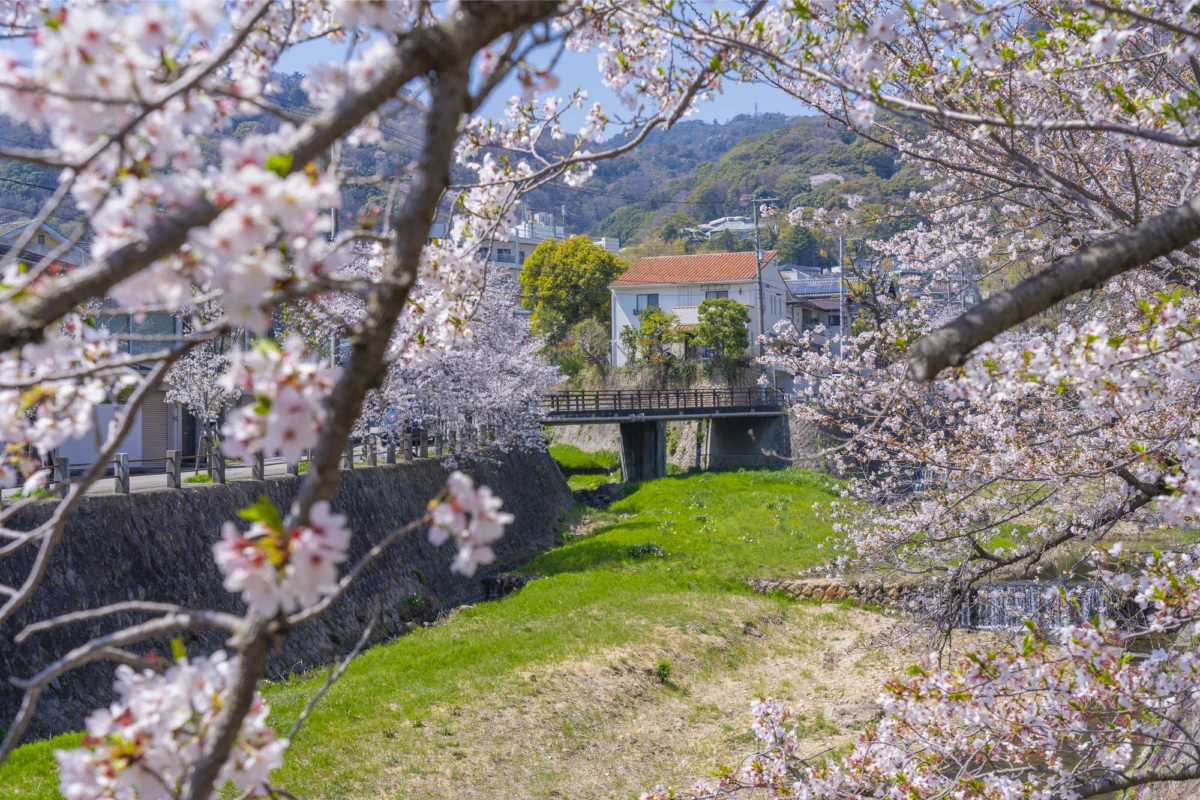
Nestled gracefully between the industrial might of Osaka and the cosmopolitan allure of Kobe, the city of Ashiya is a destination that millions of travelers speed past every year. From the windows of the JR Kobe Line, the urban landscape blurs into a series of hillsides and greenery, often ignored by those rushing toward the neon lights of the Kansai region’s major metropolises. Yet, for those who call Japan home, Ashiya occupies a distinct space in the national consciousness—one defined by heritage, architectural brilliance, and an uncompromising standard of refined living.
Far from being merely a gated sanctuary for the affluent, Ashiya offers a profound, under-the-radar experience for the discerning traveler. It is a city where the history of 20th-century Japan remains etched into the very stones of its villas, and where the natural beauty of the Rokko Mountains meets the tranquil expanse of the Osaka Bay.
Main Facts: A City of Refinement
Ashiya serves as a testament to the "Hanshinkan Modernism" movement, a cultural and architectural evolution that defined the lifestyle of Japan’s elite during the Taisho and early Showa periods. The city’s geography is as much a part of its identity as its history; it is a terraced landscape that slopes from the rugged heights of the Rokko Mountains down to the coastal plains of the sea.
The city is governed by an aesthetic discipline that is rare in the chaotic urban sprawl of Japan. Residents and local authorities maintain strict zoning laws that prioritize residential integrity. One will find no neon-soaked pachinko parlors, no garish commercial signage, and no convenience stores that disrupt the architectural harmony of the streets. This self-imposed restraint has resulted in an atmosphere of enduring, quiet sophistication that feels miles away from the frantic energy of Tokyo or downtown Osaka.
A Chronology of Elegance: The Birth of Hanshinkan Modernism
To understand Ashiya is to understand the seismic shifts of early 20th-century Japan.
The 1923 Turning Point
The genesis of Ashiya’s modern identity can be traced back to the catastrophic Great Kanto Earthquake of 1923, which leveled vast swaths of Tokyo and Yokohama. As the nation’s political and financial center struggled to rebuild, a significant exodus of Japan’s intellectual, business, and artistic elite moved westward. They sought the stability and climate of the Kansai region, specifically the area between Osaka and Kobe.
The Rise of the Villa Culture
Throughout the 1920s and 1930s, this influx of wealth and talent fostered a unique cultural melting pot. Western-style architecture, avant-garde art, and a sophisticated social life began to flourish. This era, termed "Hanshinkan Modernism," saw the construction of sprawling villas that blended Japanese traditional craftsmanship with the clean, functional lines of Western modernism. It was a time when the "Modern Girl" (moga) and "Modern Boy" (mobo) thrived, embracing jazz, literature, and the arts within the lush, private gardens of the Ashiya hills.
Post-War Preservation
Unlike many Japanese cities that underwent rapid, often haphazard redevelopment in the post-war era, Ashiya remained committed to its legacy. The preservation of landmark structures—most notably those by Frank Lloyd Wright—became a point of civic pride, cementing the city’s reputation as a living museum of early-modern Japanese luxury.
Architectural Landmarks: The Legacy of Frank Lloyd Wright
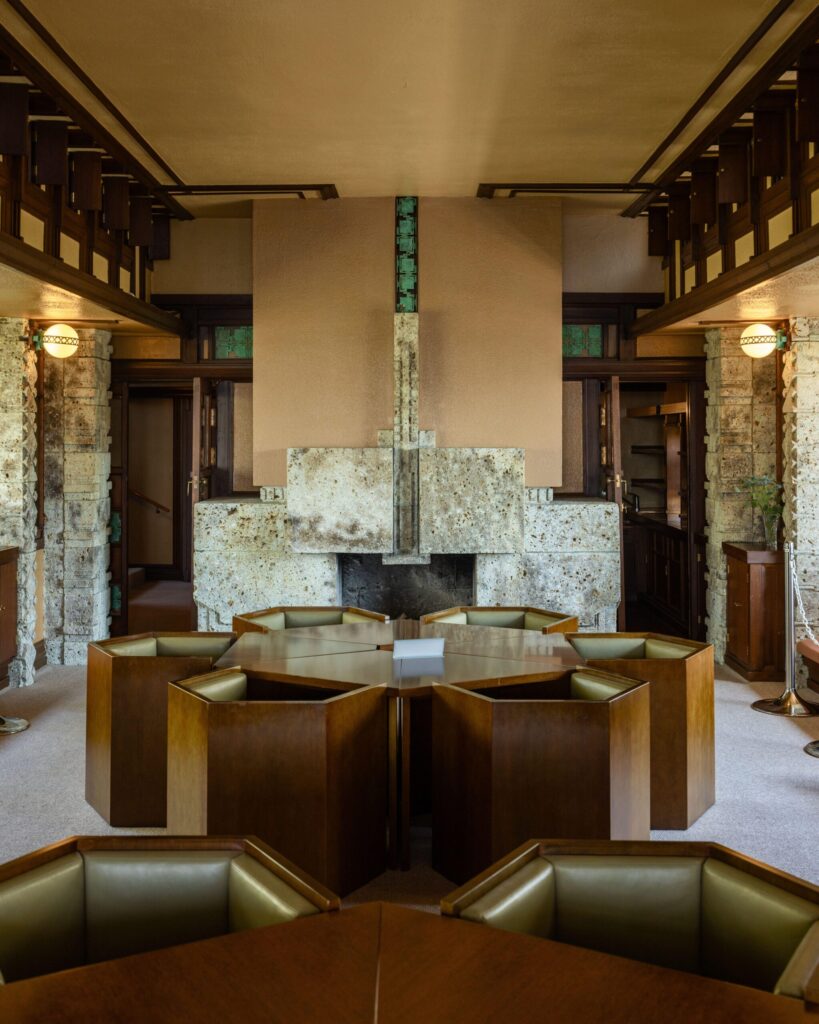
The crown jewel of Ashiya’s architectural heritage is the Yodoko Guest House. Designed by the legendary American architect Frank Lloyd Wright, the structure serves as a masterclass in organic architecture.
Commissioned by Yamamura Tazaemon, a prominent sake brewer, the house was intended to be a weekend retreat that harmonized with the steep hillside. Wright’s vision was executed by his Japanese apprentices, Arata Endo and Shin Minami, and completed in 1924. Today, it stands as the only surviving residential work by Wright in Japan that retains its original structural integrity.
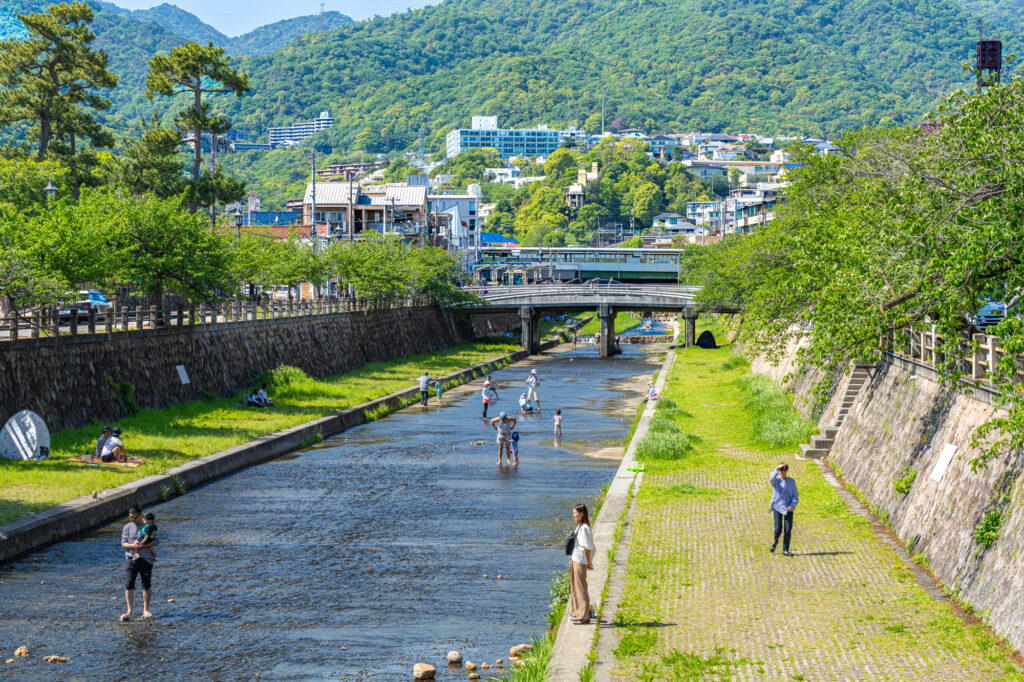
The guest house is an Important Cultural Property, and for good reason. It features the signature Oya-stone masonry, intricate green copper inlays, and low-ceilinged rooms that create a sense of compression and release, a hallmark of Wright’s spatial philosophy. Visitors wandering through its halls today can step onto the rooftop terrace, where the view commands a breathtaking panorama of the Ashiya River, the Rokko range, and the shimmering blue of the Osaka Bay.
Literary Footprints: The Tanizaki Connection
Beyond its architecture, Ashiya is a site of pilgrimage for literature enthusiasts. The city’s atmosphere deeply influenced Jun’ichiro Tanizaki, one of Japan’s most celebrated novelists.
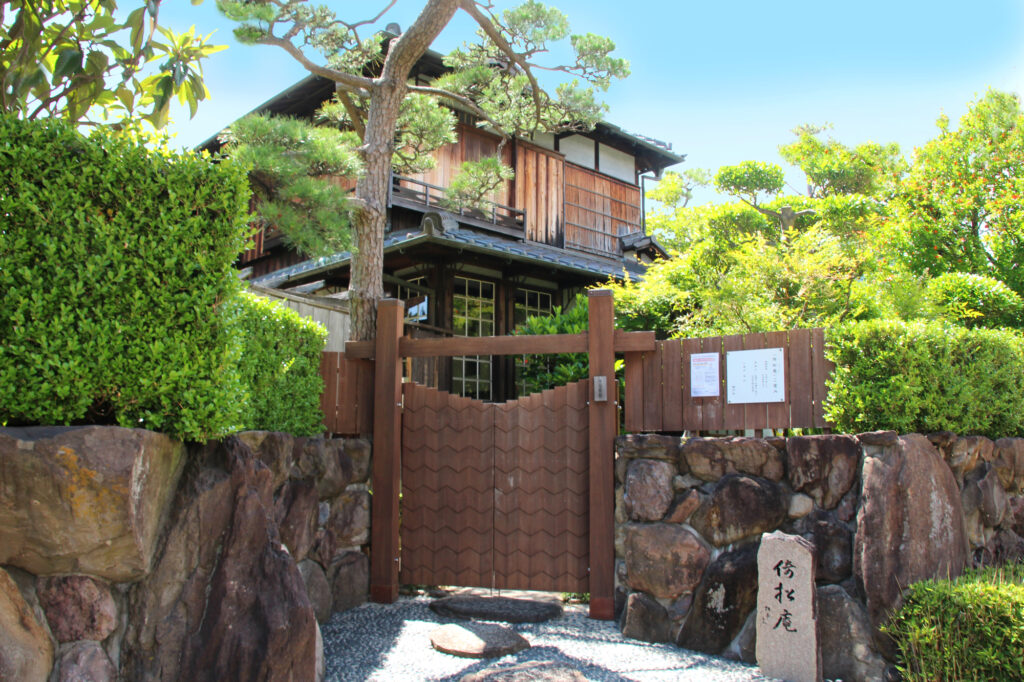
During his residence in the Hanshin area in the 1930s, Tanizaki captured the fading grace of the merchant class in his magnum opus, The Makioka Sisters. The Tanizaki Jun’ichiro Memorial Hall, established in 1988, stands in a quiet residential corner of the city. The museum itself is built in the sukiya style, mirroring the traditional aesthetic that Tanizaki so fervently admired. Inside, visitors find a curated collection of original manuscripts, personal letters, and artifacts that offer a window into the refined, albeit melancholic, world of the pre-war bourgeoisie.
Supporting Data: Navigating the City
Despite its reputation for exclusivity, Ashiya is remarkably accessible to the modern traveler.
- Connectivity: JR Ashiya Station is a major hub on the Kobe Line. It is a mere 10-to-15-minute rail journey from either Osaka Station or Sannomiya (Kobe), making it an effortless day trip.
- Walkability: The city’s compact design makes it an ideal destination for those who prefer exploring on foot. The walk from the mountain-side villas down to the riverbank is a journey through different strata of history and social class.
- Infrastructure: Unlike Japan’s hyper-crowded tourist hotspots, Ashiya maintains a serene, unhurried pace. Visitors are encouraged to walk along the Ashiya River, particularly in the spring when the hundred-plus cherry trees create a canopy of pale pink over the clear, rushing water.
The Rokurokuso Protocol: A Neighborhood’s Commitment
Perhaps the most intriguing aspect of Ashiya is the neighborhood of Rokurokuso. Developed in 1928, it remains a "forbidden" zone for commercial intrusion. The local neighborhood association governs the area with a strict code of conduct that effectively bans any business activity that might disturb the peace.
There are no vending machines, no flashing lights, and no convenience stores. For the casual tourist, this means one must plan ahead. However, for those who value architectural landscapes, it is a rare opportunity to walk through a neighborhood that looks and feels as it did nearly a century ago. It is a residential district, not a theme park, and the city relies on the discretion of visitors to maintain its tranquil status.
Official Responses and Civic Planning
The Ashiya City government has been instrumental in maintaining the city’s unique character. By implementing strict design guidelines, the municipality has ensured that even modern commercial entities, such as chain stores, must adapt their branding to fit the muted, elegant tones of the local environment.
This proactive approach to city planning is often cited by urban designers as a successful model for preserving cultural identity in the face of global commercialization. The government views Ashiya not just as a bedroom community for commuters, but as a cultural custodian of the Hanshinkan Modernism legacy.
Implications for the Future of Japanese Tourism
As Japan experiences an unprecedented surge in inbound tourism, the pressure on major hubs like Kyoto and Osaka is reaching a critical point. Cities like Ashiya provide a necessary alternative. They represent a "deeper" layer of Japan—a, quiet, sophisticated, and historically dense destination that rewards the curious traveler.
The implication is clear: the future of sustainable tourism in Japan lies in the promotion of these "hidden gems." By shifting the focus from over-visited temples and commercial districts to towns like Ashiya, the industry can better distribute the economic benefits of tourism while preserving the quality of life for local residents.
For the traveler, the lesson of Ashiya is simple: look beyond the main train lines. Sometimes, the most profound experiences are found in the places that the rest of the world is too busy to notice. Whether you are an admirer of Frank Lloyd Wright’s genius, a devotee of classic Japanese literature, or simply someone looking to escape the noise of the modern world, Ashiya stands ready to offer a glimpse into a Japan that is as elegant as it is enduring.


 Neng Nana
 Asro
Asro