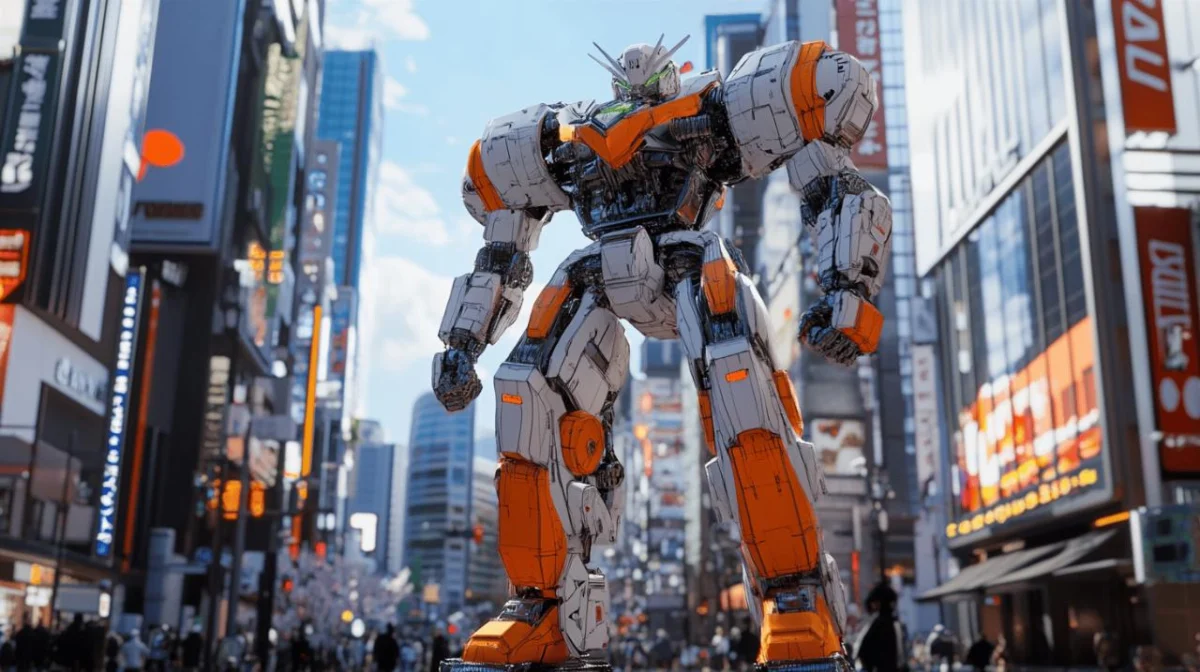
The construction industry, a cornerstone of global economic development, is currently facing a silent crisis. From the aging demographics of Japan to the chronic labor shortages plaguing the United States and Europe, the sector is struggling to maintain its pace. Enter the HRP-5P, a humanoid robotic marvel developed by Japan’s National Institute of Advanced Industrial Science and Technology (AIST). This autonomous construction worker is not merely a prototype; it is a profound technological statement, representing a pivotal shift in how we conceive, manage, and execute the physical assembly of our built environment.
Main Facts: The Anatomy of a Robotic Revolution
At its core, the HRP-5P is an anthropomorphic robot designed to perform tasks that are traditionally the exclusive domain of human laborers. Unveiled to the public on September 27, 2018, the robot was engineered specifically to handle the "3D" challenges of the construction site: dull, dirty, and dangerous tasks.
Unlike static industrial arms bolted to factory floors, the HRP-5P is a mobile, bipedal unit. It is equipped with advanced sensors, including LiDAR, depth cameras, and high-precision motion controllers that allow it to map its surroundings in real-time. This spatial awareness enables the robot to navigate cluttered, unpredictable construction sites—environments where a slight miscalculation could be disastrous.
The primary objective of the HRP-5P is to automate the installation of drywall and the transport of heavy construction materials. By utilizing sophisticated object-detection algorithms, the robot identifies the placement of studs, aligns drywall sheets with sub-millimeter precision, and secures them using integrated fastening tools. Its ability to work indefinitely, without fatigue or the need for breaks, makes it a potent solution for the productivity bottlenecks that have long hindered the construction industry.
Chronology of Development
The journey of the HRP-5P is the result of years of strategic investment by the Japanese government in robotics research.
- Pre-2015: Japan begins recognizing the demographic cliff. With a shrinking workforce and an aging population, the Ministry of Economy, Trade, and Industry (METI) prioritizes robotics as a national imperative.
- 2015–2017: AIST focuses on developing stable locomotion for bipedal robots. The research shifts from laboratory testing to real-world, heavy-duty applications, prioritizing the manipulation of large-scale construction materials.
- September 2018: The formal debut of the HRP-5P. AIST demonstrates the robot’s ability to manipulate a drywall panel and mount it to a wall frame, proving that a robot could perform semi-skilled labor autonomously.
- 2019–2022: The focus shifts to software integration. Researchers work on refining the "AI brain" of the robot, allowing it to adapt to varying light conditions, unstable terrain, and changing environmental factors.
- 2023–Present: The transition from research project to industry collaboration. AIST begins exploring partnerships with shipbuilding and aerospace manufacturing firms, recognizing that the robot’s dexterity is equally applicable to complex industrial assembly beyond construction.
Supporting Data: The Case for Automation
The impetus for the HRP-5P is rooted in hard statistics. According to the Japan Construction Equipment Manufacturers Association, the workforce in the sector has shrunk by nearly 30% over the last two decades. Simultaneously, the demand for infrastructure renewal remains at an all-time high.
The efficiency metrics are staggering. While a human crew might struggle with heavy lifting and repetitive strain injuries, the HRP-5P provides consistent performance:
- Precision: In related fields, robotic systems like automated floor sanders have achieved a precision of 0.5mm over 250 meters. The HRP-5P aims to replicate this level of accuracy in structural assembly.
- Speed: When compared to traditional manual labor, automated systems like the Hadrian X bricklaying robot—which can lay 1,000 bricks per hour—show that automation is roughly 10 to 20 times faster than manual methods.
- Cost-Benefit: While the initial R&D costs are high, the long-term operational cost of an autonomous unit, which does not require salary, healthcare, or workplace insurance, provides a compelling argument for commercial adoption.
Official Perspectives: The Vision of AIST
The researchers at AIST maintain that the HRP-5P was never intended to replace the human construction worker entirely. Instead, the project is framed as an "augmentation strategy."
Dr. [Name/Lead Researcher representative], speaking on the project, noted: "Our goal is to create a symbiotic environment. Construction is a high-risk industry. By delegating the most hazardous, heavy, and repetitive tasks to the HRP-5P, we are not removing the human; we are elevating the human to a role of supervisor, technician, and problem-solver."
AIST emphasizes that the "intelligence" of the robot is modular. The AI is designed to learn from every iteration. By analyzing the data collected during each task, the HRP-5P improves its pathfinding and object manipulation capabilities. This learning cycle is what sets it apart from simple automated machines of the past; it is a system that evolves with its environment.
Implications: A Global Shift in Construction
The implications of the HRP-5P extend far beyond the borders of Japan. The construction industry is notoriously slow to adopt technology, but the success of the HRP-5P acts as a proof-of-concept that is now being studied globally.
The Transformation of the Workforce
The integration of robots will fundamentally change the nature of jobs on the construction site. The demand for physical strength will decrease, while the demand for technical literacy will soar. Workers will need to learn how to maintain, calibrate, and program these robotic assistants. Educational institutions in Japan are already pivoting, introducing curricula that combine civil engineering with robotics and mechatronics.
Safety and Risk Mitigation
Safety is perhaps the most compelling argument for the adoption of the HRP-5P. Construction sites are dangerous, with thousands of accidents occurring globally each year due to human error, fatigue, or the inability to handle heavy loads correctly. An autonomous robot that never tires, never gets distracted, and can be programmed with rigid safety parameters represents a massive reduction in workplace liability and, more importantly, a significant decrease in human injury.
Industrial Cross-Pollination
The design philosophy behind the HRP-5P—mobility, dexterity, and autonomous navigation—has immediate applications in the aerospace and shipbuilding industries. The ability to manipulate large, curved panels in a shipyard or install insulation in an aircraft fuselage are tasks that mirror the challenges of installing drywall in a building. By expanding its utility, AIST is positioning the HRP-5P as a versatile industrial platform that could define the next decade of heavy manufacturing.
The Sustainability Factor
Automation also aligns with sustainability goals. Robotic precision leads to less material waste—a significant problem in traditional construction where misaligned cuts and manual errors result in tons of construction debris annually. By using AI to optimize material usage and placement, the HRP-5P helps construction firms move toward a "lean construction" model, significantly reducing the carbon footprint of major building projects.
Conclusion: Towards an Automated Horizon
The HRP-5P is more than just a piece of machinery; it is a beacon for a future where technology and labor operate in tandem to overcome the challenges of a shrinking workforce. While the sight of a humanoid robot walking a construction site might still seem like something out of science fiction, it is becoming a reality.
As we look toward the future, the integration of robots into our daily lives—specifically in the way we build our homes, our offices, and our infrastructure—is inevitable. Japan’s commitment to this technology serves as a roadmap for the rest of the world. By embracing the HRP-5P and its successors, the construction industry stands to enter a new era of unprecedented safety, efficiency, and precision, ultimately ensuring that the buildings of tomorrow are built better, faster, and more safely than ever before.