

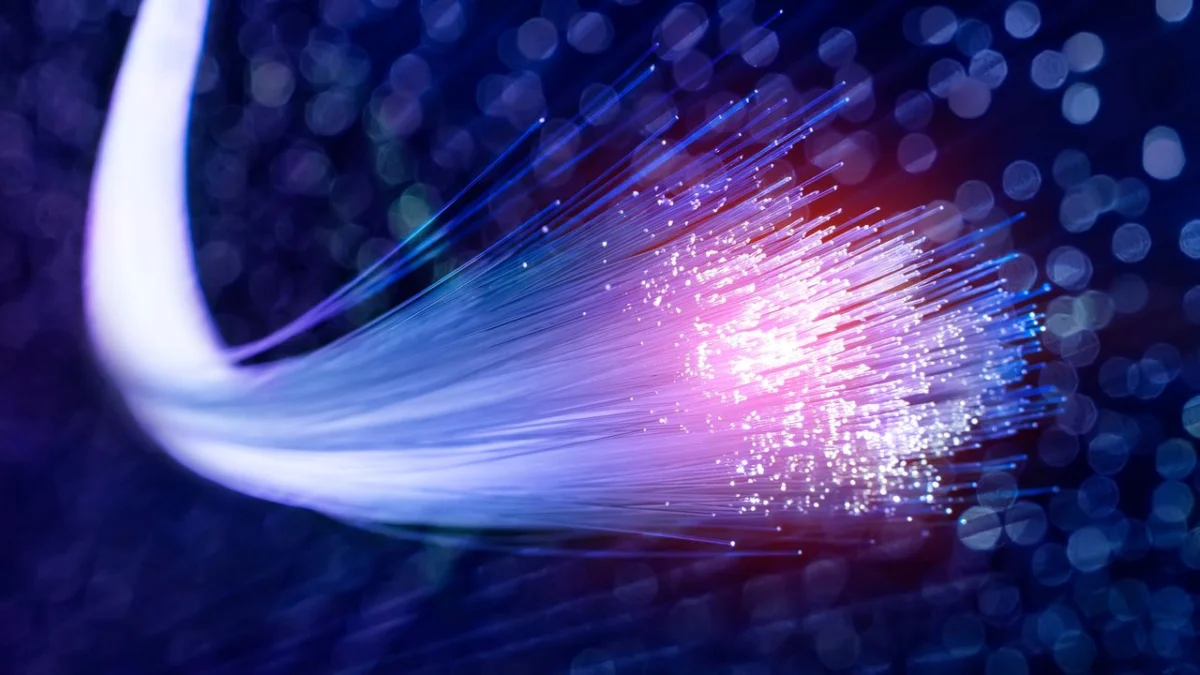
For decades, the fiber optic cable has been viewed as the gold standard of secure communication. Unlike its predecessor, copper wiring, which emits electromagnetic signals that can be intercepted from a distance, fiber optics transmit data via pulses of light. This fundamental physics-based advantage led the cybersecurity community to treat fiber as inherently "un-tappable" without physically breaking the line.
However, groundbreaking new research published in the journal Science has shattered that long-standing assumption. It turns out that the very infrastructure connecting billions of homes and businesses to the global internet can be repurposed into a massive, distributed listening device. By leveraging Distributed Acoustic Sensing (DAS) and modern artificial intelligence, bad actors can now potentially convert the physical vibrations of a cable into coherent audio, effectively turning the internet’s backbone into a sophisticated microphone.
The Science of the "Spy Cable"
The vulnerability does not lie in the data flowing through the cable, but in the cable itself. The phenomenon is known as Distributed Acoustic Sensing (DAS). In its legitimate, industrial application, DAS is a boon for infrastructure maintenance. Utility companies use it to detect leaks in water pipes, monitor perimeter security for sensitive facilities, and even track traffic patterns or detect seismic shifts.
The mechanism is deceptively simple: DAS hardware is connected to one end of a fiber optic strand. It fires rapid laser pulses down the glass core and analyzes the backscatter—the light that bounces back toward the source. Under normal conditions, the backscatter is consistent. However, when a sound wave hits the cable, the glass experiences microscopic deformations. These infinitesimal physical shifts alter the path of the light, creating measurable changes in the interference pattern.
"We show that in almost every case where you use these fibers, this could be a privacy concern," explained Jack Lee Smith, a geophysicist at the University of Edinburgh, during his presentation at the European Geosciences Union General Assembly. While the technology was designed to monitor large-scale geological or mechanical events, Smith’s research demonstrates that these sensors are sensitive enough to pick up the high-frequency vibrations of human speech, television audio, and even the clacking of a keyboard.
Chronology of the Discovery
The evolution of this threat can be traced through several distinct phases:
- The Foundational Phase: The initial development of DAS technology was focused purely on geophysical exploration and industrial safety. The ability to "hear" the earth or detect a pipeline breach was considered a triumph of modern engineering.
- The Repurposing Phase: Over the last decade, as fiber became ubiquitous, researchers began experimenting with "dual-use" scenarios. We saw subsea cables being repurposed as environmental sensors to track ships, underwater drones, and tectonic movements. During this time, the "spying" potential was theorized but remained computationally difficult.
- The AI Acceleration (2023–2024): The turning point occurred with the integration of advanced machine learning models. Converting raw, distorted light-reflection data into audible, intelligible speech is a massive signal-processing challenge. AI models, specifically those trained on audio reconstruction and denoising, have drastically lowered the barrier to entry, allowing the reconstruction of ambient sounds from what was previously considered "noise."
- The Current Reality: The latest research confirms that the barrier to entry has moved from "nation-state capability" to "commercially available hardware." An attacker now only needs access to one end of a fiber strand and an off-the-shelf DAS interrogator to begin the process.
Supporting Data: Why Fiber is at Risk
The most significant threat profile targets Fibre-to-the-Home (FTTH) and enterprise-grade fiber connections. In these configurations, the cable often runs in close physical proximity to high-activity zones: offices, living rooms, and conference areas.
The Physics of Exposure
The efficacy of this surveillance technique is dictated by several physical variables:
- Cable Configuration: Coiled cables, often found in wall cavities or near junction boxes, act as acoustic amplifiers. Research indicates that surface-level, coiled cables within five meters of a sound source yield the highest quality of intercepted audio.
- Environmental Shielding: The researchers found that depth is the primary deterrent. Burying a cable under just 20cm of soil provides a significant "acoustic buffer," effectively muffling the vibrations before they can be recorded.
- The "Signal-to-Noise" Barrier: The primary limitation for attackers is the environment. Background noise, signal degradation due to long distances, and the natural "branching" of modern networks all introduce interference. Straight, well-insulated cables are significantly harder to exploit than exposed, flexible, or loosely coiled lines.
The Role of AI in Signal Reconstruction
The most alarming aspect of this research is how AI changes the game. Previously, an attacker would need to manually filter out ambient urban noise—traffic, wind, or electrical hum—to isolate a conversation. Modern AI models can now perform "blind source separation."
By training neural networks on how human speech patterns interact with vibration-prone materials, these models can isolate a voice from a chaotic stream of data. The "listening" device is no longer a traditional microphone that records sound waves; it is a physical glass conduit that captures the mechanical energy of the room and lets the AI "re-synthesize" that energy back into audio.
Implications for Privacy and Security
The implications of this discovery are profound for both personal privacy and national security. For decades, the "air-gap" or the physical security of a building was the first line of defense against eavesdropping. Now, the infrastructure providing the building’s connectivity acts as a Trojan horse.
1. Re-evaluating Physical Infrastructure
If fiber cables can act as microphones, the way we route data cabling within secure facilities must change. Security architects may need to consider acoustic insulation for cable runs or implement "optical noise injection" to mask the vibrations on the fiber lines.

2. The Threat to "Secure" Conversations
In high-stakes environments, such as government offices or corporate boardrooms, the presence of an internet cable near a desk is now a potential liability. While the risk of a random hacker spying on a residential living room remains statistically low, the risk to high-value targets is now quantifiable and actionable.
3. Regulatory and Industry Responses
As of now, the telecommunications industry has not issued a widespread "recall" or emergency protocol, largely because the attack requires physical proximity and high-end hardware. However, the academic community is calling for a proactive approach. There is an urgent need for security standards that account for the acoustic properties of fiber-optic deployments.
Future Outlook: A Growing Security Gap
The "practical" risk today is relatively low, but the trend line is clear. We are entering an era where our physical environment is becoming increasingly "transducer-rich." Every smart device, every sensor, and now every piece of data-transmission infrastructure can be turned against the user.
As AI continues to become more efficient at processing low-fidelity data, the "real-world" obstacles—such as background noise and distance—will become less relevant. An attack that requires a highly specialized technician today may be automated by an app tomorrow.
For the average citizen, this is not yet a reason to panic. The physical constraints mentioned by Smith—the need for proximity and the dampening effect of walls and soil—provide a natural defense for most of us. However, for those in positions of power or those dealing with highly sensitive intellectual property, the humble fiber optic cable can no longer be ignored as a passive component. It is now a point of entry, a sensor, and a potential window into the most private of conversations.
As we continue to build a world where everything is connected, we must remember that the physical infrastructure underpinning our digital lives is not just moving data; it is living in our walls, our floors, and our desks, waiting for the right frequency to be heard. The challenge for the next decade will be learning how to secure the "glass" itself, ensuring that while the internet remains open, our conversations remain private.









No comments yet. Be the first to join the conversation!