

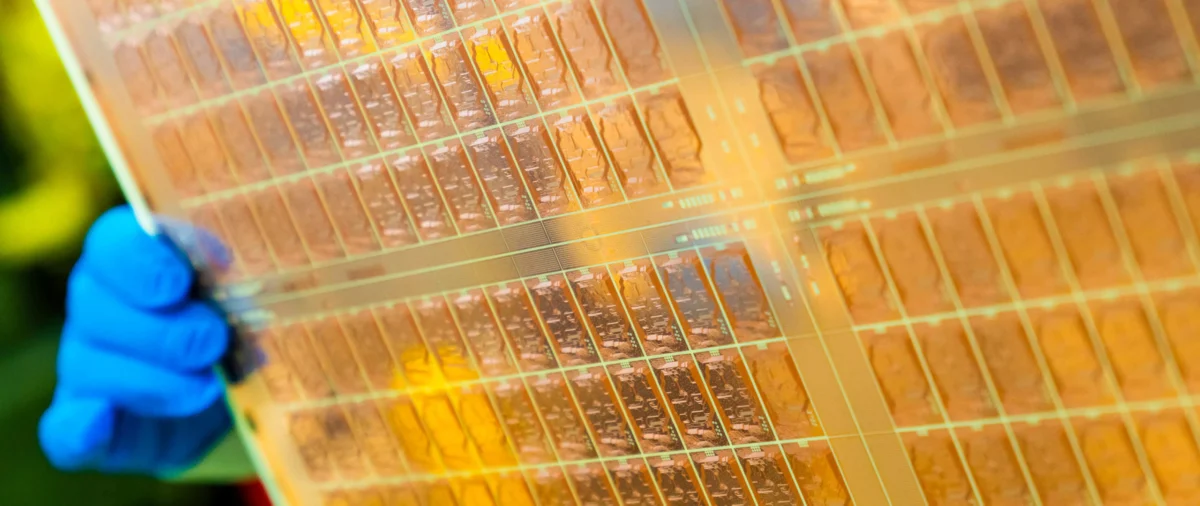
The semiconductor industry is currently locked in a race against the physical limitations of silicon. As transistors shrink toward the atomic scale, the "packaging"—the foundation that connects these chips to the rest of a system—has become the new bottleneck for performance, power, and data density. Enter glass-core substrates: a revolutionary technology touted as the successor to the traditional organic substrates that have powered computing for decades.
While the promise of glass substrates—offering superior thermal stability, lower power consumption, and unprecedented interconnect density—sent shockwaves through the industry when Intel announced a $1 billion investment in late 2023, the reality on the ground has proven more complex. As of mid-2024, the "glass revolution" is facing a significant reality check. Delays, revised timelines, and a cooling of industry fervor suggest that the transition to glass-core packaging is a marathon, not a sprint.
Main Facts: The Promise and the Pivot
The fundamental challenge in modern chip design is "warpage" and signal integrity. Organic substrates, typically made of resin-coated copper, struggle to maintain their shape under the intense heat generated by high-performance AI and data center processors. They also limit how tightly we can pack the tiny copper "vias" that transmit electrical signals.
Glass substrates solve this by offering:
- Superior Flatness: Glass is far more rigid, allowing for tighter lithography and more precise stacking of chiplets.
- Thermal Resilience: It handles extreme temperature fluctuations without warping, critical for high-wattage AI accelerators.
- Enhanced Connectivity: Glass allows for much higher density of through-glass vias (TGVs), enabling faster data transfer between chiplets.
However, moving from a laboratory prototype to a high-volume manufacturing (HVM) line is a gargantuan leap. Intel, the pioneer of this movement, has shifted its internal strategy. While they continue to champion the technology through licensing and demonstration vehicles, the expectation for widespread commercial deployment has been pushed back to the turn of the decade—roughly 2030.
A Chronology of Delays: From Hype to Hesitation
The timeline for glass substrates has been characterized by aggressive targets followed by pragmatic, often frustrating, recalibrations.
The Initial Surge (2023)
In September 2023, Intel made headlines by unveiling its glass substrate strategy. The narrative was clear: the organic era was nearing its end, and glass was the inevitable successor. With $1 billion committed to the effort, the industry took note. Simultaneously, companies like SKC’s subsidiary, Absolics, were breaking ground in Covington, Georgia, promising mass production as early as the first half of 2024.
The Reality Check (Early 2024)
As 2024 progressed, the aggressive timelines began to crumble. Technical hurdles in manufacturing, specifically regarding the fragility of glass during the wafer-handling process and the difficulty of mass-producing through-glass vias, proved more formidable than initial R&D indicated.
The Mid-Year Pivot (July 2024)
Recent earnings calls have painted a more sober picture. On July 27, SKC reported that their glass substrate samples are currently undergoing rigorous "package-level reliability evaluation" in Taiwan. These tests are the final hurdle before commercialization. Simultaneously, Samsung Electro-Mechanics and Sumitomo Chemical’s Dongwoo Fine-Chem announced a massive 482.1 billion won ($310 million) joint venture. Their target? Not next year, but the second half of 2027.
The rumor mill, which once suggested that AMD would pivot to glass-based CPUs as early as 2025 or 2026, has largely gone silent. Those reports remain unfulfilled, indicating that the industry is collectively hitting the "qualification wall."
Supporting Data: The Industrial Landscape
To understand why the transition is taking longer than expected, one must look at the capital expenditure (CapEx) and the supply chain complexity.
| Company | Initiative | Projected Milestone |
|---|---|---|
| Intel | Glass-core R&D & Licensing | Deployment ~2030 |
| Absolics (SKC) | Georgia Plant Production | Reliability testing (2024) |
| Samsung EM | JV with Dongwoo Fine-Chem | HVM start late 2027 |
The shift requires an entirely new ecosystem. Organic substrates are produced using well-established, highly optimized chemical processes. Glass, by contrast, requires new machinery for laser drilling (to create the vias), new chemical vapor deposition (CVD) processes for metallization, and new handling equipment to prevent breakage.
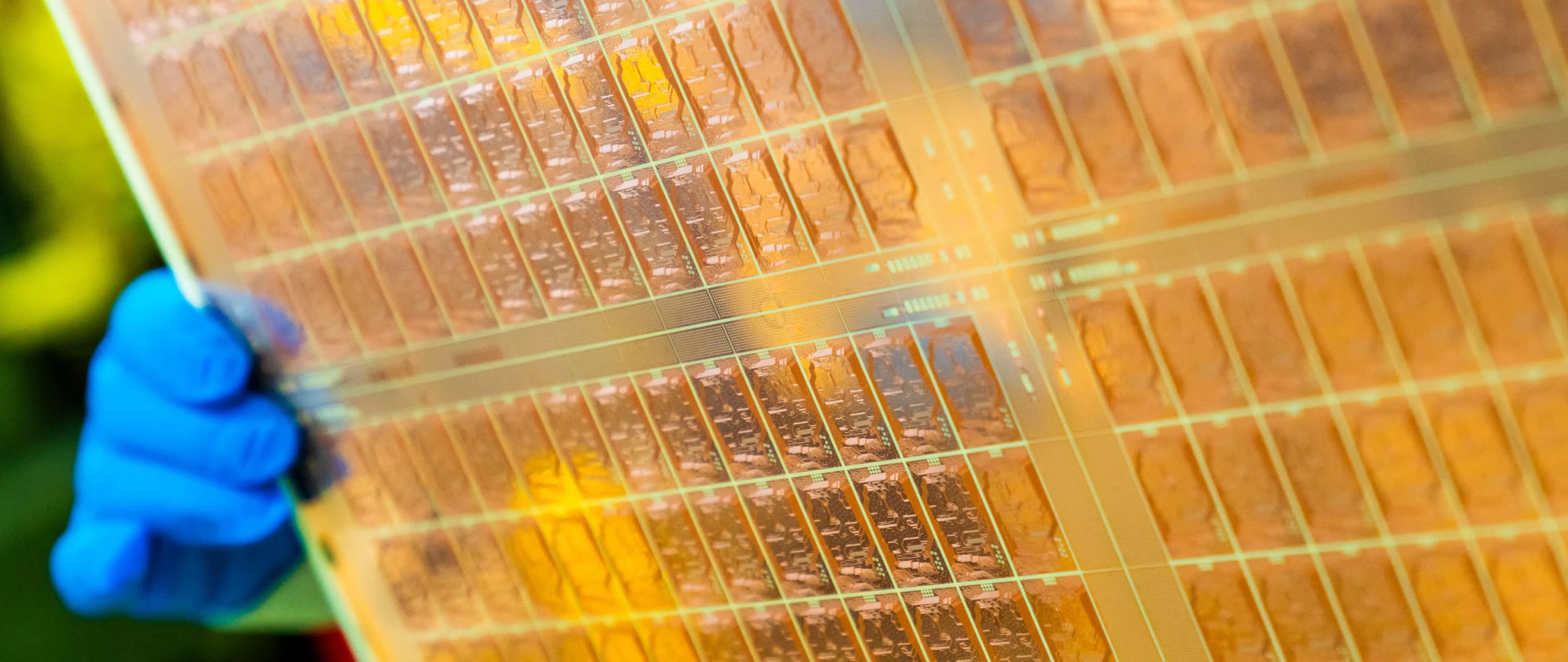
Industry analysts point out that the yield rates for these glass-core processes are currently nowhere near the "six-sigma" levels required for the high-margin, high-volume semiconductor market. Until these yields improve, the cost-per-package will remain prohibitive for all but the most specialized, high-end AI supercomputing applications.
Official Responses and Strategic Shifts
The major players are now moving toward a "collaborative qualification" model rather than a "first-to-market" battle.
Intel’s decision to focus on patent licensing suggests a strategic hedge. By enabling other firms to iterate on the foundational glass-substrate IP, Intel is essentially fostering an ecosystem that will eventually benefit its own Foundry services. By the time 2030 rolls around, Intel hopes to be the primary manufacturer for a matured, standard-compliant glass substrate market.
Absolics, meanwhile, has taken a more localized approach. By building their production facilities in the United States, they are positioning themselves to capitalize on government subsidies and proximity to key US-based customers. Their current focus on "package-level reliability" in Taiwan—the heart of the global chip assembly and testing (OSAT) industry—suggests that they are prioritizing the stability of the final chip over raw speed to market.
Implications: The Long Road to 2030
The delay of the "Glass Era" has profound implications for the semiconductor roadmap.
1. The Longevity of Organic Substrates
Organic substrates are not dying as quickly as anticipated. Manufacturers are getting better at reinforcing organic materials with advanced resins and composite structures. This "life extension" for organic substrates gives chip designers more breathing room, reducing the immediate pressure to switch to glass.
2. The AI Bottleneck
The biggest victim of these delays is the AI hardware sector. High-performance accelerators (like NVIDIA’s B200 or future iterations) are power-hungry. Glass substrates would allow for better power delivery and thermal management. As these substrates are delayed, chip architects must rely on more complex, expensive, and space-consuming cooling solutions, or accept lower performance-per-watt ratios.
3. Supply Chain Fragility
The reliance on a narrow set of companies—specifically those in Korea and Taiwan—to perfect this technology creates a new geographic bottleneck. If glass-core substrates become the gold standard for high-performance computing, countries that do not master this specific manufacturing process will effectively be cut out of the high-end processor market.
4. Economic Realities
The transition to glass represents a multi-billion-dollar infrastructure overhaul. As interest rates remain elevated and the semiconductor industry navigates a cyclical downturn in certain consumer segments, the appetite for massive, unproven capital investments has waned. Companies are now focusing on "proven value" rather than "experimental innovation."
Conclusion: A Measured Evolution
The transition to glass substrates is not a failure; it is a recalibration. The fundamental physics of the technology remain superior to organic alternatives, and the industry’s commitment—evidenced by the massive joint ventures and continued R&D spending—remains intact.
However, the industry has learned a painful lesson in 2024: the "lab-to-fab" transition is a chasm that cannot be bridged by capital alone. It requires time, process maturity, and the stabilization of a new global supply chain. While we may have missed the optimistic windows of 2025 or 2026, the progress being made in testing facilities across Taiwan and the US indicates that the glass substrate is not a question of if, but when.
As we look toward 2027 and the eventual milestone of 2030, the semiconductor industry is proving that even in a sector defined by Moore’s Law and rapid-fire innovation, the laws of material science still demand patience. The glass revolution is coming, but for now, the silicon and organic world holds the line.











