Asep Darmawan
In the landscape of modern animation, the term "independent production" usually implies a small studio, a dedicated team of artists, or perhaps a tight-knit collective. But for Japanese filmmaker Ryuya Suzuki, the term takes on a radical, literal definition. His latest feature, Jinsei, is not just a triumph of independent storytelling; it is a singular feat of endurance, crafted entirely by one man over 18 months of grueling, hyper-focused labor. As the film prepares for its wide U.S. theatrical release on June 12, 2026, via Greenwich Entertainment, the animation community is looking closely at a creator who transformed pandemic-era isolation into a century-spanning cinematic epic.
The Genesis of a One-Man Pipeline
The story of Jinsei begins in the shadow of the 2020 COVID-19 lockdowns. A graduate of the Tohoku University of Art and Design, Suzuki initially envisioned a career in live-action filmmaking. However, the crushing weight of early-career burnout, compounded by the global pause in production, forced a pivot. While working a retail job, Suzuki "borrowed" an iPad and installed Procreate, an illustration app not typically associated with feature-length production pipelines.
With no formal training in animation, he began to experiment. The resulting short films, Mahoroba and Lawless Love, served as his crucible. The positive reception to these works emboldened him to launch a crowdfunding campaign for his first feature. Jinsei—which translates to "Life"—would become his magnum opus. Suzuki acted as the sole writer, animator, editor, production designer, character designer, colorist, and composer. Aside from the vocal performances provided by talents such as rapper Ace Cool, Remi Chon, Kanji Tsuda, and Ayumu Nakajima, the film was a "one-man band" effort from start to finish.
Chronology of an Epic: 100 Years in 10 Chapters
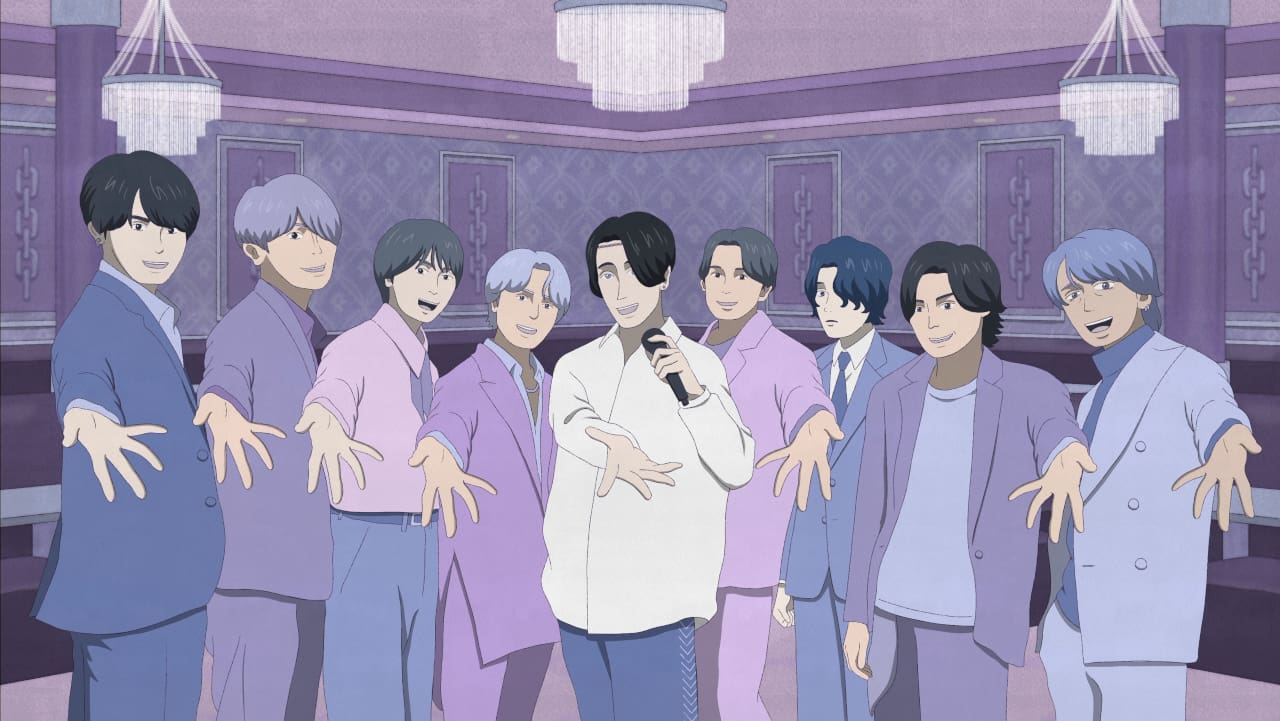
The narrative structure of Jinsei is as ambitious as its production method. The film chronicles the 100-year journey of its protagonist, Se-Chen (voiced by Ace Cool), a man who navigates a shifting existence, beginning with an intense, singular desire to become a pop idol. As time passes, the character adopts various personas, each defining a different chapter of his life.
Suzuki approached the storytelling with a mix of rigid structure and organic discovery. "The things I had decided before I started were that it would span 100 years, that it would be divided into 10 chapters, that it would be a story about an idol, and that 2025 would fall halfway through the story," Suzuki explains.
Working chronologically, Suzuki treated each of the 10 chapters almost as an individual short film, utilizing distinct thematic color palettes to mark the passage of time and the emotional evolution of his protagonist. This modular approach was vital to his mental endurance, preventing the stagnation that often accompanies such long-term, solitary projects.
.png)
Supporting Data: The Anatomy of an Independent Production
The scale of labor involved in Jinsei is difficult to quantify for traditional studios, but for Suzuki, the metrics were personal and punishing. To meet his production schedule, Suzuki maintained a grueling rhythm:
- Daily Output: On average, Suzuki logged 13 hours of work per day on his iPad.
- Production Pace: At the height of his workflow, he was completing approximately five minutes of finished animation per month.
- Total Duration: The core animation production took 18 months, following years of preparatory work and short-film testing.
This minimalist approach to animation was not merely a byproduct of his limited resources; it was a deliberate stylistic choice. Suzuki leaned into "limited animation," where the stillness of a frame serves to heighten the impact of movement when it finally occurs. By restricting motion, he gave every gesture and spoken line a disproportionate weight. "When characters don’t speak very much and then suddenly do, it carries a different weight," says Suzuki. "Movement works the same way."
Cinematic Influences and Technical Innovation
Despite his self-taught status, Suzuki’s work displays a sophisticated grasp of visual language. Jinsei features a dynamic aspect ratio that expands from a narrow, intimate square to a sprawling widescreen format, a technique reminiscent of Xavier Dolan’s Mommy (2014). This evolution was intended to mirror the protagonist’s broadening horizons and to keep the audience visually engaged.

The storytelling—often sparse in dialogue—draws inspiration from unconventional sources. Suzuki credits a Crayon Shin-chan film from the early 2000s as a primary influence, specifically a five-minute wordless sequence that conveyed an entire life story.
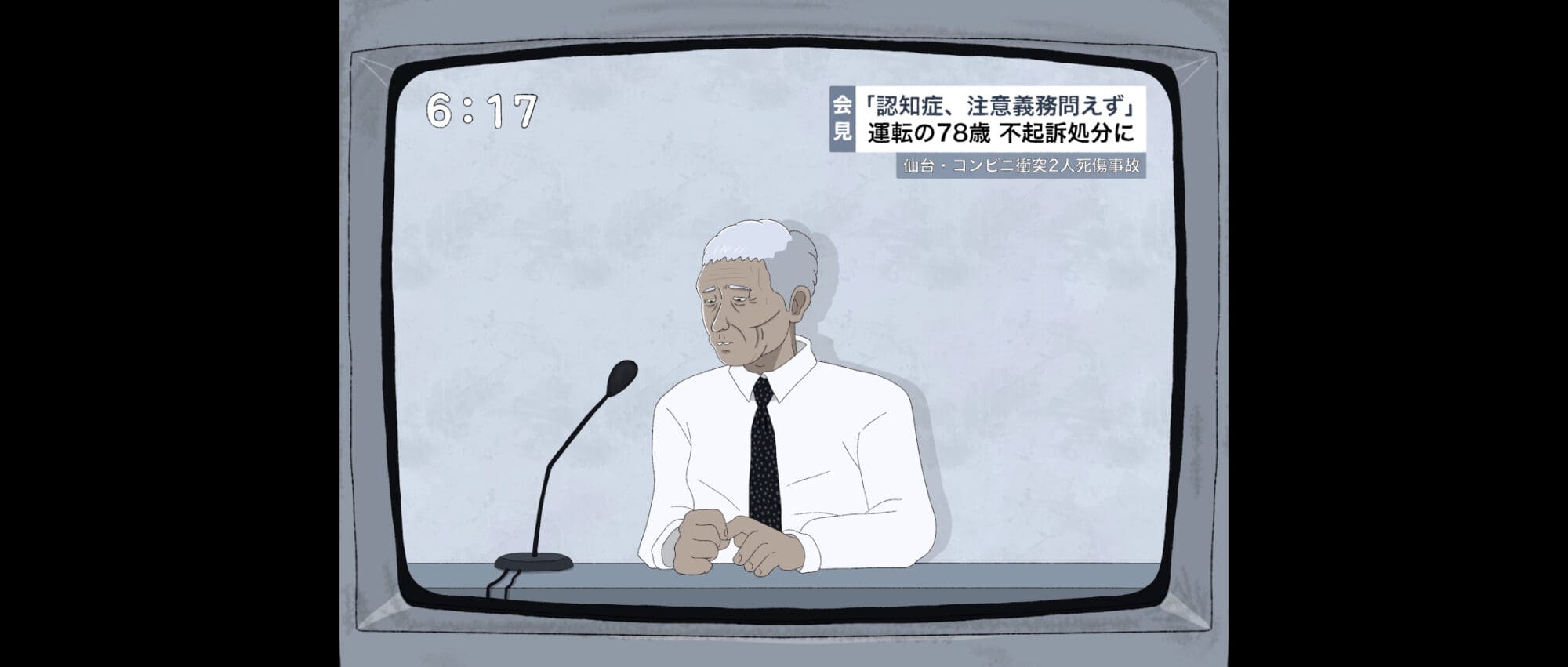
Furthermore, the film’s visual progression—from muted, grayscale beginnings to vibrant, color-saturated future sequences—acts as a psychological map. When asked about the surreal, sci-fi-leaning final chapters, Suzuki deflects comparisons to classics like 2001: A Space Odyssey or Fantastic Planet. "I love Kubrick, but I’ve actually never seen 2001," he reveals. Instead, his focus was on "creating distance from daily life," using the vastness of outer space as the ultimate metaphor for the detachment one feels at the end of a long life.
Official Responses and Industry Implications
The film’s journey from a crowdfunding campaign to an international theatrical release represents a growing shift in the animation industry. Jinsei debuted in Japan in May 2025 and subsequently charmed audiences at the Annecy International Animation Film Festival, proving that the barrier to entry for high-quality, feature-length animation is no longer gated solely by massive studio budgets.

Greenwich Entertainment, which is handling the U.S. distribution, clearly sees potential in this "auteur-driven" model. For the industry, Jinsei serves as a case study in how modern mobile technology can democratize filmmaking. However, Suzuki is quick to temper expectations for those who might hope to replicate his journey.
"I don’t want to make another feature film alone," Suzuki admits, reflecting on the toll of his 31-year-old lifestyle. "I don’t want to still be stuck in a room at this age, spending all that time sitting down."
The Future of the Auteur
As Jinsei arrives in American theaters this June, its legacy is already twofold. First, it is a touching, surreal exploration of identity and the passage of time. Second, it is a testament to the sheer force of will required to bring a vision to life in an era of technological convenience.
Looking ahead, Suzuki is eager to evolve. He has his sights set on larger, collaborative projects. "My dream is to work on a larger scale, making proper anime with a proper staff that already has the technical skills and experience," he says.
For now, Jinsei stands as a singular achievement—a rare bridge between the hyper-personal nature of independent web-animation and the grand, narrative scope of traditional feature filmmaking. Whether or not it influences a new generation of "solo-animators," it has undoubtedly secured Ryuya Suzuki a place as one of the most disciplined and distinct voices in contemporary Japanese animation. The film invites audiences to reflect on their own "Jinsei"—their own life—and perhaps, to consider what one might be capable of if they were willing to spend 13 hours a day for 18 months to bring a single idea to fruition.


 Basiran
 Nana Muazin