Rifan Muazin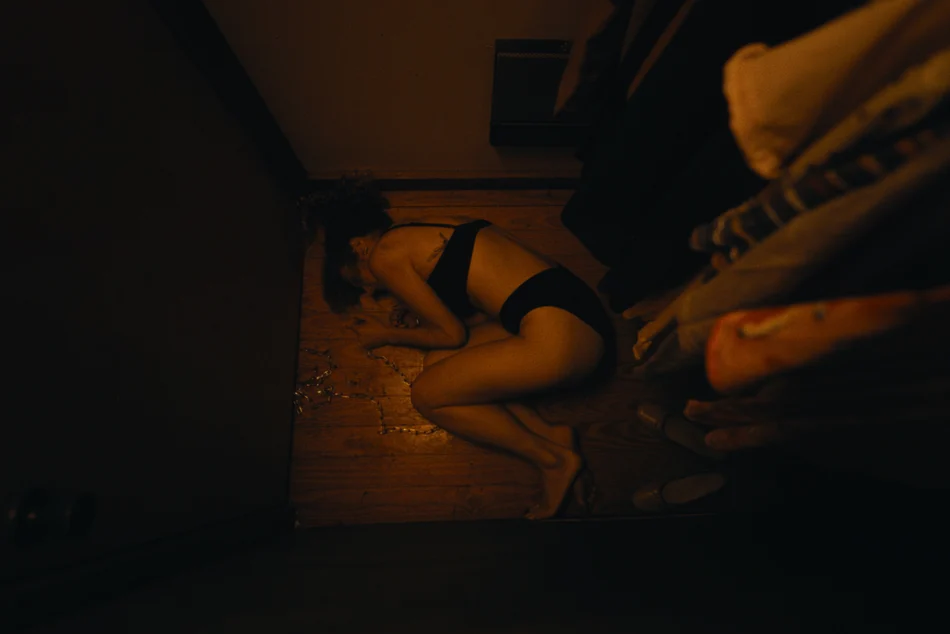
In a landscape of modern independent horror currently saturated with elevated, introspective, and often abstract scares, writer-director John Valley has arrived with a refreshing, visceral alternative. His latest feature, American Dollhouse, is a deliberate throwback to the golden age of the genre—a film that prides itself on the return of the "outrageous villain." After making waves at the South by Southwest (SXSW) Film Festival and garnering a cult-like following during screenings at the prestigious Overlook Film Festival, American Dollhouse is positioning itself as a vital, if unsettling, snapshot of contemporary American anxiety.
The Anatomy of a Suburban Nightmare: Main Facts
The premise of American Dollhouse is deceptively simple, tapping into the primal fear of the “unfriendly neighbor.” Following the death of her mother, a young woman named Sarah (played with grounded intensity by Hailley Lauren) returns to her childhood home. Her goal is pragmatic: settle the estate, renovate the property, and move forward with her life.
However, her plans are derailed by Sandy (Kelsey Pribilski), a neighbor whose facade of neighborly concern quickly curdles into a suffocating, unhinged obsession. Sandy does not merely dislike Sarah’s planned renovations; she views Sarah’s agency as a personal affront. As the film progresses, the suburban setting—a place traditionally associated with safety and stability—is revealed to be a claustrophobic trap, where the "polite society" of the neighborhood becomes a weapon of psychological and physical terror.
A Chronology of Creation: From Iowa Roots to the Festival Circuit
The journey of American Dollhouse is as much about the collaborative nature of independent filmmaking as it is about the story itself. For Iowa native John Valley, the film was born not from a desire to reinvent the wheel, but to engage with the "hard guideposts" of the slasher genre.
The project’s gestation began with Valley’s desire to explore the crushing weight of modern paranoia. After the script was finalized, the production moved through the traditional independent circuit, finding its home at festivals that prioritize genre innovation. Its premiere at SXSW marked the film’s arrival as a serious contender in the indie horror space, followed by an enthusiastic reception at the Overlook Film Festival. Currently, as the film travels the festival circuit, it remains in the active stages of seeking distribution—a critical milestone for a film that balances retro-slasher aesthetics with a distinctly modern 2025 sensibility.
Supporting Data: The Panopticon of the Cul-de-Sac
To understand American Dollhouse, one must understand Valley’s philosophical approach to the villain. He posits that Sandy is not just a character, but a "manifestation of the panopticon."
In his own words: "The question is, ‘What scares me?’ This last decade or so, there’s a sense of paranoia out on the street… these places where you think we’re supposed to be safe, and you can operate without feeling like you’re being watched all the time or judged. So the idea that sidewalks or our streets in broad daylight are these places where terror is looming at any hour of the day, it’s crushing to me."
Valley draws a direct line between his work and the pantheon of horror history. He notes that while The Texas Chain Saw Massacre gave us Leatherface and contemporary films like Weapons gave us the unforgettable Aunt Gladys, his work seeks to ground those archetypes in the specific cultural rot of the current era. By utilizing the tropes of the slasher—the final girl, the home invasion, the inescapable threat—he aims to capture a "snapshot of life in 2025 in America."
Official Responses and Creative Philosophy
Valley’s approach to directing is defined by a "holistic" understanding of the film set, informed by his years working in various departments, including grip and electric, art department, and as a production assistant. This background has rendered him a director who prioritizes the collective expression of his crew over his own ego.
The Collaborative Set
"I know that your crew and your actors are the people who ultimately make the movie," Valley explains. "So you set up this thing that is rock-solid and just do your best to get out of their way and make sure that they are feeling heard."
This philosophy manifests in his on-set practices. Rather than dictating every movement, Valley invites his cinematographer and actors to find their own "truth" within the scene. For his actors, he encourages them to experiment with dialogue, provided they maintain the "intentionality" of the scene. This fluid approach allows the film to evolve beyond the initial shot list, creating a sense of naturalism that makes the eventual descent into horror even more jarring.
Respecting the Genre
Valley is unapologetic about his love for horror. He views the genre as the "best" medium for filmmaking because it allows for the utilization of every tool in the cinematic arsenal. "It allows you to use all of the machinery tools for expression," he notes. "It’s the best genre for the medium."
Implications: The Future of Independent Horror
The success of American Dollhouse on the festival circuit serves as a bellwether for the health of independent genre cinema. As audiences continue to crave "larger-than-life" villains who reflect the societal anxieties of their specific time, directors like Valley are proving that the slasher film is far from dead—it is merely evolving.
The Road Ahead
Valley’s future, as he describes it, is deeply rooted in the genre. He is currently "ideating" on several projects, all of which maintain the dark, atmospheric intensity of American Dollhouse. His "back pocket" list is extensive and genre-diverse:
- The West Texas Monster Movie: Described as "culty" and visceral, this project currently holds his primary interest.
- The Vampire Project: An exploration of the mythos through a modern lens.
- Suburban Slasher-Thrillers: Continuing his interest in the terror of the domestic sphere.
Valley’s commitment to the genre is not merely commercial; it is an act of artistic devotion. By acknowledging that his nights are "a little dark" when he is in the middle of a project, he highlights the intense psychological labor required to craft effective horror.
Conclusion: Why ‘American Dollhouse’ Matters
American Dollhouse arrives at a pivotal moment in film history. As the industry grapples with the transition into a new era of digital distribution and a shifting theatrical landscape, films that utilize the "hard guideposts" of the past while remaining tethered to the pulse of the present are vital.
John Valley has successfully bridged the gap between the slasher traditions of the 1970s—as seen in the works of Hitchcock or Bob Clark—and the modern, socially-aware horror of the mid-2020s. By placing a monster in the house next door, he reminds us that the most terrifying thing in America isn’t a masked killer in the woods, but the neighbor who watches, judges, and decides that your existence is an encroachment on their domain.
As American Dollhouse continues its journey toward wide distribution, it stands as a testament to the power of independent vision. It is a film that challenges the viewer to look at their own neighborhood, their own sidewalks, and their own polite society, and ask: Who is watching, and what happens when they decide to act?
Watch the teaser for American Dollhouse:
[Link to Teaser Trailer – Embedded via YouTube]
The film is currently seeking distribution. Updates on release dates and platform availability will be provided as they become available.

 Lina Hope
 Azzam Bilal Chamdy