

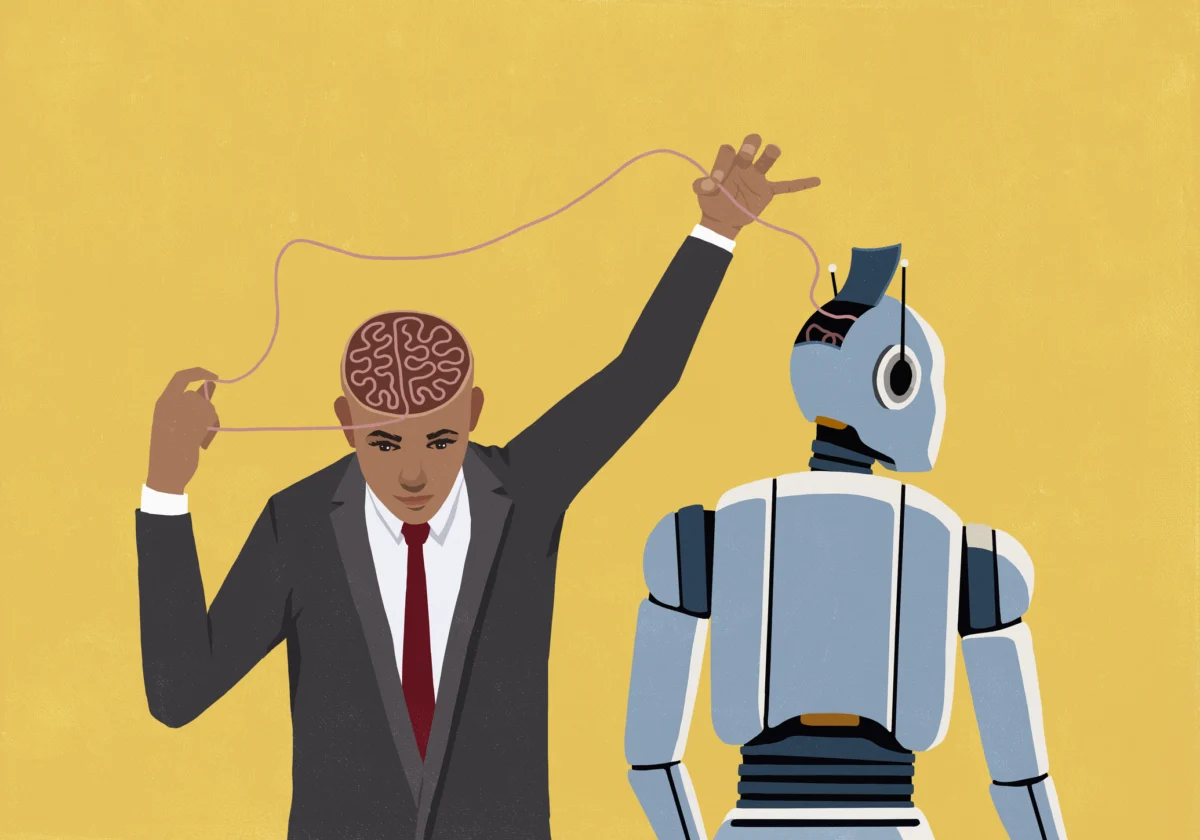
For nearly two decades, Amazon’s Mechanical Turk (MTurk) has occupied a peculiar, often controversial space in the digital economy. It was the platform that promised to solve the "last mile" problem of computing—tasks that were trivial for a human but historically impossible for a machine. Now, the service is approaching its final chapter.
In a quiet update to its documentation, Amazon Web Services (AWS) announced that as of July 30, 2026, the crowdsourcing marketplace will no longer accept new customers. While existing clients can continue to operate as usual, the platform has essentially been placed on life support. AWS confirmed it will maintain security and availability, but the days of innovation and expansion for the service are officially over.
This move marks the end of an era for a platform that once sat at the intersection of global labor, early-stage machine learning, and the ethics of the digital age.
A Chronology of the "Turk"
2005: The Birth of a Digital Workforce
Launched in 2005, Mechanical Turk was named after the 18th-century "automaton" hoax—a wooden cabinet housing a hidden human chess master. The Amazon iteration was far more honest about its nature: it was a platform designed to connect companies with a vast, anonymous, and global workforce willing to perform "Human Intelligence Tasks" (HITs) for pennies. From identifying traffic lights in blurry photos to transcribing audio, MTurk became the backbone of early web data processing.
2010s: From Data Annotation to Political Scandal
As the decade progressed, the platform evolved. It became a critical tool for social science researchers and corporations looking to clean data. However, this growth brought scrutiny. The platform became a lightning rod for debates regarding the "gig-ification" of labor and the exploitation of workers in developing nations who were often paid below minimum wage by any Western standard. Its role in the 2018 Cambridge Analytica scandal—where data scraped from the platform helped build psychographic profiles for political targeting—cemented its reputation as a morally ambiguous cog in the tech machine.
2018–2023: The SageMaker Integration and the AI Loop
In 2018, Amazon attempted to rebrand the utility of MTurk by integrating it with SageMaker, its enterprise AI service. The pitch was simple: companies building neural networks needed humans to "annotate" data to train their models. But as AI capabilities grew, the relationship between the platform and the machines it helped train became recursive. By 2023, studies revealed that a significant portion of the MTurk workforce was using generative AI to complete tasks—effectively creating a feedback loop where humans used AI to label data for other AIs, calling into question the quality and reliability of the output.
The Economics of "Fake-It-Till-You-Make-It"
One of the most enduring legacies of Mechanical Turk is its role in the "Wizard of Oz" approach to technology. In the startup ecosystem, "fake-it-till-you-make-it" often involved marketing a product as an automated AI solution while, in reality, a hidden team of MTurk workers was performing the heavy lifting behind the scenes.
This "Potemkin AI" phenomenon allowed companies to test market viability without spending millions on actual, robust engineering. If the product gained traction, the company would eventually automate the process. If it failed, they hadn’t invested in the expensive infrastructure. Mechanical Turk provided the perfect, low-cost veneer of intelligence for companies eager to outpace their competitors.
However, as large language models (LLMs) became more sophisticated, the economic utility of paying a human to act like a computer diminished. The "last mile" of automation—those tasks that were previously impossible for machines—has shrunk significantly.
Supporting Data: The Erosion of Quality
The decline of Mechanical Turk was not sudden; it was a slow erosion driven by technological shift and platform degradation.
- The Botification of Crowdsourcing: By the mid-2020s, the platform was reportedly overrun by automated scripts and bad actors. Researchers who once used the platform for rigorous data collection found that the "human" element was increasingly compromised by bots designed to harvest HITs.
- The "Snake-Eating-Its-Own-Tail" Irony: A 2023 analysis by TechCrunch and other industry observers found that between 33% and 46% of workers on the platform were utilizing LLMs like ChatGPT to perform their tasks. This effectively turned the platform into a "middleman" for AI models, with humans providing only a thin layer of oversight that added little value to the underlying data.
- User Abandonment: On forums like Reddit, the sentiment has been overwhelmingly negative for years. Experienced workers, often referred to as "Turkers," reported plummeting wages and an influx of low-quality tasks. The platform, once a source of supplemental income for thousands, had become a graveyard for high-effort, low-reward labor.
Official Responses and Strategic Shifts
Amazon’s official stance, while concise, reflects a broader strategic pivot within AWS. The company stated that the decision followed "careful consideration."
"Existing customers can continue to use the service as normal," an AWS spokesperson noted. "AWS continues to invest in security and availability improvements for Mechanical Turk, but we do not plan to introduce new features."
Industry analysts interpret this as a "managed sunset." By keeping the service running for existing clients, Amazon avoids the immediate backlash of breaking contracts while simultaneously signaling to the market that the platform is no longer a core component of their AI strategy. As Amazon shifts its focus toward more advanced, automated, and integrated AI services within SageMaker, the human-centric, manual labor model of MTurk has become an artifact of a bygone era.
Implications: The End of Human-in-the-Loop?
The winding down of Mechanical Turk raises profound questions about the future of AI training and the ethics of digital labor.
The Reliability Crisis
If AI models are being trained on data that is itself generated by other AI models—or by humans using AI to cut corners—the risk of "model collapse" becomes a reality. This is the phenomenon where AI models become less intelligent as they ingest their own synthesized data. The loss of a dedicated, even if flawed, human-in-the-loop platform like MTurk forces companies to reconsider how they verify the quality of their training sets.
The Displacement of the "Click-Worker"
While the gig economy continues to thrive in areas like ride-sharing and delivery, the specific class of "digital piecework" that MTurk pioneered is disappearing. For many workers, this was a vital source of income. Its closure reflects a broader trend in the tech industry: the belief that the "human touch" is a temporary necessity to be engineered away as quickly as possible.
A New Era of Data Curation
The vacuum left by MTurk will likely be filled by specialized, high-cost data annotation firms that prioritize quality and human oversight over the "fast and cheap" model of the early 2000s. The era of the "unskilled" digital laborer is being replaced by the era of the "AI data specialist."
Conclusion: A Fitting End for a Digital Hoax
There is a poetic irony in the decline of Mechanical Turk. The original 18th-century machine was a deception—a human disguised as a machine. Modern AI has, in many ways, reversed that dynamic: we have spent years treating machines as if they were human, while often treating humans as if they were mere processors for machine-like tasks.
As July 30, 2026, approaches, the platform will continue its slow descent into obscurity. It leaves behind a complex legacy of innovation, exploitation, and the blurring of lines between human cognition and silicon logic. For those who built their careers on the platform, its end is a long-overdue acknowledgment of a reality that has been evident for years: the machines have finally caught up, and in the process, they have rendered the very platform that trained them obsolete.
The "Mechanical Turk" may be fading, but the questions it raised about the value of human labor in an automated world are only just beginning to be answered.











