

As the curtains rise on Computex 2026, AMD has finally addressed one of the industry’s most persistent open secrets. After more than a year of exclusivity within the Chinese market, the Radeon RX 9070 GRE is officially embarking on a global rollout. Positioned as a strategic mid-range contender, this card aims to bolster AMD’s RDNA 4 portfolio, providing a more accessible entry point into the high-performance tier of the current generation.
For many enthusiasts, the wait has been long, but the arrival of the RX 9070 GRE at a global scale invites a fresh look at AMD’s competitive positioning against NVIDIA’s formidable RTX 50-series. With a launch MSRP of $549, the card enters a crowded marketplace where price-to-performance ratios are under constant scrutiny.
The Chronology: From Regional Curiosity to Global Player
The history of the "GRE" (Golden Rabbit Edition/Global Release Edition) moniker has always been shrouded in localized intrigue. When the RX 9070 GRE first surfaced in April 2025, it was treated as a regional anomaly. At the time, Chinese system integrators utilized the card to bridge the gap between entry-level mid-range hardware and the flagship 9070 XT, offering a solution for users who found the latter’s price prohibitive.
For over twelve months, Western consumers and tech analysts could only speculate on the performance metrics of the card through imported samples and unofficial benchmarks. By choosing Computex 2026 as the stage for its global debut, AMD is signaling a shift in its inventory management and supply chain strategy. The transition from a "China-exclusive" to a "worldwide availability" model suggests that AMD has optimized its production of the Navi 48 silicon sufficiently to meet broader demand without cannibalizing its higher-margin products.
Technical Deep Dive: Deconstructing the Navi 48 Die
To understand the RX 9070 GRE, one must examine its architectural DNA. Built on the TSMC N4 process, the card leverages the same monolithic Navi 48 die that powers the RX 9070 and the flagship 9070 XT. This is a crucial distinction, as it confirms that the 9070 GRE is not a repurposed entry-level chip, but a highly capable, albeit "cut-down," enthusiast-grade processor.
Core Specifications and Architectural Scaling
The silicon boasts a total of 53.9 billion transistors across a 357mm² die. While the full-fat Navi 48 chip found in the 9070 XT features 64 Compute Units (CUs), the 9070 GRE has been pruned to 48 CUs. This results in:
- Stream Processors: 3,072 units.
- Ray Accelerators: 48 units, ensuring that ray-tracing workloads are handled with the same architectural efficiency as the rest of the RDNA 4 family.
- ROPs: 96 units.
Despite the reduction in core count, AMD has pushed the clock speeds to maintain a competitive edge. The card sports a rated game clock of 2,220 MHz, with a boost frequency reaching up to 2,790 MHz. This creates an interesting performance profile where the card compensates for its reduced parallel processing power with higher operating frequencies compared to the standard RX 9070.
Memory Architecture and Bandwidth Constraints
The most significant departure from the 9070 XT lies in the memory subsystem. The 9070 GRE is equipped with 12GB of GDDR6 memory clocked at 18Gbps. By utilizing a 192-bit memory interface, the card delivers a total memory bandwidth of 432 GB/s. This is supplemented by 48MB of AMD’s signature Infinity Cache, which, while smaller than the 64MB found on the 9070 XT, continues to be a cornerstone for mitigating latency and bandwidth bottlenecks in high-resolution gaming scenarios.
Supporting Data: The Benchmark Context
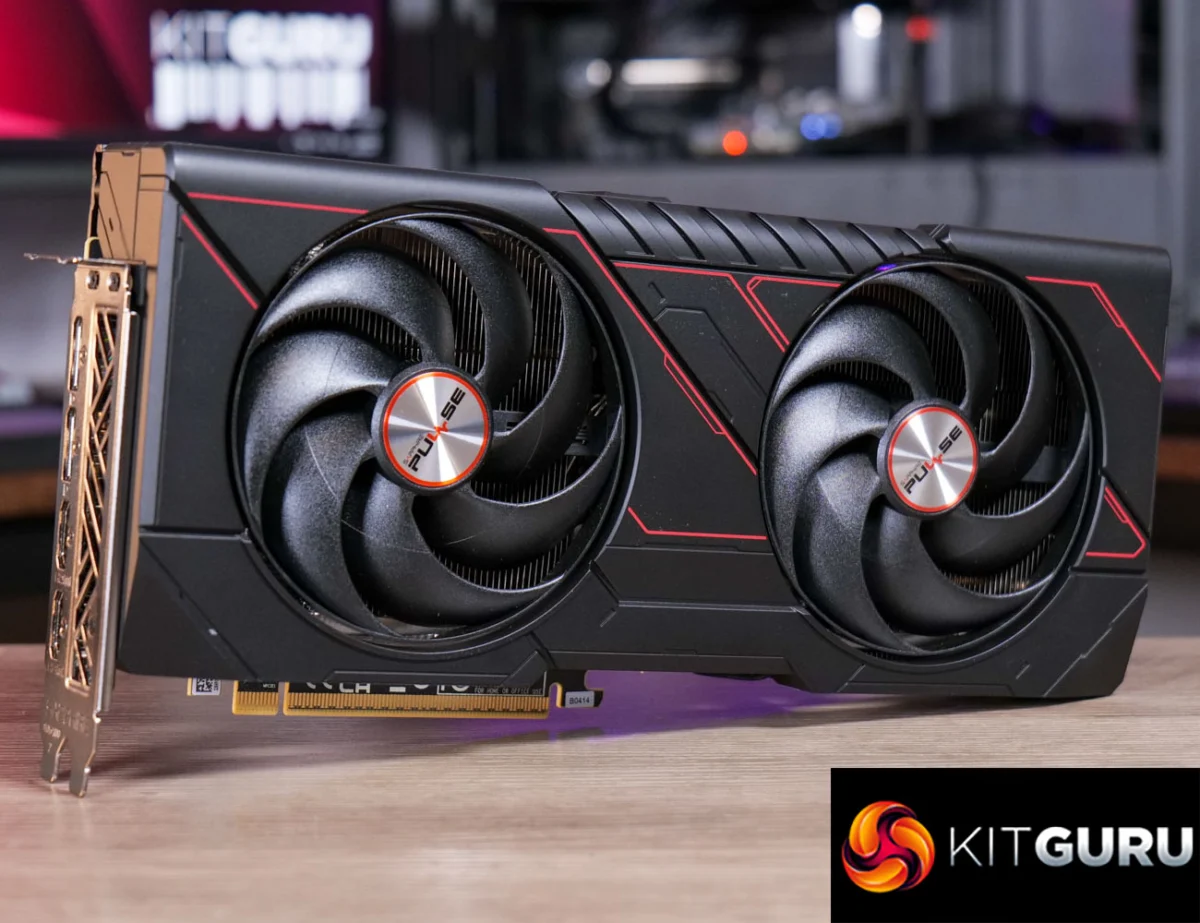
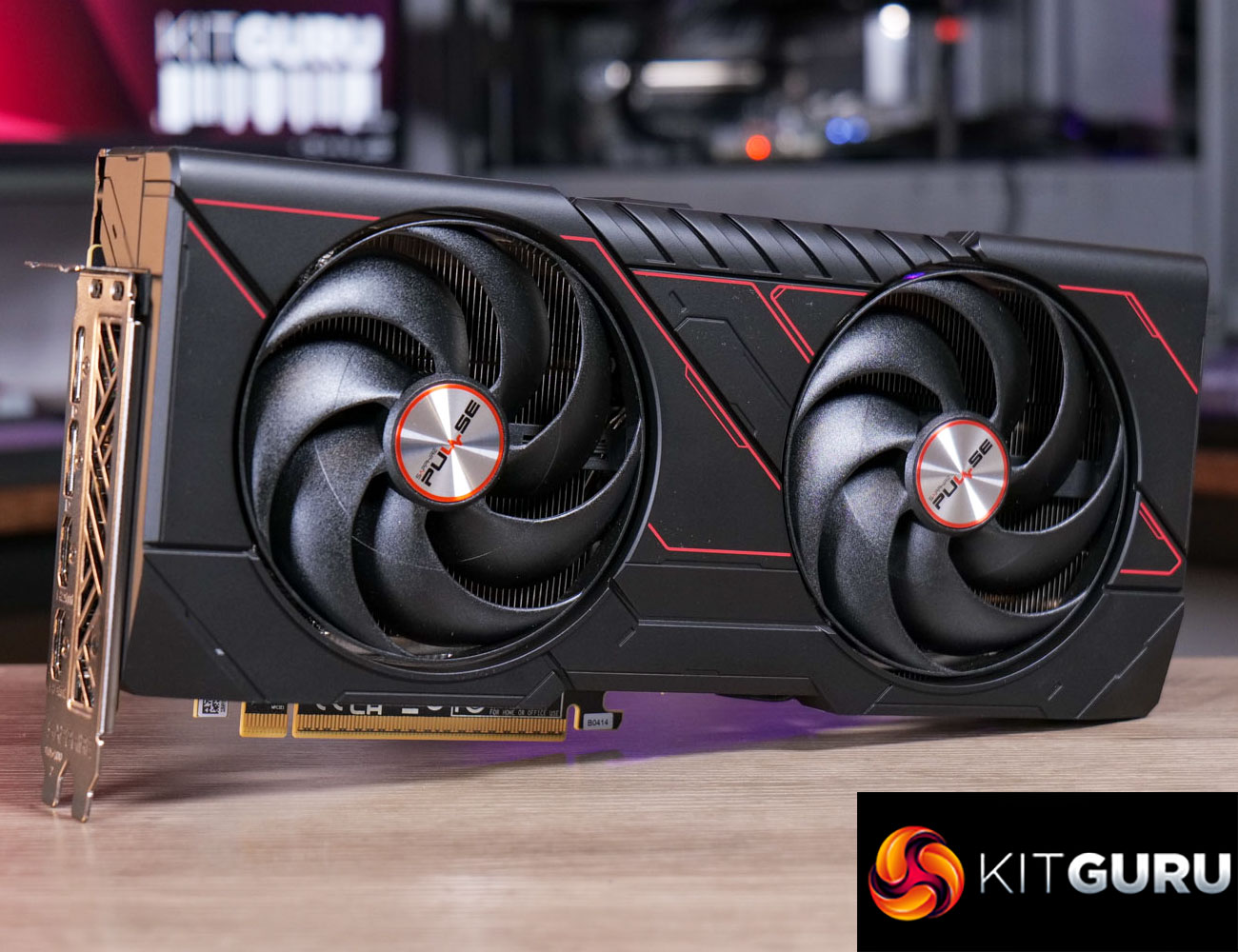
In the lab, we tested the Sapphire Pulse edition of the RX 9070 GRE. While this specific board partner card arrives with a factory overclock, our testing protocol remains anchored to reference specifications to ensure an "apples-to-apples" comparison across the product stack.
Efficiency and Power Consumption
With a Total Board Power (TBP) rating of 220W, the RX 9070 GRE is positioned as a balanced card. In our updated power testing methodology, we observed that the card maintains high efficiency under synthetic and gaming loads. It avoids the aggressive power spikes often associated with overclocked mid-range cards, making it an attractive option for users on mid-wattage power supplies (typically 650W–750W).
Comparative Performance Table
| Feature | RX 9070 XT | RX 9070 | RX 9070 GRE | RX 9060 XT |
|---|---|---|---|---|
| Compute Units | 64 | 56 | 48 | 32 |
| Stream Processors | 4096 | 3584 | 3072 | 2048 |
| Memory | 16GB | 16GB | 12GB | 8/16GB |
| Bus Width | 256-bit | 256-bit | 192-bit | 128-bit |
| TBP | 304W | 220W | 220W | 160W |
Official Stance and Market Positioning
AMD’s decision to launch the 9070 GRE at $549 (approximately £469–£479 in the UK) places it in direct conflict with NVIDIA’s RTX 5070. The RTX 5070, which is frequently available around the £500 price point, remains the primary benchmark for the 9070 GRE’s success.
"The RX 9070 GRE is designed for the gamer who demands high-fidelity 1440p performance without the premium tax of flagship silicon," an AMD spokesperson noted during the Computex briefing. By avoiding reference models and relying on board partners like Sapphire to provide custom cooling solutions, AMD is allowing the market to dictate the value proposition of the card through various aesthetics, noise profiles, and thermal capabilities.
Implications: Is the 9070 GRE Still Relevant in 2026?
The release of the RX 9070 GRE raises a fundamental question: Is there still room for a 12GB card in the mid-to-high-end segment in late 2026?
The Memory Debate
The 12GB VRAM buffer is currently the subject of intense debate among PC enthusiasts. While 16GB is becoming the standard for entry-level 4K gaming, 12GB remains perfectly adequate for the vast majority of 1440p ultra-preset titles. For users who do not intend to push into 4K or heavy productivity workloads (such as 8K video editing or complex 3D rendering), the 12GB limit is unlikely to be a hindrance in the next two to three years.
Competitive Pressure
The primary challenge for AMD is the perception of value. When pitted against the RTX 5070, the 9070 GRE must prove that its architectural efficiency—specifically within the RDNA 4 ecosystem—outweighs the feature-set advantages that NVIDIA traditionally holds, such as superior DLSS performance and specialized ray-tracing hardware.
However, AMD’s strategy here is clearly volume. By utilizing the mature Navi 48 die, AMD can supply a consistent stream of cards to the global market, potentially undercutting supply constraints that have historically plagued their flagship launches.
The Consumer Takeaway
For the average consumer, the RX 9070 GRE represents a "Goldilocks" GPU. It is faster than the entry-level 9060 XT but significantly more affordable than the 9070 XT. It avoids the extreme power requirements of the flagship tier, making it a "plug-and-play" upgrade for a wider range of existing systems.
As we continue to push through the 2026 gaming cycle, the success of the 9070 GRE will depend heavily on driver maturity and how well it scales with upcoming titles that lean heavily on advanced shader utilization. For now, it stands as a robust, capable card that successfully translates a regional experiment into a global reality.
Final Verdict
The AMD Radeon RX 9070 GRE is not a revolutionary piece of hardware, but it is a necessary one. In a market where prices have trended upward, providing a sub-$600 card that utilizes high-end Navi 48 silicon is a smart move. While its 12GB VRAM capacity may be a point of contention for those looking to future-proof for the next half-decade, for the modern gamer looking for high-refresh-rate 1440p gaming, the RX 9070 GRE is a compelling, efficient, and well-timed addition to the Radeon stable.
With board partners already shipping units and retail availability confirmed for the coming weeks, the 9070 GRE is poised to become a staple in mid-range gaming builds for the remainder of 2026.












No comments yet. Be the first to join the conversation!