Reynand Wu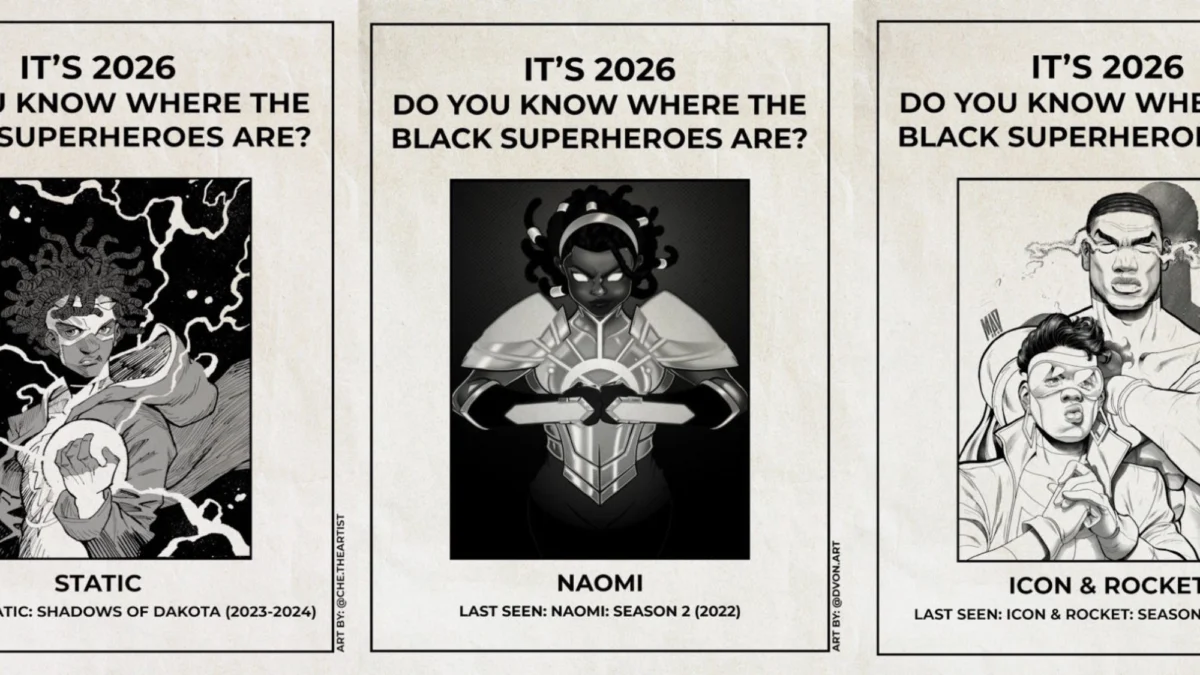
In the high-stakes world of comic book publishing, representation has long been a battlefield of optics, corporate policy, and fan activism. As the industry enters the latter half of the 2020s, a pointed protest campaign—spearheaded by creator and activist James Portis III—has re-emerged to challenge the editorial direction of DC Comics. The slogan, "It’s 2026, Do You Know Where The Black Superheroes Are?", serves as both a critique of the publisher’s historical pipeline and a demand for structural inclusion. While the formal “DC Blackout” boycott may have concluded, the digital conversation surrounding the visibility of Black characters in the DC Universe remains as vibrant and contentious as ever.
A Chronology of the DC Blackout Movement
To understand the current discourse, one must look back at the origins of the #DCBlackout and #DCSoWhite movements. These campaigns were born out of a perceived systemic failure at DC Comics to promote, develop, and sustain Black characters in prominent, solo-led titles.
2021: The Initial Spark
The movement gained significant traction in the summer of 2021, a period defined by a global reckoning regarding equity in media. Fans, creators, and industry commentators mobilized under the hashtag #DCBlackout, calling for a day of non-participation in DC-related products. The objective was to force a dialogue with DC’s editorial leadership regarding the lack of representation for Black characters and creators in the publisher’s flagship titles.
2024–2025: The Persistence of the Critique
As the industry navigated the post-pandemic landscape, proponents of the movement noted that while DC had introduced new characters of color, many were relegated to supporting roles or short-lived limited series. By the time the calendar turned to 2026, the sentiment shifted from a demand for “more” to a demand for “substance.” James Portis III’s latest creative project—a series of biting, satirical posters—seeks to highlight this discrepancy by framing the lack of Black superhero visibility as a collectible, albeit ironic, set of grievances.
2026: The Poster Campaign
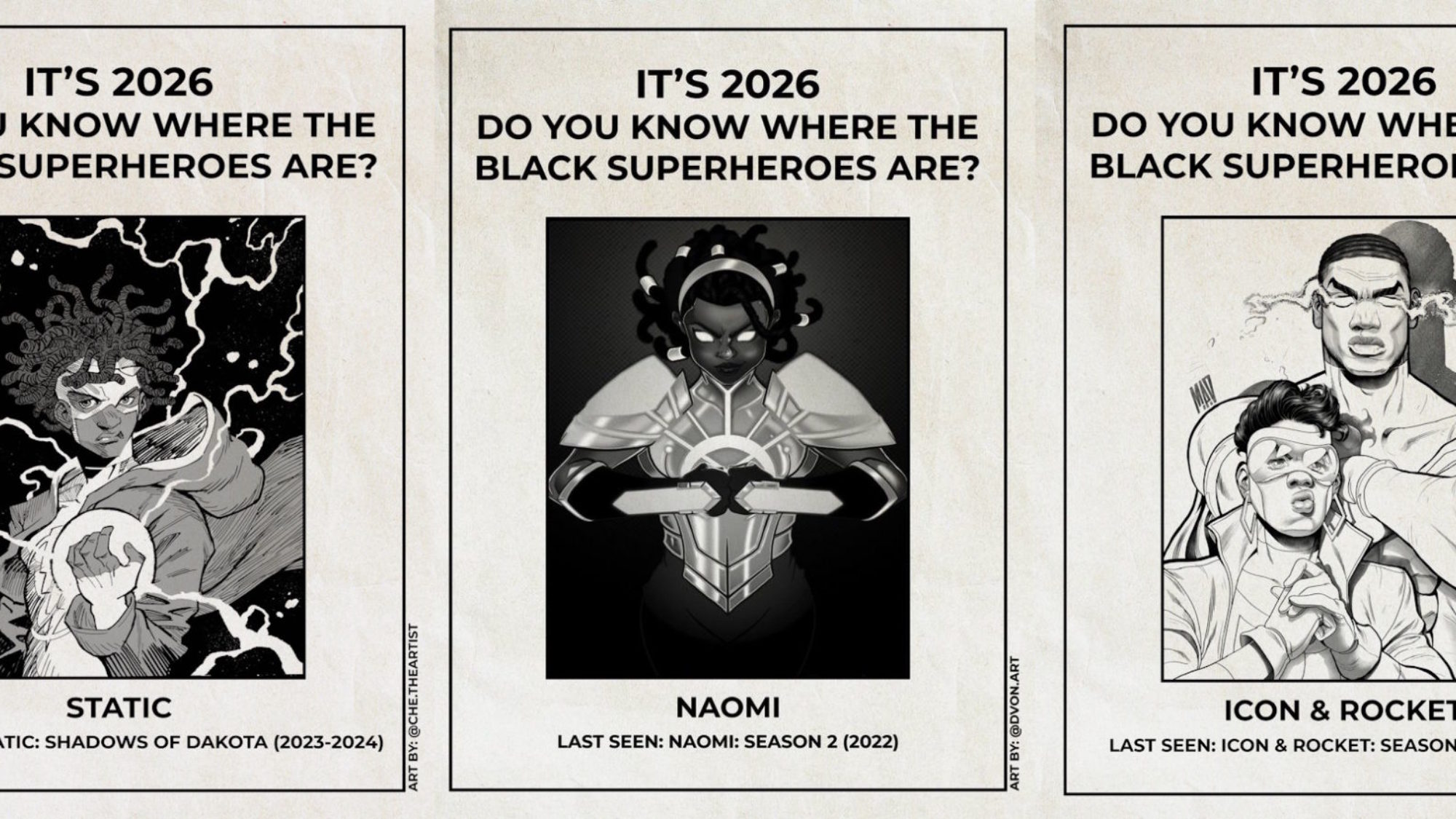
The current iteration of the protest has moved into the realm of visual activism. Portis has utilized social media to disseminate posters that challenge fans to "collect the set" of missing or underserved Black icons. This artistic approach serves as a reminder that the conversation is not merely about numbers, but about the quality and longevity of representation.
Supporting Data: The Representation Gap
The criticism leveled against DC Comics is not without empirical backing. When analyzing the publication history of major publishers over the last decade, a pattern emerges: the “Diversity Gap.”
Character Longevity and Solos
Industry analysts often point to the “Solo Title Test.” While DC has successfully integrated Black characters into ensemble books—such as Justice League or Teen Titans—the path to a long-running, monthly solo series for a Black protagonist has historically been fraught with cancellations.
- The "One-and-Done" Phenomenon: Many Black-led titles are greenlit as limited series, preventing these characters from building the deep, multi-year lore afforded to their Caucasian counterparts.
- Legacy vs. Originality: Critics often argue that DC relies too heavily on legacy characters—Black heroes taking up the mantle of existing white heroes—rather than investing in original, culturally distinct IP that can stand on its own merits without the shadow of a predecessor.
The Editorial Pipeline
The issue extends beyond the page to the people behind the desk. Critics of DC Comics argue that without a more diverse editorial and creative leadership team, the “blind spots” in storytelling will persist. When editorial boards lack diverse lived experiences, there is a risk that character arcs for minority heroes remain one-dimensional or stereotypical.
Official Responses and Corporate Strategy
DC Comics has rarely addressed these movements directly in formal press releases, preferring to point toward its recent initiatives. In recent years, DC has launched several imprints and lines—such as the Milestone Media revival—aimed at celebrating and sustaining Black creators and characters.
The Milestone Revival
The return of the Milestone Universe, featuring characters like Static, Icon, and Rocket, is often cited by the publisher as a cornerstone of their commitment to diversity. Milestone was founded in the early 90s specifically to address the lack of representation in comics, and its return was a massive win for fans. However, activists like Portis argue that relying on legacy properties from the 90s is insufficient and that the publisher must innovate with brand-new, contemporary Black superheroes who reflect the reality of 2026.
The “Silent” Approach
DC’s corporate strategy often involves "quiet inclusion"—the practice of diversifying rosters without making it a central marketing hook. While this avoids the potential for "virtue signaling" accusations, it also leaves the publisher vulnerable to charges of being performative. By refusing to engage in a public dialogue with groups like those behind #DCBlackout, DC has effectively allowed the critics to define the narrative of the debate.
Implications for the Future of Comics
The campaign spearheaded by Portis III serves as a microcosm of the larger shifts occurring in the entertainment industry. The implications of this ongoing friction are profound.
The Power of Fan Activism
The #DCBlackout movement proved that comic book readers are no longer passive consumers. They are active participants who hold publishers accountable for their corporate policies. This shift forces publishers to move beyond the "if you don’t like it, don’t buy it" mentality and engage in a two-way conversation with their base.
The Economic Argument
There is a growing economic argument for diversity. The success of films like Black Panther (Marvel) and the sustained popularity of Milestone characters prove there is a massive, underserved market for stories featuring Black leads. Publishers who ignore this are effectively leaving money on the table, a fact that investors are increasingly beginning to notice.
The "Collectibility" of Social Change
Portis’s suggestion that these posters should be released as "San Diego Comic-Con trading cards" is a brilliant piece of irony. It highlights the commodification of fandom. If fans are willing to spend hundreds of dollars on rare variants and collectibles, they are arguably the most dedicated segment of the consumer base. By alienating them through a perceived lack of representation, DC Comics risks eroding its own fan loyalty.
Conclusion: A Call for Genuine Transformation
As we look further into 2026, the question posed by James Portis III remains as pertinent as ever. It is not enough to simply exist; characters must be given the room to grow, the budgets to be promoted, and the creative talent to be elevated.
The protest is not merely a call for more characters, but a demand for a fundamental shift in how the comic book industry views the value of Black lives, stories, and audiences. Whether DC Comics will choose to lean into this critique and foster a more inclusive future, or continue to treat the issue as a temporary PR hurdle, remains the defining question of their current era.
The industry is at a crossroads. As the digital age allows for the rapid mobilization of fan sentiment, the era of top-down editorial control is waning. For DC Comics, the path forward involves acknowledging the validity of these concerns, moving beyond legacy properties, and ensuring that the "set" of heroes they offer truly reflects the diverse world in which their readers live.
For more on the evolving conversation regarding representation in the comic book industry, follow the ongoing developments of the #DCBlackout movement and its proponents through our continued coverage here on Bleeding Cool.

 Sagoh
Sagoh
 Ammar Sabilarrohman