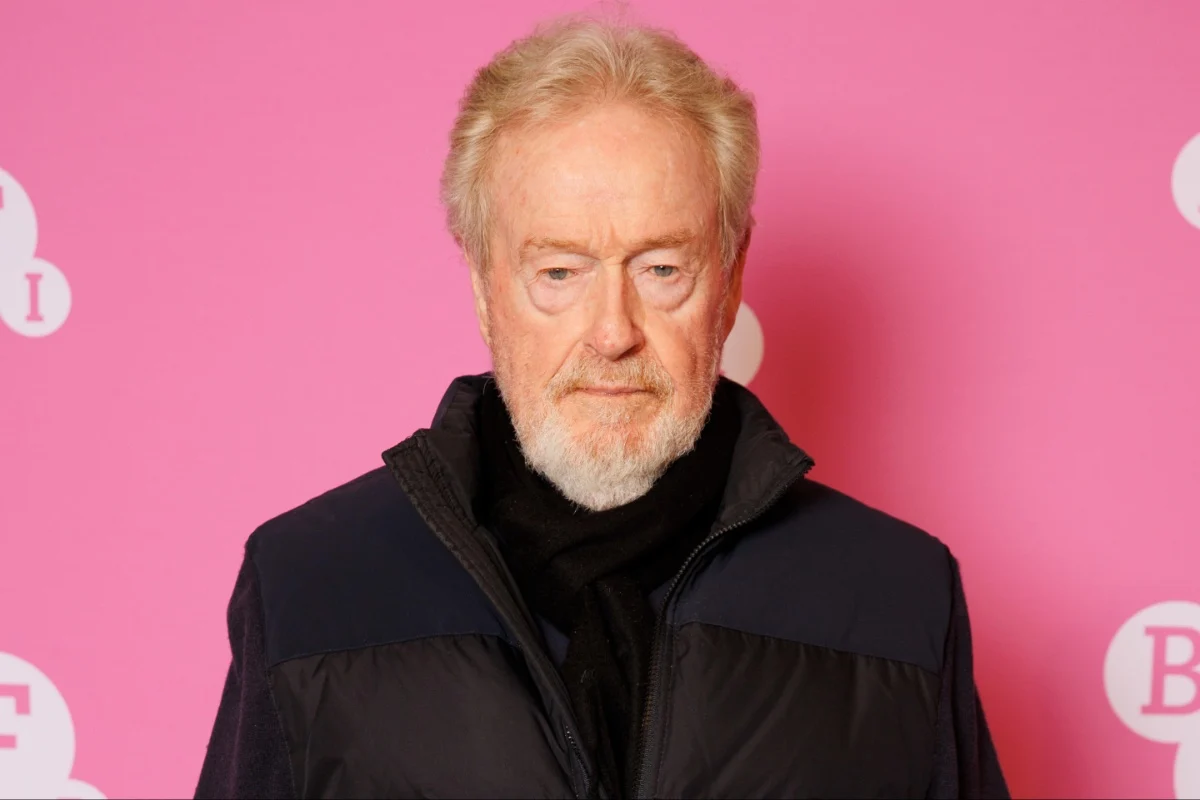
In an industry defined by rigid hierarchies and standardized genre labels, Ridley Scott has long operated as an outlier. From the claustrophobic, industrial terror of Alien to the sweeping, sand-blasted grandeur of Gladiator, the 86-year-old director has spent five decades defining the visual language of modern cinema. However, in a recent, candid conversation with The Times of London, Scott discarded the traditional nomenclature of his profession. He does not view himself merely as a filmmaker; he views himself as an "influencer."
This declaration is not a nod to the social media age, but rather a reflection of a career built on anticipating the cultural zeitgeist before it arrives. For Scott, to be a filmmaker is to follow a script; to be an influencer is to set the pace for the entire industry.
The Philosophy of Influence: Defining the Creative Through-Line
When pressed on the common thread connecting his sprawling, genre-defying filmography, Scott’s answer was characteristically blunt. "Every time, you are vulnerable," he noted. "Also, I never want to repeat myself and all my films have been on the money. I’ve been ahead of the game frequently and, if you’re ahead of the game, you’re an influencer. So I’m not a filmmaker, I’m an influencer."
This statement serves as a manifesto for his creative longevity. Scott’s career has been marked by a refusal to settle into a comfortable aesthetic. While many of his contemporaries found a "signature style" and refined it into a brand, Scott has treated every project as a fresh encounter with the medium. Whether exploring the neon-drenched dystopia of Blade Runner (1982), the feminist road-movie archetype of Thelma & Louise (1991), or the historical grit of The Last Duel (2021), Scott’s "influence" stems from his ability to synthesize new technology with primal, human storytelling.
A Chronology of Influence: Five Decades of Visual Evolution
To understand Scott’s claim, one must look at the timeline of his impact on Hollywood:
- The 1970s: The Architect of Atmosphere. With Alien (1979), Scott did not just direct a horror movie; he created an aesthetic of "used future" sci-fi that has been imitated in thousands of films, games, and television shows since. He influenced the very look of how the public envisions space travel.
- The 1980s: World-Building as Art. Blade Runner (1982) remains the blueprint for the cyberpunk genre. Its influence on visual culture is so profound that nearly every modern depiction of urban decay in a high-tech future owes a debt to Scott’s collaboration with production designer Lawrence G. Paull.
- The 1990s: Redefining the Road Trip. With Thelma & Louise, Scott took a conventional genre and imbued it with a cultural potency that shifted the conversation regarding female agency in film.
- The 2000s: The Sword-and-Sandal Renaissance. Gladiator (2000) single-handedly revived the historical epic, proving that massive, high-budget spectacle could still be grounded in intimate, Shakespearean-level character drama.
- The 2020s and Beyond: The Irrepressible Innovator. Even in his eighties, Scott continues to experiment with digital cinematography and grand-scale storytelling, proving that his "influencer" status remains relevant to modern audiences and stars alike.
The Unfinished Checklist: What Lies Ahead for the Visionary
Despite an illustrious career that has earned him three Oscar nominations for Best Director, Scott shows no signs of slowing down. During his sit-down with The Times, he revealed a career "bucket list" that suggests he is far from satisfied with his current body of work.
"I’ve never done a Western," he admitted, a surprising omission for a director so adept at framing wide, panoramic vistas. He also expressed a desire to venture into the world of musicals—a genre that demands a level of choreographed precision he has yet to fully tackle. Perhaps most intriguingly, he revealed plans for a Treasure Island adaptation featuring Hugh Jackman, as well as a long-gestating project centered on the African elephant, a subject he treats with a level of reverence that suggests a deep, philosophical interest in the natural world.
Challenging the Status Quo: The Critique of Modern Hollywood
Scott’s transition from "filmmaker" to "influencer" is perhaps most evident in his sharp critique of the current cinematic landscape. He remains openly frustrated by what he perceives as a cycle of creative stagnation in Hollywood.
"Look, everything now is about a murdered girl in the woods, or an FBI agent who is better than anyone else—or a superhero," Scott said. "Fuck me! There have to be other stories to tell."
His next project, The Dog Stars, serves as an antidote to this perceived fatigue. Starring Jacob Elordi, Margaret Qualley, and Josh Brolin, the film is a post-apocalyptic narrative that Scott hopes will push back against the "tedious sameness" of modern blockbusters. He was particularly vocal about his leading man, Jacob Elordi, describing him as "a big star" and noting that the two "got on great." By choosing to work with rising talent on projects that prioritize character over the standard "superhero" template, Scott is actively attempting to influence the direction of future studio output.
Implications: A Legacy Honored
The industry is beginning to recognize the depth of Scott’s influence in a formal capacity. In November, Scott will be awarded an honorary Oscar at the Governors Awards—a testament to his role as a pillar of global cinema. He will be joined by fellow industry icons including Glenn Close and pioneering animator Floyd Norman.
The implication of this honor is significant: it acknowledges that Scott’s contribution is not merely the sum of his box office receipts, but the structural influence he has exerted on the medium itself. He has trained generations of filmmakers, pioneered visual effects techniques, and consistently challenged the economic models of studio filmmaking.
Analysis: The Future of the "Influencer" Director
As the film industry grapples with the rise of AI, the decline of mid-budget dramas, and the dominance of franchise intellectual property, Ridley Scott’s positioning as an "influencer" feels prophetic. He is not fighting the evolution of the medium; he is positioning himself as the one who dictates the evolution.
By rejecting the title of "filmmaker"—a term he implies is too narrow to capture the breadth of his role as an architect of culture—Scott is making a bold assertion: the director of the future must be a visionary who dictates taste rather than a technician who follows trends.
His career remains a masterclass in adaptability. From his early days in advertising, where he learned the power of the "ten-second story," to his current status as a titan of epic cinema, Scott has always prioritized the visual experience. He understands that audiences do not just want to see a story; they want to inhabit a world. That is the essence of influence.
Whether or not he succeeds in his quest to film a musical or his long-awaited Western, Ridley Scott has already achieved his goal: he has ensured that his work remains the benchmark by which others are measured. He remains, quite literally, the influencer of his own era, proving that in a world of repetitive stories, the most radical act of all is to tell something entirely new.
As the industry prepares to honor him this November, the message is clear: Ridley Scott is not just looking back at a legendary career. He is still looking forward, searching for the next horizon to capture, and continuing to challenge the very definition of what it means to lead the medium of film.