

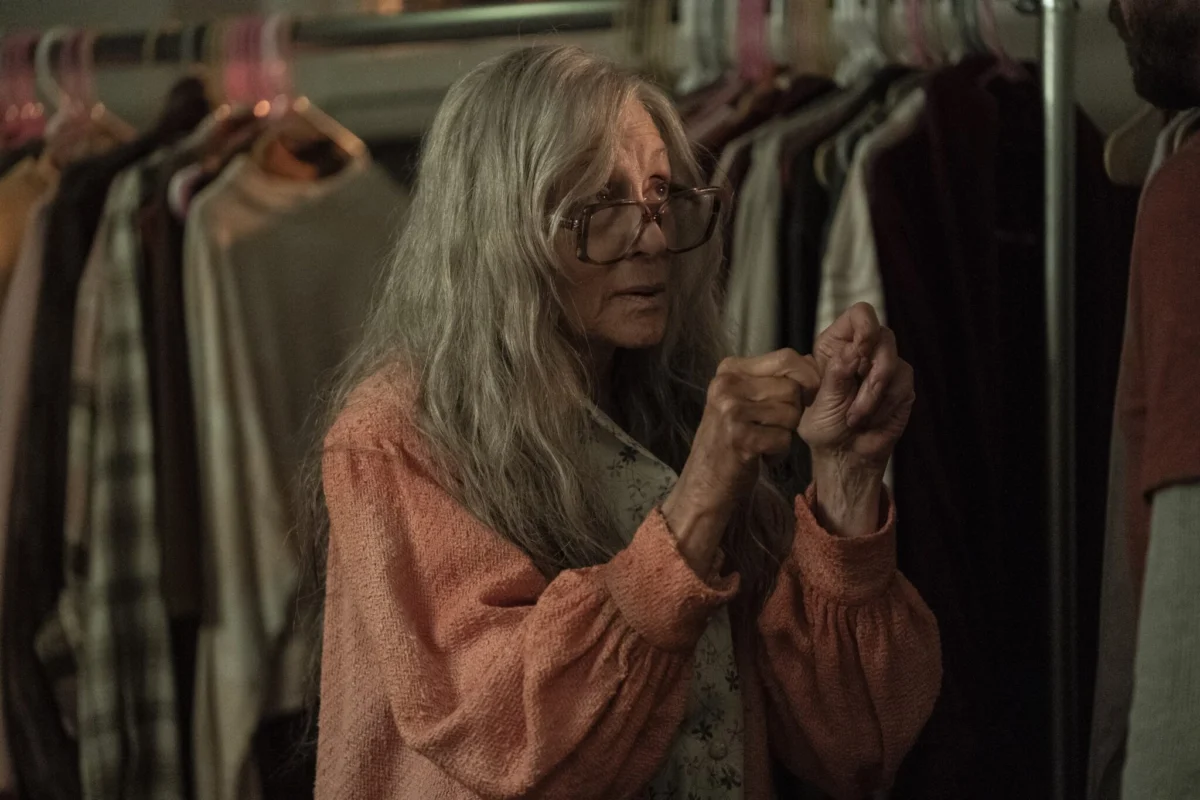
The atmosphere at New Hyde Hospital has reached a fever pitch. In the latest installment of The Terror: Devil in Silver, the narrative tension—which has been building steadily since the series premiere—erupts into a harrowing exploration of institutional abandonment, the erosion of agency, and the terrifying intersection of human cruelty and supernatural dread. As the walls of Northwest 2 close in on our protagonists, the lines between medical “care” and systematic erasure blur, leaving the audience to confront a haunting reality: at New Hyde, the greatest monster may not be the one behind the silver door, but the system that keeps the doors locked.
Chronology of Despair: The Descent into Northwest 2
The episode’s cold open serves as a brutal masterclass in foreshadowing. We are finally granted a window into the past of Dorry, confirming the long-held suspicion that her presence at New Hyde is the result of a husband’s calculated abandonment. The tragedy of her institutionalization—punished for being “too much” or “too emotional”—is a grim mirror of the historical reality where women were frequently discarded by their spouses into psychiatric care for failing to adhere to rigid, submissive standards.
Dr. Walter, ever the architect of misery, frames this enforced compliance as a "regimen." Yet, the cruelty is palpable. As the episode progresses, we see the ripple effects of this rigidity: Miss Chris’s visceral reaction to the patients enjoying a simple, home-cooked meal is not a quirk of policy, but a symptom of a deeper, systemic rot. Whether it is a home-cooked meal being treated as an infraction or the lobotomization of a patient, the message is clear: New Hyde does not allow for joy, humanity, or autonomy.
The episode reaches a devastating climax as Pepper, Loochie, and Coffee attempt a rescue that spirals into tragedy. Dorry’s attempt to guide Pepper to “safety” only results in him being thrust back into a painful memory—a psychological prison where he is forced to confront his failures as a father. This "frictionless existence" offered by the hospital is a chilling allegory for modern desensitization, echoing a world where we are increasingly invited to surrender our humanity to algorithms and automated comfort, provided we stop asking difficult questions.

Supporting Data: The Anatomy of a Corrupt System
To understand the tragedy at New Hyde, one must examine the staff, who fall into distinct categories of complicity.
- The Beneficiaries: Dr. Anand represents the administrative nightmare of the system. For him, "noncompliance" is merely an obstacle to funding and efficiency. He views the patients through the lens of a ledger, ignoring their suffering to preserve the hospital’s status quo.
- The Enablers: Miss Chris is the most complex figure on the ward. She oscillates between maternal affection and cold-hearted enforcement. While she claims she stays to protect her patients, her actions—drugging patients, ignoring their trauma, and dismissing their cries for help—suggest she is merely "arranging deck chairs on the Titanic."
- The Reluctant Participants: Scotch Tape and the new arrival, Josephine, represent the spectrum of those caught in the middle. Scotch Tape, despite his role as an enforcer, displays a glimmer of genuine empathy for Loochie. His character remains a focal point for the audience’s hope, though his survival is increasingly in question.
The death of Coffee is the ultimate indictment of this system. When he finally attempts to reach out for help, he is gunned down by police—a sobering reflection of how the real world handles mental health crises. His final words to Miss Chris, noting that she "demands" honesty but practices none, cut to the core of the show’s central conflict: the staff may listen to the patients, but they never truly hear them.
Official Perspectives and Institutional Neglect
The management of New Hyde Hospital operates on a doctrine of denial. Dr. Walter’s insistence on "years of regimen" is a thinly veiled attempt to justify the erasure of the individual. When the staff speak of their duties, they use the language of caregiving, yet their actions are rooted in containment.
Miss Chris’s defense—that the facility would fall into worse hands if she were to leave—is a common refrain in corrupt institutions. It is a psychological defense mechanism that allows staff to rationalize their participation in abuse. However, the arrival of the review board and Dr. Cleave introduces a volatile variable. For the first time, the "protective" shell of the hospital is being scrutinized, yet the desperation of the patients shows that they have long since stopped believing in the possibility of external salvation.

Implications: A Mirror to Our Own Realities
The brilliance of The Terror: Devil in Silver lies in its refusal to offer easy answers. The "Devil" in question—the entity behind the silver door—has become inextricably linked with the medical staff. The question posed by the characters is haunting: Did the devil come to New Hyde because of what Dr. Walter did, or did Dr. Walter do these things because the devil told him to?
This ambiguity suggests that the horror is circular. The institution creates the conditions for the supernatural, and the supernatural justifies the existence of the institution. As we move toward the final two episodes, the implications are dire. We are witnessing the total destruction of hope for Loochie, Pepper, and the memory of Coffee.
The series is effectively asking the viewer to consider the nature of "kindness" versus "niceness." Miss Chris is "nice"—she provides the bare minimum, keeps the peace, and maintains the order. Josephine is "kind"—she brings warmth, real connection, and genuine humanity. In a system like New Hyde, "kindness" is an act of rebellion, one that is rarely rewarded and often punished.
Conclusion: The Final Reckoning
With only two episodes remaining, The Terror: Devil in Silver stands at a crossroads. The narrative has successfully stripped away the veneer of institutional safety, revealing the raw, beating heart of a nightmare. Whether the show concludes with a desperate escape or a total capitulation to the dark forces within New Hyde remains to be seen.

However, the point has already been made: when a system is designed to treat humans as "lesser," it is not broken—it is functioning exactly as intended. The "chaos" that the staff fears is, in reality, the only true expression of humanity left within the ward. As the series moves toward its conclusion, the audience is left with the uncomfortable truth that at New Hyde, the only way to "get used to it" is to lose a piece of one’s soul. We can only wait to see if the characters have anything left to fight with when the final curtain falls.
Selected Quotes for Reflection:
- "I am done calling for help. I used to think this system was broken and people out there just didn’t know. But now I realize nothing is broken. The system is working perfectly."
- "He can even be your friend if you do what he tells you."
- "It hurts the most the first time, but you get used to it."









No comments yet. Be the first to join the conversation!