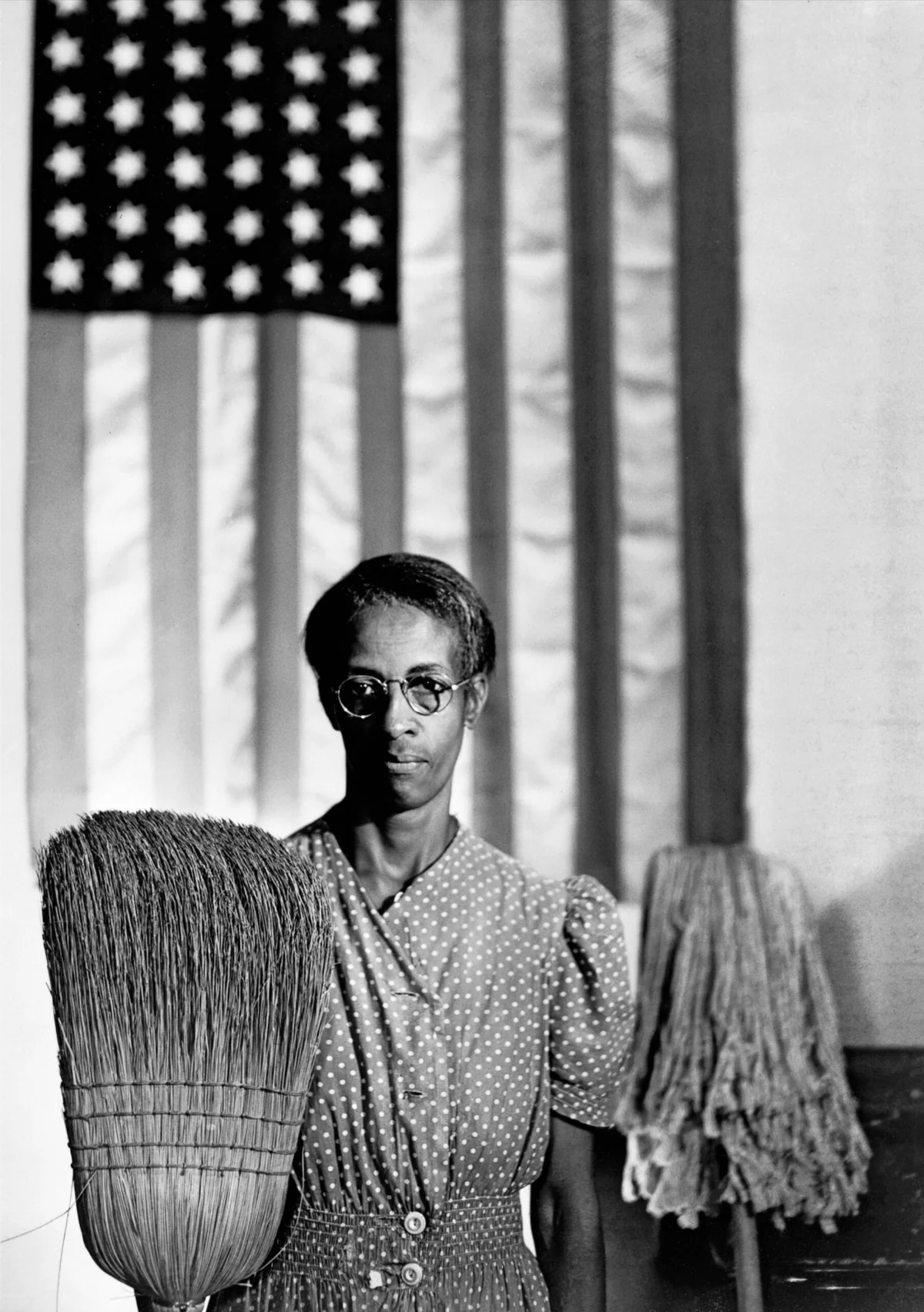
In the annals of American photography, few figures loom as large or as compassionately as Gordon Parks. A polymath who excelled as a photographer, filmmaker, musician, and writer, Parks utilized his camera not merely as an instrument for documentation, but as a deliberate "weapon" against the systemic injustices of his time. This September, the Jack Shainman Gallery in New York will host Voices in the Mirror, an expansive exhibition that brings together the definitive works of Parks’s career, serving as both a retrospective of his profound influence and a celebration of the 20th anniversary of The Gordon Parks Foundation.
From the quiet, dignified portraits of Harlem residents in the 1940s to the visceral, high-stakes documentation of the Civil Rights Movement, the exhibition offers an unvarnished look at the American experience. Voices in the Mirror acts as a bridge between the past and present, inviting a new generation to grapple with the same social fractures that Parks spent his life meticulously recording.

The Genesis of a Vision: A Chronology of Purpose
To understand the weight of the images displayed at the Jack Shainman Gallery, one must look at the trajectory of Parks’s life—a journey marked by poverty, segregation, and an unyielding refusal to accept the status quo.
1912–1936: Formative Years
Born into a world of deep-seated racial inequality in Fort Scott, Kansas, Parks was the youngest of 15 children. His upbringing was defined by the harsh realities of the Jim Crow South, an experience that would later serve as the foundation for his most biting social critiques.

1937: The Turning Point
Parks’s professional life changed forever in 1937 when he encountered the work of the Farm Security Administration (FSA). The FSA’s mandate to capture the hardships of rural life during the Great Depression sparked a realization in Parks. He famously remarked, "I saw that the camera could be a weapon against poverty, against racism, against all sorts of social wrongs. I knew at that point I had to have a camera."
1942: Breaking Barriers in D.C.
Parks made history in 1942 by becoming the first Black photographer hired by the FSA. His assignment in Washington, D.C., was a baptism by fire. Far from the beacon of democracy he expected, he found a city steeped in institutionalized bigotry. It was here that he captured his most iconic image, "American Gothic, Washington, D.C." (1942), which featured Ella Watson, a government cleaning woman, posed with a broom and mop in front of an American flag.

1948–1960s: Life Magazine and the Civil Rights Era
Parks eventually joined the staff of Life magazine, where he pushed the boundaries of photojournalism. His assignments took him across the globe, capturing the stark beauty of artists like Helen Frankenthaler and the grace of stars like Ingrid Bergman, while simultaneously documenting the brutal realities of segregation in Alabama and the fiery oratory of Malcolm X and Martin Luther King, Jr.
Supporting Data: The Anatomy of an Image
The power of Gordon Parks’s work lies in his ability to imbue personal narratives with national significance. The Voices in the Mirror exhibition features archival prints that provide a granular look at his technical and narrative precision.

The Power of "American Gothic"
Parks’s decision to photograph Ella Watson was born from a conversation about her daily struggles. After listening to her describe the systemic discrimination she faced as a Black woman in the nation’s capital, Parks felt an urgent need to translate her pain into a visual language. By positioning her before the Stars and Stripes with a mop and broom, he created a jarring juxtaposition against Grant Wood’s 1930 painting of the same name. Where Wood’s painting celebrated, in many ways, the agrarian ideal, Parks’s photograph interrogated the reality of that ideal for Black Americans. "I didn’t care about what anybody else felt," Parks reflected. "That’s what I felt about America and Ella Watson’s position inside America."
The 1956 Segregation Series
The exhibition also showcases works from his 1956 photo essay, The Restraints: Open and Hidden. These color photographs, including "At Segregated Drinking Fountain, Mobile, Alabama," serve as a harrowing reminder of the banal, everyday nature of Jim Crow. Unlike the stark contrast of black-and-white, the color saturation in these prints brings a terrifying immediacy to the scene—a family eating ice cream under the watchful gaze of signs dictating their place in society.

Voices in the Mirror: Perspectives from the Subjects
One of the most compelling aspects of the upcoming exhibition is the inclusion of oral histories and anecdotes from those who were present during the creation of these iconic frames.
The curators have worked closely with The Gordon Parks Foundation to incorporate the memories of individuals such as Qubilah Shabazz, the daughter of Malcolm X, and Cora Taylor, who was captured as a young girl standing near a segregated water fountain in Mobile, Alabama. By centering these voices, the exhibition shifts the focus from the artist’s "gaze" to the lived experience of the subjects. It transforms the gallery space into a site of communal memory, where the history of the Civil Rights movement is not merely a lecture, but a conversation between generations.

The Legacy and Its Implications
As we mark the 20th anniversary of The Gordon Parks Foundation, the relevance of this exhibition cannot be overstated. In a contemporary climate where discussions regarding racial justice, equity, and the role of the media in shaping public perception are at the forefront of the national discourse, Parks remains an essential touchstone.
The Camera as a Tool for Social Justice
Parks taught us that photography is an act of witness. He did not aim for objectivity; he aimed for truth. His work challenges modern journalists and artists to consider the ethical weight of their subjects. He proved that an image is not just a captured moment in time, but a catalyst for change.

Educational and Curatorial Impact
The Jack Shainman Gallery has stated that the exhibition aims to be more than a display of artifacts. By providing historical context and personal narratives, the gallery seeks to educate the public on the systemic nature of the challenges Parks documented. For those interested in the broader historical context, the exhibition also highlights the work of his contemporaries, such as Russell Lee and Marion Post Wolcott, who similarly used the FSA lens to chronicle the American South.
Conclusion: A Living History
Voices in the Mirror opens on September 18 and will remain on view through November 7. It stands as a testament to the endurance of Gordon Parks’s vision. His life was a testament to the idea that one does not need to be a politician or a law-maker to alter the course of history; one only needs the courage to see the world as it is and the will to show it to others.

In the quiet of the gallery, among the gelatin silver prints and archival pigment works, visitors will find more than just photographs. They will find the echoes of a man who looked into the mirror of America and demanded that it reflect the truth. Whether it is the dignified posture of an elderly couple in Alabama or the intensity in the eyes of a young Martin Luther King, Jr., these images serve as an enduring reminder that the work of justice is an ongoing process—one that requires us to keep looking, keep listening, and keep witnessing.
As we approach the opening, the question remains: what will the next generation of "voices" see when they look into the mirror that Gordon Parks held up for us all? The answer lies in the continued study and appreciation of his work, ensuring that his weapon of choice remains sharp for those who seek to use it in the fight for a more equitable world.