

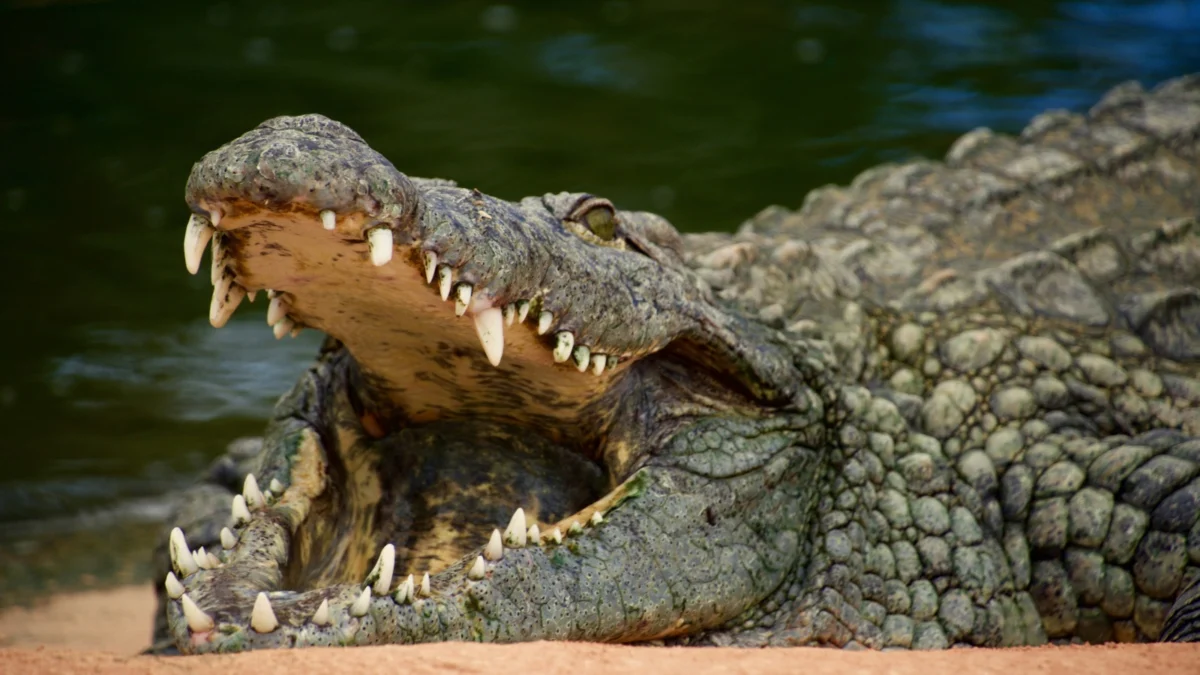
In the annals of paleontological history, few discoveries challenge our fundamental understanding of evolutionary trajectories quite like Labrujasuchus expectatus. Unearthed in the sun-baked, red-rock strata of New Mexico’s Ghost Ranch, this 212-million-year-old specimen—colloquially dubbed the "Witch Croc"—has shattered the conventional mold of what a crocodilian relative should look like. While we associate modern crocodiles with low-slung, quadrupedal, semi-aquatic lifestyles, Labrujasuchus stood upright on two legs, possessed a toothless beak, and roamed the terrestrial landscapes of the Triassic period with an agility that rivaled the dinosaurs.
Main Facts: A Taxonomic Enigma
The discovery of Labrujasuchus expectatus represents a monumental shift in how researchers interpret the Pseudosuchia lineage—the group of archosaurs that includes modern crocodiles and their extinct relatives. Unlike their modern descendants, who occupy the apex predator niche in aquatic ecosystems, the "Witch Croc" was a terrestrial specialist.
Key features of this extraordinary creature include:
- Bipedal Locomotion: The skeletal structure indicates that Labrujasuchus moved exclusively on its hind limbs, a trait previously thought to be the exclusive domain of dinosaurian ancestors.
- Edentulous Beak: Perhaps its most startling feature is the absence of teeth. The creature sported a hardened, keratinous beak, suggesting a specialized diet that differed significantly from the predatory, carnivore-heavy lifestyle of its peers.
- Vestigial Forelimbs: The forelimbs of the Labrujasuchus were remarkably small, suggesting that they were likely not used for locomotion or heavy-duty grasping, further reinforcing the similarity between this creature and later, ostrich-like theropods.
The Chronology of a Discovery
The story of Labrujasuchus begins millions of years ago, during the late Triassic period, a time when the supercontinent Pangea was beginning to show the first signs of tectonic fracturing. The environment of Ghost Ranch was vastly different from the arid desert we see today; it was a lush, vibrant landscape teeming with life, serving as a cradle for the early evolution of archosaurs.
For decades, paleontologists have combed the Chinle Formation at Ghost Ranch, an area famous for its abundance of Coelophysis fossils. However, it was not until recent field expeditions that the specific remains of Labrujasuchus were identified. The process of excavation was delicate, requiring months of careful matrix removal in laboratory settings to ensure the fragile, toothless beak and the slender, bipedal leg bones remained intact.
The name itself serves as a historical bridge. "Labrujasuchus" is a portmanteau of the Greek souchos (crocodile) and bruja (Spanish for "witch"). This pays homage to the local name for Ghost Ranch, El Rancho de los Brujos (Ranch of the Witches). The species epithet, expectatus, reflects the scientific community’s long-held suspicion that a "missing link" existed to bridge the morphological gap between two previously known, less specialized species within the Poposauridae family.
Convergent Evolution: Nature’s Repeated Blueprint
The most profound implication of the Labrujasuchus discovery is the evidence it provides for convergent evolution. Convergent evolution occurs when unrelated species evolve similar traits or body plans independently, usually as a response to similar ecological pressures or niches.
Labrujasuchus bears a striking resemblance to the fast-running, ostrich-like dinosaurs (ornithomimids) that would not appear on Earth for another 100 million years. This "repetition" of the bipedal, long-legged, toothless design suggests that there is a highly efficient "blueprint" for a terrestrial, fast-moving vertebrate. Whether a creature is a crocodile relative or a dinosaur, nature appears to have converged on the same structural solution for survival in open, terrestrial environments.
The Evolutionary "Path Well-Trod"
Dr. Alan Turner, lead author of the study from Stony Brook University, highlights the significance of this trajectory: "Bipedalism is certainly a unique path for crocodile relatives to take, but it’s a path well-trod by dinosaurs and later birds. It obviously worked for these animals. The fact that this ancient crocodile relative adopted this form long before the rise of the most famous bipedal dinosaurs suggests that the niche for a terrestrial, fast-moving, non-predatory archosaur was open and lucrative for millions of years."
Implications for Paleontology
The existence of Labrujasuchus forces a re-evaluation of the "Crocodilian" identity. It serves as a stark reminder that the modern crocodile is merely the survivor of a once-diverse and morphologically experimental group. In the Triassic, the "Crocodile-line" archosaurs (Pseudosuchians) were arguably more diverse than the "Bird-line" archosaurs (Dinosaurs).
- The Bipedal Paradigm: Paleontologists must now account for the fact that bipedalism was not an evolutionary novelty unique to the dinosaur lineage.
- Dietary Diversity: The discovery of a toothless, beak-bearing crocodilian suggests a potential move toward herbivory or specialized omnivory, which contrasts sharply with the generalist predatory nature of extant crocodilians.
- Environmental Adaptations: The anatomy of Labrujasuchus suggests a creature capable of significant speed, likely used to escape the larger, more aggressive predators of the late Triassic.
Official Responses and Scientific Consensus
The formal publication of the findings in the Taylor & Francis Group journals has sparked a wave of enthusiasm within the scientific community. Peers have praised the study for its meticulous reconstruction of the specimen, which relies on high-resolution CT scanning to visualize the internal structures of the skull.
Dr. Turner and his team emphasize that while the fossil is a single individual, its diagnostic features are robust enough to confidently classify it within the Poposauridae clade. "We are not just looking at a weird crocodile," Dr. Turner noted during a press briefing. "We are looking at a masterclass in adaptation. Labrujasuchus proves that evolution is not a straight line toward a specific end goal, but a series of opportunistic experiments."
The Future of Fossil Engagement
While the Labrujasuchus discovery marks a high point for academic research, it also highlights the public’s enduring fascination with the deep past. As paleontology continues to unearth these bizarre specimens, the bridge between scientific research and public interest grows stronger.
For those eager to engage with these prehistoric wonders, the upcoming Pokemon Fossil Museum exhibition in Chicago serves as a unique cultural phenomenon. By juxtaposing real-world fossils—such as those of the early archosaurs—with the fictional creatures of the Pokémon franchise, the exhibit aims to inspire the next generation of paleontologists. It underscores a fundamental truth: whether in fiction or in the fossil record, our imagination is always sparked by the "bizarre" and the "unexpected."
Conclusion
The "Witch Croc" of Ghost Ranch is more than just a peculiar skeleton in a museum drawer. It is a testament to the sheer, chaotic creativity of evolution. Labrujasuchus expectatus reminds us that the history of life on Earth is not merely a chronicle of winners and losers, but a tapestry of strange, fleeting, and highly successful experiments. As we continue to study the arid, wind-swept mesas of New Mexico, we can only wonder what other "witches" remain buried beneath the earth, waiting to challenge our perceptions of the ancient world once more.












No comments yet. Be the first to join the conversation!