

By Global Affairs Correspondent
The geopolitical landscape of the Indo-Pacific has been thrown into a state of heightened uncertainty following recent remarks by U.S. President Donald Trump, who publicly characterized arms sales to Taiwan as a "very good negotiating chip" in his administration’s broader strategy with Beijing. This shift toward a transactional foreign policy—one that treats a decades-old security partnership as a bargaining tool—has sparked profound anxiety in Taipei and drawn sharp rebukes from regional security experts.
The comments, delivered in a Fox News interview with Bret Baier immediately following the President’s high-stakes summit with Chinese leader Xi Jinping, have effectively punctured the long-standing assumption that U.S. support for Taiwan is immutable. As the U.S. moves to prioritize economic outcomes and power-brokering with China, the island democracy finds itself caught in the crosshairs of a new, unpredictable era of international relations.
The Core Conflict: Security as a Commodity
At the heart of the current tension lies a fundamental shift in how the Trump administration views the U.S.-Taiwan relationship. While the U.S. is legally bound by the Taiwan Relations Act to provide the island with the means to defend itself, President Trump has introduced a conditional framework that links these defense requirements to his overarching trade and geopolitical agenda with Beijing.
When questioned about a stalled $14 billion arms package intended for Taiwan, the President was unequivocal. "I’m holding that in abeyance and it depends on China," Trump stated. "It’s a very good negotiating chip for us, frankly. It’s a lot of weapons."
This rhetoric marks a departure from the traditional U.S. "strategic ambiguity" policy. By openly signaling that the delivery of defensive weaponry is contingent upon concessions from the Chinese Communist Party—whether those involve favorable trade terms or diplomatic pressure on third-party actors like Iran—the administration has signaled that Taiwan’s security is no longer an absolute priority, but rather a variable in a larger equation.
A Chronology of Escalating Tensions
The current diplomatic impasse follows a series of rapid developments that have strained the Washington-Beijing-Taipei triangle:
- Late 2025: The U.S. Congress approves an $11 billion arms sale to Taiwan. Beijing responds with an unprecedented show of force, conducting live-fire military exercises that effectively encircled the island, signaling a new level of military posturing.
- The Xi-Trump Summit: During the most recent meeting between the two leaders, President Xi Jinping reportedly labeled Taiwan "the most important issue in China-U.S. relations," warning of "clashes and even conflicts" should the U.S. continue to bolster the island’s defense capabilities.
- Post-Summit Interview: Immediately following his return from Beijing, President Trump utilized his Fox News appearance to reframe the U.S. position, describing the arms sales as a bargaining tool and demanding that the island’s microchip manufacturing base be relocated to the American mainland.
- Ongoing Legislative Gridlock: A $14 billion military aid package remains in limbo, with the White House citing the need to leverage the deal against Beijing’s future behavior.
The Microchip Ultimatum: Economic Coercion
Beyond the sphere of military hardware, President Trump has turned his attention to Taiwan’s most critical strategic asset: its semiconductor industry. Home to TSMC, which produces over 90% of the world’s most advanced chips, Taiwan is the undisputed hub of the global technology economy.
Trump has made no secret of his desire to "onshore" this capacity, bluntly telling Fox News, "I’d like to see everybody making chips over in Taiwan come into America." He further intensified his rhetoric by reviving past claims that Taiwan "stole" the semiconductor industry from the U.S. decades ago.
This pressure is yielding tangible, if forced, results. TSMC has already committed to a $165 billion investment in an Arizona mega-campus. Furthermore, as part of a sweeping trade agreement finalized earlier this year, the Taiwanese government pledged a total of $250 billion in investment toward the U.S. microchip sector. Despite these massive capital injections, the President’s continued criticism suggests that for the current administration, no amount of investment is sufficient to offset his desire for total domestic control over the supply chain.
Official Responses and Diplomatic Damage Control
The reaction from Taipei has been one of disciplined, albeit strained, damage control. Officials in the presidential office have worked to reassure the public that the core tenets of U.S. policy remain intact, even as they navigate the President’s provocative statements.
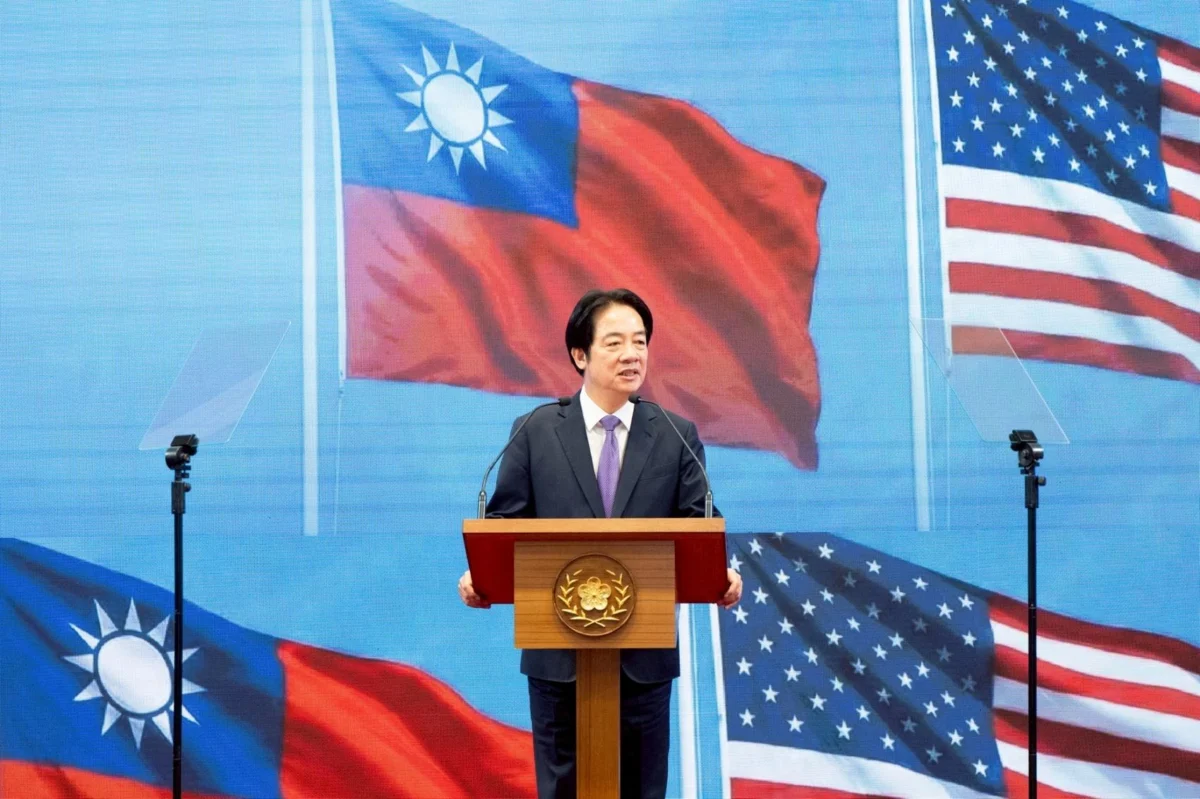
"The Republic of China is a sovereign, independent, democratic country; this is self-evident," stated Presidential Office Spokesperson Karen Kuo. She emphasized that the island remains grateful for U.S. support while reminding stakeholders that arms sales are not a discretionary luxury but a mandate under existing U.S. law.
However, the administration’s focus has clearly shifted. The lack of interaction between President Lai Ching-te and the Trump White House—contrasted with the more robust diplomatic signaling seen in previous years—has led observers to suggest a cooling of ties. Trump himself fueled these concerns by suggesting that the current Taiwanese leadership is pushing for independence to "get into a war" and that he has no interest in "fighting a war thousands of miles away."
Implications: The "Nightmare Scenario"
The implications of this shift are profound. William Yang, a senior analyst for the International Crisis Group, characterizes the current situation as one of Taiwan’s "nightmare scenarios." For decades, Taiwan’s primary fear was that it would be excluded from the table during high-level U.S.-China negotiations; now, the fear is that the island is being served "on the menu."
Strategic Vulnerability
If the U.S. begins to treat defense sales as a bargaining chip, the deterrent effect of those sales is significantly weakened. Beijing may conclude that if they apply enough pressure—or offer enough economic concessions—they can eventually force the U.S. to abandon its arms supply commitments entirely.
The Erosion of Credibility
The pivot toward transactionalism threatens to undermine the credibility of the U.S. as a security guarantor in the Indo-Pacific. If allies in Japan, South Korea, and the Philippines perceive that U.S. security guarantees are subject to the whim of a negotiating cycle, they may feel compelled to seek their own independent deterrents, potentially triggering a regional arms race.
Domestic Stability in Taiwan
Domestically, the rhetoric from Washington creates a volatile environment. President Lai is now forced to balance the need for U.S. support against the reality that his strongest ally is openly questioning his policy direction. The narrative pushed by Beijing—that the current administration in Taipei is a reckless actor—is being inadvertently bolstered by the U.S. President’s own critiques.
Conclusion: The Path Forward
As the international community watches these developments, the consensus among analysts is that the era of predictable, value-based alliances may be giving way to a more fluid, dangerous form of realpolitik. Wen-Ti Sung, a fellow at the Atlantic Council, captured the sentiment of many observers: "Trump’s rhetoric is being turned up to the max, but what matters is the substance."
Whether this is merely a negotiating tactic designed to extract maximum value from Beijing or a fundamental pivot toward a "Fortress America" isolationism remains to be seen. What is clear, however, is that Taiwan is currently navigating its most precarious period in recent history. As the island holds its collective breath, the global order waits to see if the U.S. will uphold its historical commitment to a democratic partner or sacrifice that partnership on the altar of a "very good" deal.












No comments yet. Be the first to join the conversation!