Layla Zulfa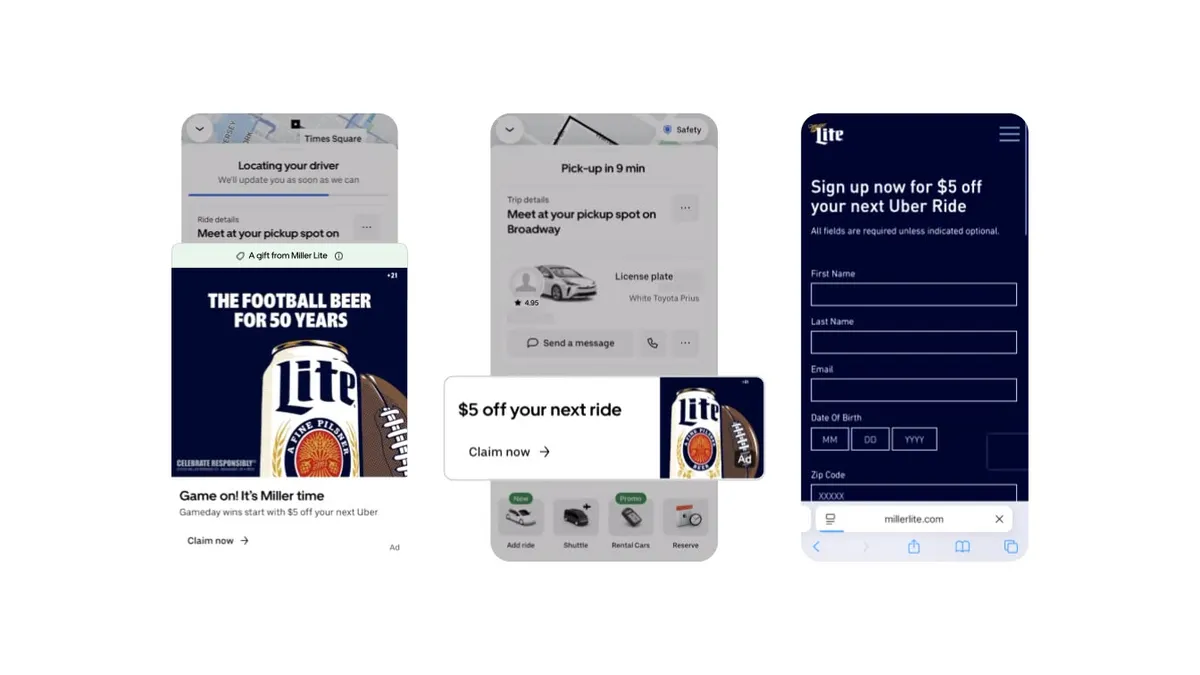
By Industry Desk
Published June 18, 2026
Uber, the global titan of rideshare and food delivery, is aggressively expanding its advertising ecosystem. With its ad business eclipsing the $2 billion annual revenue mark in 2025, the company is moving beyond simple brand awareness to offer high-intent, performance-driven formats. The latest suite of tools—including destination-based offers and app-wide takeovers—represents a sophisticated attempt to monetize the “captive audience” of riders and hungry diners while providing marketers with granular, measurable data.
Main Facts: The New Ad Architecture
The latest rollout from Uber’s advertising arm is defined by a focus on "high-intent" engagement. Recognizing that the vast majority of its users—roughly 81%—are open to receiving offers during their transit or browsing time, Uber is integrating advertisements into the moments where consumers are most primed to make a decision.
The new formats include:
- Destination Offers: Leveraging data that indicates over 50% of Uber users are willing to deviate from their path to redeem a compelling deal, this format connects riders with specific in-store promotions. Success is measured through verified arrivals and actual in-store transactions, bridging the gap between digital exposure and physical foot traffic.
- Ride Offers on Journey: A mid-ride ad format designed to drive immediate click-throughs. By presenting users with actionable offers while they are already in the vehicle, Uber is tapping into the "downtime" of the transit experience. Early testing by major brands, including Molson Coors (promoting Miller Lite), showed that these creative executions yielded a click-through rate nearly 45% higher than standard, non-offer advertisements.
- Homescreen Ride Offers: These ads appear at the start of the user journey, combining branded messaging with an immediate incentive, such as a discount on the ride itself.
- Uber Eats Enhancements: The delivery platform is seeing a makeover in ad visibility, featuring Brand Takeovers (pop-ups upon app launch), Item Showcase (interactive carousels allowing direct-to-cart additions), and Offer Spotlight (full-screen, algorithmically targeted promotions).
Chronology: Building a Marketing Powerhouse
Uber’s evolution from a transportation utility to an advertising giant has been swift and methodical:
- 2022: The Launch. Uber officially entered the advertising space, capitalizing on the vast amount of first-party data it holds regarding user movement, spending habits, and location history.
- 2024: Programmatic Integration. The company opened its “Journey Ads” to programmatic buyers, allowing advertisers to integrate Uber’s unique rider data into their existing digital buying stacks.
- April 2026: The Instacart Synergy. Uber announced a deep integration with Instacart’s "Carrot Ads" platform. This move signaled a major play for Consumer Packaged Goods (CPG) marketers, who now have a consolidated way to reach consumers across both grocery delivery and rideshare environments.
- June 2026: Performance-Driven Expansion. The launch of the current suite of formats marks the transition from broad-reach impressions to outcome-based marketing, where every ad is designed to be tracked through to the point of sale or physical store arrival.
Supporting Data: Why It Matters
The rationale behind these developments is grounded in consumer behavior data. Uber’s research indicates that discounts are not just tolerated—they are actively desired. Approximately 64% of riders report that discounts improve their sentiment toward a brand, and 65% find that these offers effectively capture their attention during their ride.
Financially, the timing is optimal. Uber reported Q1 2026 revenue of $13.2 billion, representing a 14% year-over-year increase. More importantly, the volume of trips surged 20% to 3.6 billion, fueled by a 17% growth in monthly active users. This massive influx of traffic creates a high-frequency digital environment that is increasingly difficult for advertisers to ignore. By shifting to performance-based ads, Uber is not just selling "eyeballs"; it is selling a closed-loop system where a brand can trace a customer from an app interaction to a physical store purchase.
Official Responses and Strategic Vision
While Uber has kept its exact internal roadmaps quiet, industry analysts observe that the company is effectively positioning itself as a "retail media network" in the real world. By leveraging the physical footprint of its drivers and the digital habits of its Eats users, Uber is positioning its platform as a necessary component of any omnichannel marketing strategy.

"The goal is to eliminate the friction between discovery and conversion," says one industry observer familiar with the product launch. "When a rider is on their way to a destination, they are in a unique state of mind—they are ready to move, ready to buy, and ready to engage. Uber is simply capitalizing on that transitionary period."
Implications: The Future of Real-World Marketing
The implications of this move are significant for both the advertising industry and the privacy landscape.
For Advertisers
The shift toward verified arrivals and in-store activity tracking provides a solution to one of the industry’s most persistent headaches: proving the ROI of digital advertising on physical retail. By integrating with point-of-sale data and location services, Uber is offering a level of attribution that traditional out-of-home advertising simply cannot match. For CPG brands, the ability to push an item directly into a digital shopping cart while the user is already hungry creates a seamless path to purchase that minimizes the time between intent and fulfillment.
For Consumer Privacy
As Uber builds a more robust data profile to serve these ads, it faces the ongoing challenge of balancing personalization with privacy. The company relies heavily on the trust of its users, and the effectiveness of its advertising platform depends on its ability to leverage data without overstepping boundaries. Uber has stated that its models are designed to maximize relevance, but the proliferation of "offer-based" tracking will likely invite scrutiny from regulators who are increasingly wary of how movement data is utilized for commercial gain.

For the Rideshare Economy
Uber’s pivot to advertising suggests that the future of the platform is not just in moving people from point A to point B, but in becoming a lifestyle portal. By turning the "downtime" of a ride into an active shopping experience, Uber is creating a secondary revenue stream that is high-margin and highly scalable. This provides a buffer against the volatility of the core transportation market.
As we look toward the remainder of 2026, the question is not whether Uber will continue to lean into advertising, but how much of the user experience will be transformed into a marketing surface. For the consumer, this means a more personalized, discount-rich experience; for the marketer, it means a powerful new channel to drive real-world impact. As the platform matures, the integration of third-party networks like Instacart’s Carrot Ads suggests that Uber is building a walled garden that is effectively becoming a critical piece of the modern retail infrastructure.

 Laily UPN
 Ammar Sabilarrohman