

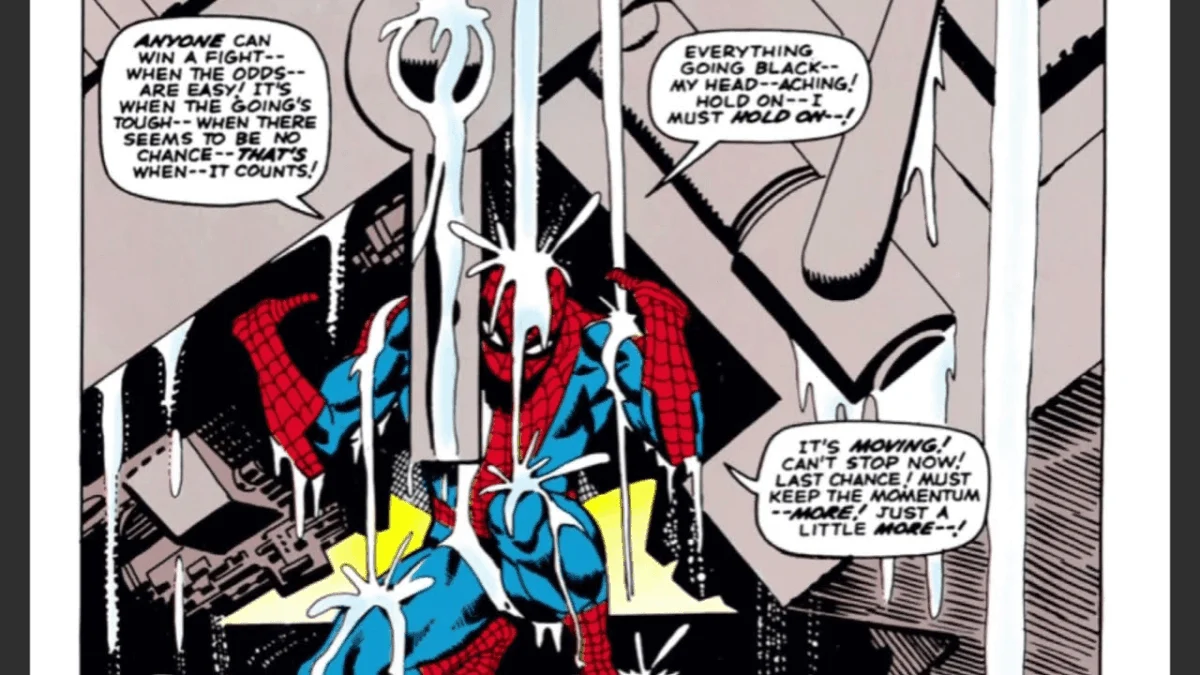
The intersection of comic book fantasy and empirical science has long been a subject of fascination for both researchers and enthusiasts. At Fan Expo Denver 2026, a panel of experts took to the stage to address the ultimate "what if" scenario: Could the spectacular abilities of Peter Parker—the Amazing Spider-Man—actually exist within the constraints of our physical world?
While the session was momentarily hampered by the irony of "Parker Luck"—a malfunctioning audiovisual system that left the panel without their prepared PowerPoint—the experts proceeded with the kind of ingenuity the wall-crawler himself would admire. By the time a replacement monitor was sourced, the discussion had already captured the audience’s imagination, proving that the Marvel Universe sits firmly at the crossroads of rigorous scientific theory and imaginative storytelling.
The Foundation of Arachnid Strength
The panel began by dissecting the most iconic of Spider-Man’s traits: his superhuman strength. In the comics and films, Peter Parker is frequently depicted lifting heavy machinery, battling foes with vastly superior mass, and enduring physical impacts that would be fatal to a conventional human.

The scientists on the panel offered a staggering estimation: for Spider-Man to perform the feats witnessed in his most high-octane battles, he would need to be capable of lifting approximately 20,000 times his own body weight. This calculation provides a scientific explanation for a recurring motif in the comics: Spider-Man "pulling his punches." The experts noted that if Parker were to strike a human being with his full, unbridled force, the results would be catastrophic.
Furthermore, the panel posited that such strength necessitates a radical change in skeletal and muscular density. To withstand the G-forces of his web-swinging maneuvers and the recoil of his own physical output, Peter’s bones would need to be significantly more robust than those of a typical human, likely bordering on the density of advanced industrial alloys. This physiological adaptation explains not only his offensive capabilities but also his ability to pull heavy objects—or catch falling vehicles—without suffering the musculoskeletal injuries that would plague a normal person attempting such a feat.
Genetic Anomalies and Horizontal Gene Transfer
One of the most pressing questions in the Spider-Man mythos remains the mechanism behind his transformation. How does a single bite from a radioactive arachnid fundamentally rewrite a human’s genetic code?
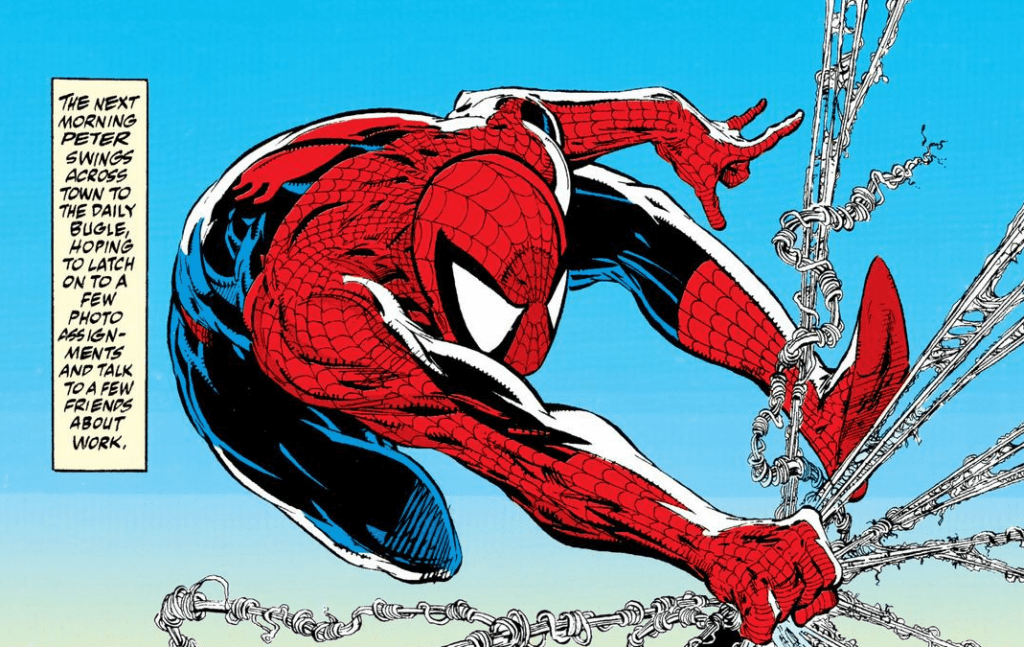
The panel moved away from the traditional "radiation-as-magic" trope, instead exploring the concept of Horizontal Gene Transfer (HGT). HGT is a biological process in which an organism acquires genetic material from another organism without direct reproduction. While the panel acknowledged that being bitten by an irradiated spider would, in reality, likely result in severe medical complications rather than superpowers, they argued that HGT provides the most plausible scientific framework for the phenomenon.
In this model, the radiation acting upon the spider served as a catalyst, facilitating the transfer of specialized spider DNA into Peter’s own biological architecture. This echoes the original concepts introduced by Stan Lee and Steve Ditko, who utilized the "atomic age" anxieties of the 1960s to bridge the gap between biological potential and science fiction.
The Chemistry of Web-Slinging
Perhaps the most debated aspect of Spider-Man’s arsenal is his synthetic webbing. Unlike the organic silk of spiders, Peter Parker famously synthesizes his own web fluid in a home laboratory.

The panel compared the structural properties of this substance to carbon nanotubes. These microscopic structures exhibit extraordinary tensile strength, making them a cornerstone of modern aerospace engineering. The experts hypothesized that the webbing’s durability might be enhanced by its unique ability to interact with the radiation present in Parker’s body—a bold theory that suggests the webs are not just chemically superior but potentially energized by the host’s own genetic anomaly.
The discussion also highlighted real-world advancements in biomimicry. The panelists pointed to ongoing research into genetically engineered goats, whose milk contains the proteins necessary to produce spider silk. This parallel serves to validate the idea that the "mad science" of Peter Parker is moving closer to reality with every passing year.
The Physics of Wall-Crawling: Van der Waals Forces
For decades, audiences have debated how Spider-Man adheres to vertical surfaces. While the Sam Raimi film trilogy famously posited that Peter grew microscopic hooks on his fingertips, the panel firmly rejected this as a biological impossibility.

Instead, they championed the theory of Van der Waals forces. These are the electrostatic attractions between molecules that occur when they are in extremely close proximity. The panel used the gecko as a primary example—a creature that utilizes these forces to navigate sheer surfaces with ease. By manipulating these forces, Peter Parker would effectively be able to create a molecular bond with any surface he touches, regardless of texture. This theory aligns with the character’s portrayal in more recent adaptations, such as the Andrew Garfield and Tom Holland films, which emphasize the scientific ingenuity required to master these forces rather than treating them as a simple "mutation."
Chronology of the Scientific Inquiry
The study of "The Science of Spider-Man" has evolved in parallel with the character’s longevity.
- 1962: Amazing Fantasy #15 debuts, establishing the radioactive spider bite as the origin point.
- 1990s–2000s: The rise of materials science, specifically nanotechnology and carbon fiber research, begins to provide real-world data to support the theory of high-tensile web fluids.
- 2010s: The emergence of gene-editing technologies (such as CRISPR) shifts the conversation toward horizontal gene transfer as a legitimate biological pathway.
- 2026: The Fan Expo Denver panel synthesizes these decades of research, moving the conversation from "is it possible" to "how does it work within our current understanding of physics?"
Implications for Future Research
The panel concluded with a poignant observation: the reason Spider-Man remains one of the most compelling figures in pop culture is that he is, at his core, a scientist. His struggle is not just against crime, but against the limitations of his own equipment and knowledge.

The implications of this discussion extend far beyond the convention floor. By analyzing the "impossible," researchers are often pushed to think about material science, biomechanics, and genetics in new, creative ways. If the strength-to-weight ratios observed in arachnids can be replicated in synthetic materials, or if Van der Waals forces can be harnessed for human-scale climbing, the impact on construction, medicine, and rescue operations could be profound.
The "Science of Spider-Man" session served as a vital reminder that while the Marvel Universe may be defined by its fantastic elements, its roots are deeply embedded in the pursuit of knowledge. Whether or not we ever see a real-life web-slinger, the questions posed by Peter Parker’s existence continue to drive scientific inquiry and inspire the next generation of inventors. As the panelists noted, science is, at its heart, the process of forming a theory, testing it, and—when the television inevitably breaks—finding a way to keep going.












No comments yet. Be the first to join the conversation!