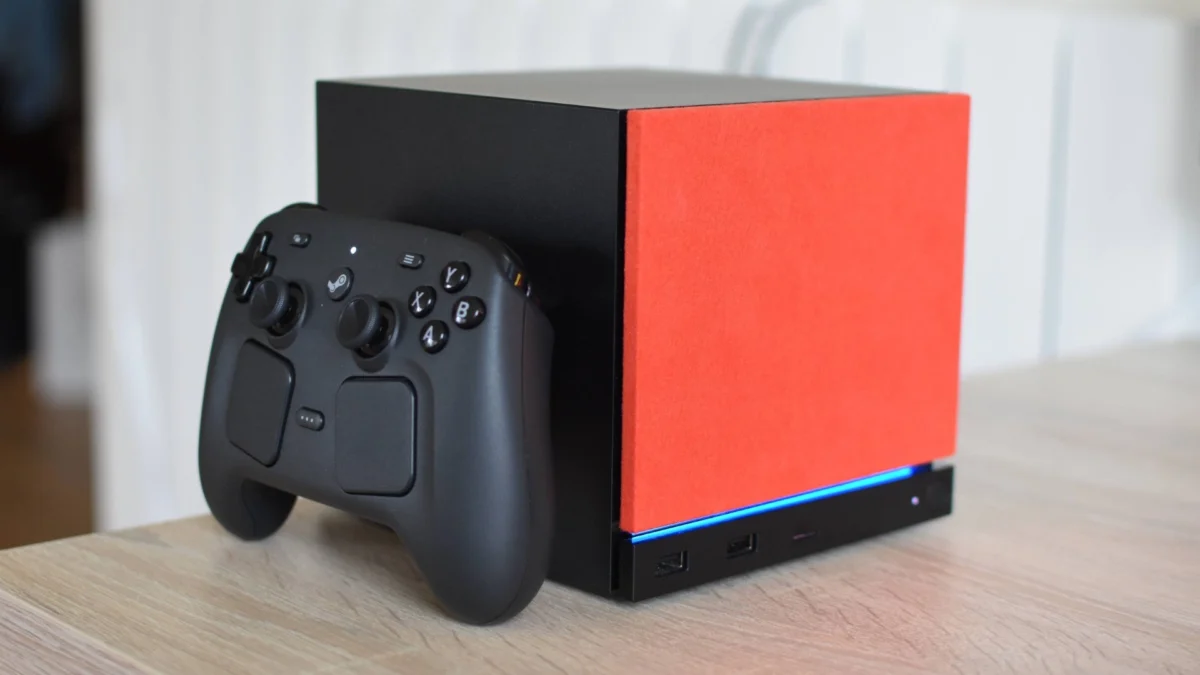
Seattle, WA – Valve Corporation has officially announced the pricing and initial availability strategy for its highly anticipated Steam Machine, a dedicated living room PC designed to bridge the gap between traditional consoles and high-end desktop gaming. Positioned as the desktop counterpart to the wildly successful Steam Deck, the new hardware enters a challenging market with a premium price tag and an exceptionally constrained launch.
The Steam Machine will initially be offered in two configurations: a 512GB model priced at $1,049 USD / £879 GBP, and a more capacious 2TB version at $1,349 USD / £1,149 GBP. Access to these units will be governed by a unique, randomly-ordered waitlist system, with registration commencing today. This lottery-based approach, Valve states, is a direct measure to combat scalping and ensure a fairer distribution among eager consumers.
Early critical reception, while acknowledging the device’s innovative design and form factor, has largely flagged the price point as a significant hurdle, placing it at a disadvantage when directly compared to the more established and often more powerful PlayStation 5 and Xbox Series X consoles. Valve has attributed the elevated costs and severe stock limitations to unprecedented shifts in the global hardware market, specifically citing soaring RAM and storage prices driven by the insatiable demand from AI hyperscalers.
Main Facts: A Premium Entry into the Living Room
Valve’s re-entry into the dedicated living room PC market with the Steam Machine represents a bold, albeit constrained, move. The device is designed to offer a seamless, console-like experience for PC gaming directly on a television, leveraging Valve’s extensive Steam library and the Linux-based SteamOS.
The core announcement revolves around the immediate availability window and pricing structure. Potential buyers can register for the reservation queue starting today on the official Valve website, with a strict deadline of June 25th at 10 AM Pacific Time. Following this, Valve will conduct a randomized lottery to determine the order of the reservation queue. The first batch of purchase emails is slated for distribution on Monday, June 29th, with Valve expressing an ambitious goal to clear the entire queue by the end of the year. This phased rollout underscores the extreme scarcity of the initial production run.
The two main configurations are:
- Steam Machine 512GB: Priced at $1,049 USD / £879 GBP.
- Steam Machine 2TB: Priced at $1,349 USD / £1,149 GBP.
Both models are also available in bundles that include the Steam Controller, offering a slight discount compared to purchasing the controller separately. For instance, the 512GB bundle will cost $1,128 USD / £938 GBP, while the 2TB bundle is priced at $1,428 USD / £1,208 GBP. International pricing has also been confirmed, with the 512GB model starting at €1,039 EUR, C$1,509 CAD, A$1,609 AUD, and zŁ4,389 PLN. The 2TB model escalates to €1,359 EUR, C$1,919 CAD, A$2,109 AUD, and zŁ5,739 PLN. These figures firmly place the Steam Machine in the premium segment of the gaming hardware market, significantly above the launch prices of current-generation consoles.
Valve’s decision to implement a lottery system reflects a growing trend among hardware manufacturers dealing with high demand and limited supply. This method aims to mitigate the impact of opportunistic resellers and bots, which have plagued previous high-profile product launches, from graphics cards to the PlayStation 5. By managing expectations and attempting to create a level playing field, Valve hopes to foster goodwill among its dedicated user base, even as the overall availability remains a bottleneck.
Chronology: A Long Road to the Living Room
The journey of the Steam Machine concept has been protracted and marked by both ambitious vision and significant setbacks. Its current iteration represents a phoenix-like resurgence for an idea that Valve first introduced almost a decade ago.
A Long-Awaited Return: The Genesis of Steam Machines
The initial concept of the Steam Machine was first unveiled by Valve in 2013. The vision was revolutionary: to bring the vastness of PC gaming, then largely confined to desks and dedicated rigs, into the comfort of the living room. Valve proposed a new ecosystem built around SteamOS, a Linux-based operating system optimized for gaming, and the Steam Controller, an innovative gamepad designed to offer PC-like precision from a couch. Numerous hardware partners, including Alienware, Falcon Northwest, and Syber, were announced to build a variety of "Steam Machines" – essentially pre-built gaming PCs running SteamOS.
However, the initial rollout faced considerable challenges. SteamOS was in its infancy, lacking widespread game compatibility and the polish of established operating systems. The Steam Controller, while innovative, had a steep learning curve. Crucially, the PC hardware market itself was evolving rapidly, and the "console-killer" narrative struggled to gain traction against the entrenched PlayStation and Xbox ecosystems, which offered simpler, more affordable, and more optimized gaming experiences. By 2018, Valve had largely phased out its promotion of the original Steam Machines, and the project was widely considered to have failed. Many believed Valve’s ambitious living room PC dream had come to an end.
The Rise of the Steam Deck and Renewed Hope
The landscape dramatically shifted with the unexpected success of the Steam Deck, launched in early 2022. This handheld gaming PC, also running SteamOS (specifically, a custom version called SteamOS 3.0 based on Arch Linux), proved to be a critical and commercial triumph. Its portable form factor, compelling price point, and impressive performance for its size resonated deeply with gamers. The Steam Deck effectively demonstrated the viability of SteamOS as a gaming platform and validated Valve’s vision for PC gaming beyond the traditional desktop.
The Steam Deck’s success provided Valve with invaluable lessons in hardware design, supply chain management, and user experience for Linux-based gaming. It also rekindled interest in the dormant living room PC concept. With a more mature SteamOS, a proven hardware design philosophy, and a clearer understanding of what players wanted from a dedicated gaming device, the path was cleared for the Steam Machine’s reintroduction, albeit with a refined focus. This new iteration draws heavily on the architectural and software advancements pioneered by the Steam Deck, aiming to deliver a similarly streamlined PC gaming experience but on a larger, more powerful, and stationary platform.
Pricing Adjustments and Market Realities
Valve’s current pricing strategy for the Steam Machine stands in stark contrast to earlier expectations. The company had previously indicated that its hardware pricing would be "pretty competitive" with equivalent PCs, suggesting a value proposition that would make it an attractive alternative to building a custom rig. Observers initially hoped the Steam Machine could disrupt the console market, offering a unique blend of PC gaming flexibility with a console-like form factor, all powered by a 20-plus-year-old Steam library.
However, Valve has now openly admitted that its original target price is "no longer viable." This drastic revision is attributed to a volatile global hardware market, where component costs and availability have seen unprecedented fluctuations. The company stated that the current Recommended Retail Price (RRP) "reflects the price of the components as we’ve secured them over the past 6 months." This transparency, while appreciated by some, highlights the significant economic pressures impacting the tech industry and directly influencing consumer costs.
Supporting Data: Unpacking the Costs and Constraints
The Steam Machine’s launch is a microcosm of broader trends affecting the technology sector, particularly in the realm of high-performance computing. The announced pricing and availability issues are not arbitrary but are rooted in a complex interplay of supply chain dynamics, burgeoning new markets, and strategic decisions.
Detailed Pricing and Configuration Breakdown
The Steam Machine is presented as a premium gaming device, and its pricing reflects that positioning. The decision to offer 512GB and 2TB storage options caters to different user needs, with the larger capacity appealing to those with extensive game libraries or who prefer to install numerous AAA titles simultaneously.
| Bundle | USD | GBP | EUR | CAD | AUD | PLN |
|---|---|---|---|---|---|---|
| Steam Machine 512GB | $1,049 | £879 | €1,039 | C$1,509 | A$1,609 | zŁ4,389 |
| Steam Machine 512GB + Controller | $1,128 | £938 | €1,108 | C$1,628 | A$1,728 | zŁ4,698 |
| Steam Machine 2TB | $1,349 | £1,149 | €1,359 | C$1,919 | A$2,109 | zŁ5,739 |
| Steam Machine 2TB + Controller | $1,428 | £1,208 | €1,428 | C$2,038 | A$2,228 | zŁ6,048 |
The inclusion of the Steam Controller bundle options suggests Valve’s continued commitment to its unique input device. For users new to the Steam ecosystem or those seeking the "full" Valve living room experience, these bundles offer convenience. However, the additional cost further pushes the overall price point into enthusiast territory. When comparing these prices to current-generation consoles (e.g., PS5 Digital Edition at $399/£389 and PS5 with disc drive at $499/£479, or Xbox Series S at $299/£249 and Xbox Series X at $499/£449), the Steam Machine’s cost is clearly several multiples higher, placing it in a different league entirely.
The Component Conundrum: AI’s Impact on Gaming Hardware
The most significant factor contributing to the Steam Machine’s revised pricing and limited availability, according to Valve, is the dramatic escalation in hardware component costs. Specifically, the company highlights that "RAM and storage costs have rocketed in recent months as AI hyperscalers buy out available supply." This statement points to a seismic shift in the semiconductor market.
AI development, particularly large language models and advanced machine learning, demands colossal amounts of high-bandwidth memory (HBM) and high-speed storage. Companies like Nvidia, AMD, and Intel are heavily investing in AI accelerators, and data centers are rapidly expanding their infrastructure to support these computational demands. This surge in AI-driven demand has created an unprecedented competitive environment for crucial components. Gaming hardware, which also relies on high-performance RAM (like GDDR6 or DDR5) and fast solid-state drives (SSDs), finds itself in direct competition with these multi-billion-dollar AI enterprises. The sheer volume and purchasing power of AI hyperscalers can easily outbid or monopolize supply lines, leaving traditional consumer electronics manufacturers scrambling for components.
Valve’s admission that it "couldn’t source some of our components at all, at any price" is a stark indicator of this market disruption. This isn’t just about higher prices; it’s about outright unavailability for certain critical parts, forcing design changes, delaying production, or pushing up costs for alternative components. This phenomenon has ripple effects across the entire technology supply chain, impacting everything from smartphones to graphics cards, but appears to be particularly acute for memory and storage solutions vital for modern gaming.
The Lottery System Explained
The randomized lottery system for reservations is a direct response to the anticipated high demand and limited supply. Valve’s rationale, as stated in their blog post, is "an effort to improve the purchase experience and limit resellers." This approach has become increasingly common for highly sought-after tech products.
Here’s how it typically works and why Valve has adopted it:
- Registration Window: A specific period during which interested customers can sign up for the opportunity to purchase. This window (ending June 25th) allows Valve to gauge overall interest without overwhelming their servers with simultaneous purchase attempts.
- Randomized Selection: After the window closes, a computer algorithm randomly selects individuals from the pool of registrants. This aims to provide a fair chance to everyone, regardless of how quickly they registered within the window, thereby reducing the advantage of bots or automated purchasing tools.
- Reservation Queue Assignment: Selected individuals are placed into a queue. As units become available, customers at the front of the queue receive an email with a unique link to complete their purchase within a limited timeframe.
- Anti-Reseller Measures: By tying purchases to specific registered accounts and limiting the window for transaction, Valve can better track sales and potentially identify and ban accounts engaged in large-scale reselling. The random order also disincentivizes bots that rely on being first-in-line.
While this system can be frustrating for those who don’t get selected immediately, it is generally perceived as a more equitable method than a first-come, first-served model, especially when supply is severely constrained. It manages expectations and allows Valve to control the flow of sales as production ramps up, aiming to fulfill all reservations by the end of the year.
Official Responses and Critical Reception
Valve’s communication regarding the Steam Machine’s launch has been remarkably candid, directly addressing the difficult decisions forced upon them by market realities. This transparency has been met with understanding from some, but the ultimate impact on consumer perception remains to be seen. Meanwhile, early reviews offer a nuanced perspective on the device’s strengths and weaknesses.
Valve’s Stance on Pricing and Availability
In a comprehensive blog post, Valve explicitly laid out the challenges they faced in bringing the Steam Machine to market. "The firm said that its original target price was ‘no longer viable’ due to hardware pricing and availability, and the RRP ‘reflects the price of the components as we’ve secured them over the past 6 months.’" This statement is a direct acknowledgment of the financial pressures and a defense of the higher price point. By linking the cost directly to component acquisition, Valve attempts to justify the premium, framing it as a necessary evil rather than an opportunistic markup.
Furthermore, the company’s admission of "severely constrained" availability, to the extent that it "couldn’t source some of our components at all, at any price," underscores the depth of the supply chain crisis impacting the project. This level of transparency, while potentially dampening initial enthusiasm, aims to manage consumer expectations and explain the lottery system as a pragmatic solution to a genuine problem. Valve’s commitment to clearing the reservation queue by the end of the year, despite these challenges, suggests a concerted effort to scale production as quickly as possible.
Analyst and Industry Expert Commentary
Industry analysts, while acknowledging the Steam Machine’s innovative premise, are largely viewing its launch with cautious optimism. Many see it as a niche product rather than a mainstream console competitor. "Valve is playing a long game here," noted Sarah Chen, a senior analyst at Tech Insights Group. "The Steam Machine isn’t about immediate market domination; it’s about expanding the Steam ecosystem into the living room with a premium, curated experience. The price point, while high, is understandable given the component shortages, but it definitely shifts the target audience from mass-market console gamers to PC enthusiasts looking for a seamless, couch-friendly setup."
Others emphasize the long-term implications for Valve’s strategy. "The Steam Deck proved that SteamOS and Valve’s hardware expertise could deliver a compelling gaming experience," commented David Jones, an independent games industry consultant. "The Steam Machine extends that vision. Even if initial sales are limited, it establishes a high-performance benchmark for living room PC gaming and reinforces Valve’s commitment to Linux-based gaming, which could have significant implications for the industry down the line, particularly if Microsoft ever falters with Windows gaming." The consensus is that while the launch is fraught with challenges, it solidifies Valve’s position as a serious hardware player, building on the Steam Deck’s foundation.
Unpacking Early Reviewer Consensus
Despite the pricing concerns, early reviews from prominent gaming publications have generally been positive, praising the Steam Machine for its design and its unique position in the market.
Jackie Thomas from IGN, awarding the device an 8 out of 10, highlighted its dual nature: "While it was ‘a bit too expensive to take on the PS5 or the Xbox Series X,’ it was ‘an incredible entry-level gaming PC,’ and ‘still one of the cheapest and almost certainly the easiest way to get into PC gaming right now.’" This assessment points to the Steam Machine’s strength as an accessible gateway to PC gaming, offering a simplified experience without the complexities of building a custom rig. The sleek form factor and integrated SteamOS contribute significantly to this "ease of entry" appeal.
Rock Paper Shotgun’s James Archer described the Steam Machine as "a discreet but quietly capable companion, more at home under a TV than perched on a desk" that is "truly unlike any other PC you could build or buy." Archer’s review emphasizes the device’s unique aesthetic and its tailored experience for the living room environment. However, he also noted that its focus on living-room friendliness meant it didn’t have the advanced performance to compete with high-end desktop gaming PCs, reinforcing its niche appeal. It’s a PC designed for a specific purpose, not a raw power monster.
Eurogamer’s Chris Tapsell offered a more direct comparison to traditional PCs and consoles, concluding that buyers "could probably build a similar or more performant PC for a similar cost, and then be able to upgrade that indefinitely over time." He also judged the device to fall short of the PS5 Pro (a hypothetical benchmark) on cost and performance grounds. Tapsell’s closing remarks, however, capture the essence of the Steam Machine’s unique value: "The wizards at Sony and Microsoft might have the edge when it comes to conjuring pure power from hardware with extraordinary efficiency – and in designing a UI and ecosystem around it, in that order. But with the Steam Machine we have something different: a new perspective, and a new standard for living room sort-of-console design." This perspective suggests the Steam Machine isn’t trying to beat consoles at their own game but rather define a new category – a premium, streamlined, and user-friendly PC gaming experience for the living room.
Implications: The Future of Living Room PC Gaming
The launch of the Steam Machine, with its high price and constrained availability, carries significant implications for Valve, the PC gaming landscape, and the broader console market. It challenges existing paradigms and forces a re-evaluation of what a "gaming console" can be.
A Niche Market or a New Frontier?
The Steam Machine is unlikely to be a mass-market phenomenon in the same vein as the PlayStation or Xbox. Its price point alone ensures that. Instead, it appears poised to carve out a niche for discerning gamers who value the flexibility and vast library of PC gaming but desire the simplicity and form factor of a console for their living room. The target audience is likely existing PC gamers who want to extend their Steam library to a more casual, couch-based setting without the complexities of a full desktop setup, or perhaps new PC gamers looking for a highly curated "entry-level" experience that feels more accessible than building a custom rig.
The Steam Machine’s greatest strength lies in its access to the entire Steam ecosystem, including a two-decade-old library of games, many of which are unavailable on traditional consoles. Furthermore, the openness of SteamOS, while less polished than proprietary console interfaces, offers a degree of flexibility that dedicated consoles cannot match. This includes potential for emulation, broader peripheral support, and customization, appealing to a segment of the gaming community that values versatility.
Impact on Valve’s Ecosystem
For Valve, the Steam Machine represents a strategic expansion of its hardware ambitions beyond the Steam Deck. It solidifies Valve’s position as a key player in the hardware space, demonstrating its commitment to its own vision of PC gaming. The Steam Machine acts as a flagship for SteamOS, showcasing its capabilities on a more powerful, stationary platform. This helps to further develop and refine SteamOS, benefiting both the Steam Machine and future iterations of the Steam Deck.
The success of the Steam Machine, even in limited quantities, can generate valuable feedback and drive further innovation in Valve’s hardware and software divisions. It reinforces the company’s ecosystem play, aiming to keep users firmly within the Steam platform across various devices – from handhelds to living room PCs to traditional desktops. It positions Valve not just as a game distributor, but as an end-to-end gaming experience provider.
Competition Landscape
The Steam Machine operates in a complex competitive landscape. While reviewers acknowledge it’s not a direct competitor to the PS5 or Xbox Series X on a pure price-to-performance ratio for new AAA titles, it offers a distinct alternative. Its primary competition might actually come from custom-built small form factor (SFF) PCs, or even existing media center PCs, though the Steam Machine offers a more integrated and user-friendly software experience.
The long-term implications for the console market are subtle. The Steam Machine isn’t expected to steal significant market share from Sony or Microsoft. Instead, it serves as a reminder that the lines between consoles and PCs are increasingly blurring. It pushes the boundaries of what a "console" can be, offering PC flexibility in a console-like package. This could potentially influence future console designs, encouraging more open ecosystems or greater compatibility with existing PC libraries. It also keeps pressure on Microsoft, which is already working to integrate PC gaming more closely with its Xbox ecosystem.
The Challenge of Supply Chains and AI Demand
Ultimately, the Steam Machine’s launch is a potent illustration of the wider economic and technological forces shaping the hardware industry. The "AI boom" is not just a distant tech trend; it’s directly impacting the availability and cost of components for consumer electronics, including gaming devices. Valve’s candid remarks about struggling to source RAM and storage highlight a fundamental shift in market priorities, where the immense capital of AI development can outcompete traditional consumer markets for essential silicon.
This challenge is unlikely to dissipate quickly. As AI continues to evolve and demand for high-performance computing grows, manufacturers of gaming hardware may face ongoing struggles with component pricing and availability. The Steam Machine’s launch serves as a cautionary tale and a blueprint for how companies are adapting – with premium pricing, managed scarcity, and transparent communication – to navigate an increasingly competitive and volatile global supply chain. The future of gaming hardware may hinge not just on innovation, but on the ability to secure the necessary components in a world hungry for AI.