Asep Darmawan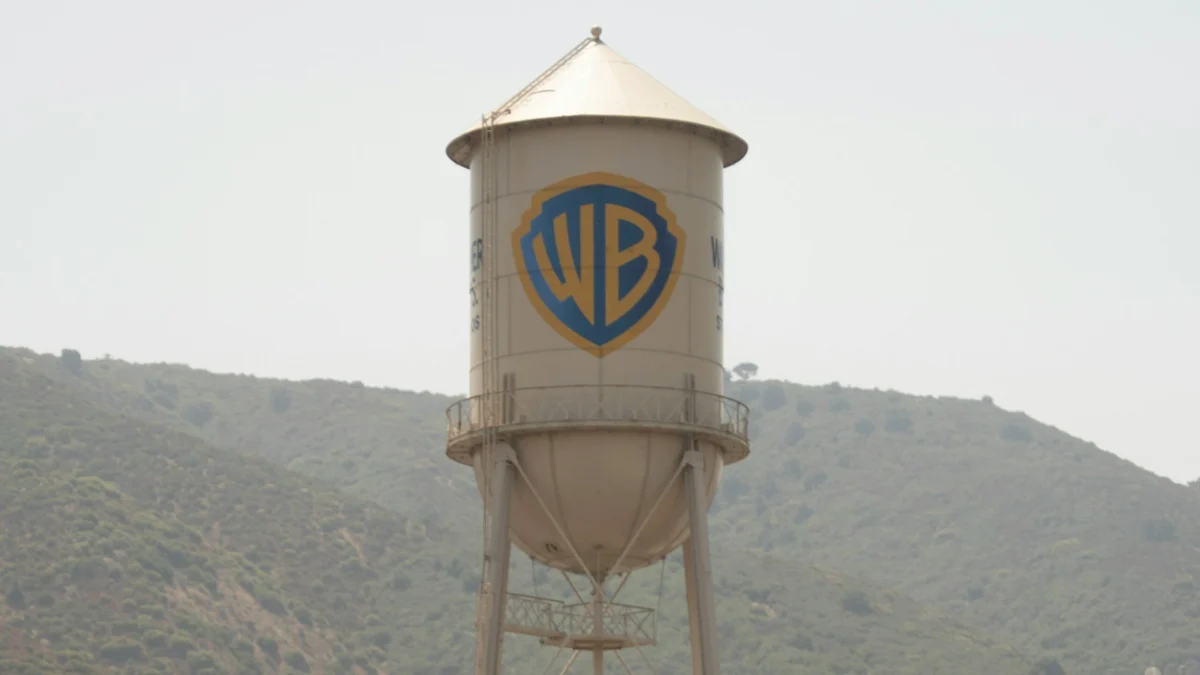
Warner Bros. Discovery (WBD) finds itself at a pivotal juncture. As the media conglomerate navigates a shifting landscape of streaming wars, linear television decline, and a massive corporate merger with Paramount, its internal divisions are under intense scrutiny. Most notably, the company’s gaming division—a sector that was once a crown jewel in its portfolio—has fallen into a period of conspicuous silence, underscored by a sharp 30% revenue decline in the first quarter of 2026.
Despite the company’s assertion that it is “preparing for its next chapter,” the absence of a clear strategy for its interactive entertainment arm has left investors and industry analysts questioning the future of WBD’s gaming assets.
The Financial Reality: A Quarter of Contraction
In its Q1 2026 shareholder letter, Warner Bros. Discovery reported total revenue of $8.8 billion, a 1% year-on-year decrease. While the broader numbers show a company struggling to maintain its footing, the data beneath the surface tells a more concerning story regarding the Studios segment.
The gaming business, which is housed within the broader Studios division, saw revenues plummet by 30%. Perhaps even more telling of the company’s current operational strategy is the 43% reduction in gaming content expenses (excluding foreign exchange impacts). WBD attributed this sharp decline primarily to "lower library revenues."
Essentially, the company is spending significantly less on developing or maintaining its interactive portfolio. While this may provide short-term relief to the balance sheet, industry experts argue it reflects a lack of investment in new, high-impact titles that typically drive growth in the gaming sector.
Chronology of a Shifting Strategy
To understand how WBD reached this point, one must look at the recent timeline of the company’s corporate maneuvers:
- 2025: A Year of "Significance" and Rebuilding: Throughout 2025, WBD described the year as "significant" for the company, yet it offered very little in the way of concrete gaming roadmaps. It was during this time that management began signaling a pivot toward "rebuilding" its pipeline, hinting that previous gaming strategies—perhaps over-leveraging established franchises—were being reconsidered.
- March 2026: The Strategic Pivot: By the start of the current fiscal year, the narrative shifted from "rebuilding" to silence. While management discussed scaling HBO Max and optimizing linear networks, the gaming business was relegated to a mere footnote within the broader "Studios" reporting segment.
- April 2026: The Paramount Acquisition: In a move that dominated headlines, WBD shareholders overwhelmingly approved the $111 billion acquisition of Paramount. This massive consolidation event has effectively shifted the focus of the board and senior leadership toward integration and debt management, leaving non-core or underperforming assets—like the current gaming division—further down the priority list.
The Studios Segment: A Balancing Act
WBD continues to insist that its Studios segment is on track to hit an Adjusted EBITDA target of at least $3 billion. The company groups its games business alongside first-run film, television, and content licensing.
By lumping these disparate sectors together, WBD can mask the volatility of its gaming division. When one sector—such as interactive entertainment—underperforms, the company relies on the steady revenue from its deep content library or successful theatrical releases to balance the scales. However, this lack of transparency regarding gaming performance is increasingly frustrating to institutional investors who view games as a distinct, high-growth asset class that requires different management strategies than film or TV.
Official Responses and Corporate Messaging
The corporate communication coming out of WBD headquarters has been characterized by a notable omission. In the latest shareholder correspondence, the company laid out its primary pillars of focus:
- Scaling HBO Max globally.
- Returning Studios to industry leadership.
- Optimizing Global Linear Networks.
Gaming is conspicuously absent from this list. When pressed for details, the company points to its "diversified portfolio," suggesting that the gaming business is functioning as a support mechanism for the broader studio ecosystem rather than a primary driver of growth.
This is a stark departure from the era of massive successes like Hogwarts Legacy, which showcased the potential for gaming to be a flagship revenue generator for the company. The current tone is one of maintenance rather than expansion, suggesting that management is prioritizing the preservation of existing intellectual property (IP) value over the high-risk, high-reward nature of new game development.
Implications: The Future of WBD Gaming
The implications of this strategy are significant for the gaming industry and the future of WBD’s creative assets.
1. Risk Aversion in Development
The 43% decrease in content spending is the most dangerous metric for the long term. If WBD is not investing in the development of new titles, the pipeline will inevitably run dry. In an industry that relies on a constant churn of new hits to stay relevant, a "library-first" approach is a slow-motion exit strategy.
2. The Impact of the Paramount Merger
The $111 billion merger with Paramount introduces a massive amount of complexity. As the company works to integrate two enormous media entities, non-synergistic assets are often the first to be divested or deprioritized. There is a genuine risk that the gaming division could eventually be treated as a candidate for spin-off or sale, should the leadership team decide that managing a gaming studio is incompatible with the demands of a streamlined media powerhouse.
3. Talent Attrition and Creative Talent
Stability is the currency of game development. When a company stops talking about its gaming arm and cuts budgets by nearly half, it signals to developers, creative leads, and engineers that their work is no longer the priority. This environment often leads to the loss of top-tier talent to competitors who are currently investing heavily in the next generation of interactive media.
4. The Loss of Competitive Edge
WBD owns some of the most valuable IP in the world—including the DC Universe and the Wizarding World. If these properties are not utilized effectively in the gaming space, the company is leaving massive revenue potential on the table. Competitors are increasingly moving toward a model where gaming, film, and TV are integrated into a single, cohesive ecosystem. By retreating, WBD risks losing its foothold in that ecosystem.
Conclusion
Warner Bros. Discovery is currently in a defensive posture. The prioritization of streaming global reach and the massive debt-servicing requirements associated with the Paramount acquisition have pushed the gaming division into the shadows. While the company maintains that it is making "steady progress" toward its EBITDA targets, the data suggests that this progress is being achieved by cutting costs rather than fueling growth.
As the company prepares for its "next chapter," the role of gaming remains the great unknown. For shareholders and consumers alike, the question remains: is WBD truly "rebuilding" its gaming pipeline, or is it slowly winding down one of the most exciting segments of its creative portfolio? Until the company chooses to break its silence and offer a transparent roadmap for its interactive business, the 30% revenue slump will likely serve as the defining metric of its current position.


 Nila Kartika Wati
 Evan Lee Salim