

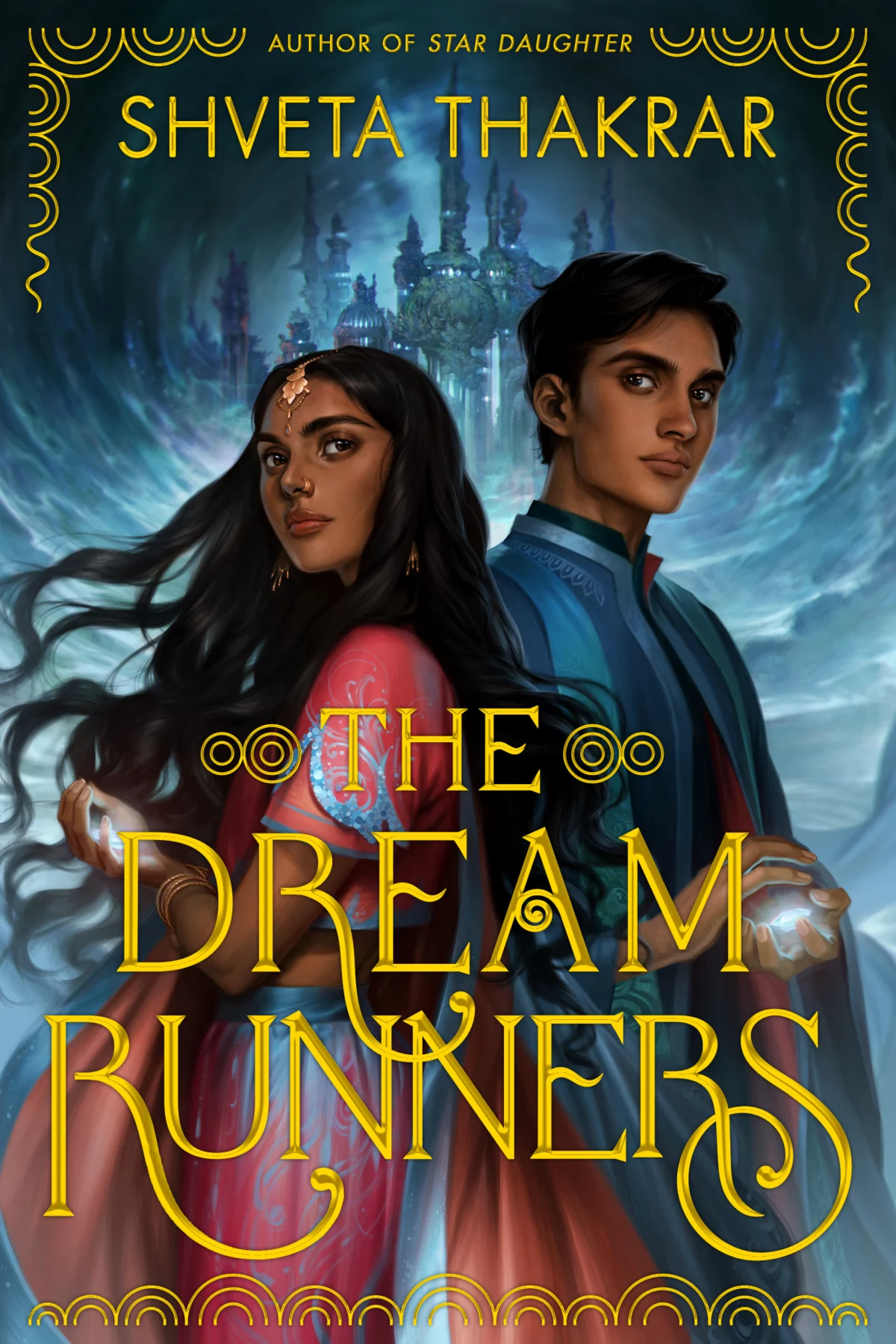
In the landscape of contemporary fantasy literature, the canon has long been dominated by a specific, Eurocentric lineage of folklore—tales of Celtic faeries, British knights, and Narnian gas-lamp whimsy. Yet, for author Shveta Thakrar, the act of storytelling is not merely a creative endeavor; it is an act of cultural reclamation and spiritual survival. By blending the vibrant, intricate tapestries of Indian mythology with the structures of Western fantasy, Thakrar is challenging the "standard" literary narrative and proving that the voices once relegated to the periphery are, in fact, the bedrock of human wonder.
The Architecture of a Storyteller: A Life Defined by Narrative
For Shveta Thakrar, stories were never merely entertainment; they were a foundational reality. Raised in a household where the aromatic, comforting scents of Gujarati cuisine balanced the intellectual rigor of her mother’s career as a physician, Thakrar grew up in an environment where the mundane and the magical were inextricably linked.
Her childhood was marked by a deep, sensory engagement with her surroundings—picking blackberries, hunting for mushrooms, and becoming lost in the illustrations of picture books. However, as she navigated the often-alienating experiences of childhood, including bullying and the struggle to find belonging, she found that her internal world began to mirror the narratives she consumed. For years, she processed her reality through the lens of third-person narration, a psychological bridge that helped her make sense of a world that frequently felt exclusionary.

Chronology of a Literary Rebellion
The trajectory of Thakrar’s career is a testament to the power of persistence in the face of systemic erasure.
- Formative Years: As a young reader, Thakrar devoured Western fantasy staples—The Chronicles of Narnia, Dorrie the Little Witch, and the Brothers Grimm. Simultaneously, she was steeped in the rich oral and written traditions of the Indian subcontinent, including the Mahabharata, the Ramayana, and the Panchatantra.
- The "Default" Phase: In her early writing efforts, Thakrar unconsciously adopted the industry standard, centering white protagonists and Western settings. She mimicked the models she had been taught were "worthwhile," relegating her own heritage to the shadows.
- The Awakening (Age 22): Standing in a public library, face-to-face with a burgeoning young adult fantasy section, the realization struck: the stories of her own culture were absent. This moment of clarity acted as a catalyst for her life’s work.
- The Industry Pushback: When she began to pursue publication, she was met with dismissive, often prejudiced, feedback—told that stories about people like her were "niche," "unmarketable," or "a passing fad."
- The Breakthrough: Rather than retreating, Thakrar channeled that exclusion into a defiant, creative energy, eventually publishing her debut novel and establishing herself as a vital voice in mythic fiction.
Supporting Data: The Cultural Weight of Myth
The term "myth" has suffered a linguistic bifurcation. Originally signifying "sacred story," it has increasingly been co-opted in modern parlance to mean "lie" or "falsehood." Thakrar argues that this shift in language reflects a broader colonialist bias that prioritizes Western empirical validation over the spiritual, intuitive, and emotional truths inherent in non-Western folklore.
Her work explores the existence of entities such as gandharvas, nagas, garudas, and dakinis—creatures that are every bit as valid and "mythic" as the elves or trolls of Western tradition. By reintroducing these figures, Thakrar provides more than just cultural diversity; she expands the ontological boundaries of the genre itself. Her novels and essays serve as a repository for these neglected figures, ensuring they are not lost to the homogenization of the globalized literary market.

The Implications of "Othering" in Publishing
The barriers Thakrar faced are not isolated incidents but symptoms of a larger structural issue within the North American publishing industry. The "default" protagonist in literature has long been white, and the "default" mythology has long been Greco-Roman or Anglo-Saxon.
When publishers tell authors of color that their stories are not "universal," they are reinforcing a system where the "standard" human experience is defined by the West. Thakrar’s success serves as a direct rebuttal to this ideology. She posits that the hunger for these stories is not just felt by marginalized communities but by readers everywhere who are tired of the same tired tropes. By bringing the Mahabharata and regional Indian folklore to the forefront, she is inviting readers to step into a wider world—one where the moon and sun are not constrained by fixed gendered roles, and where magic is defined by ancestral wisdom rather than Western convention.
Official Stance and Philosophy
In her own words, Thakrar sees her work as a portal. She draws a parallel to the dragon in Jackie Morris’s Tell Me a Dragon, which whispers ancient secrets to its listener. Thakrar views herself as that storyteller—a naga of sorts—who sits at the reader’s ear to share tales from "far away and long ago."

Her philosophy is grounded in the belief that all ancestors, regardless of geography, were engaged in the same human project: looking at the stars, the trees, and the water, and attempting to explain the inexplicable. The resulting myths are diverse, yet they all share a "subtle resonance" that connects humanity.
Conclusion: A Mission for the Future
The journey of Shveta Thakrar is one of defiance. From the child who felt like a changeling in a world not designed for her, to the acclaimed author who is now reshaping the fantasy genre, her path has been paved with resilience. She refuses to accept the labels of "niche" or "irrelevant."
As she continues to draft, revise, and publish, Thakrar remains committed to the little girl inside her who needed to see her own reflection in the books she loved. For the readers who have felt alienated by the lack of representation, and for those who are just beginning to discover the rich, complex, and deeply magical world of Indian myth, Thakrar’s work offers a vital, necessary, and shimmering path forward. She is not just writing stories; she is actively expanding the human capacity for wonder, proving that the most profound myths are those that refuse to be silenced.









No comments yet. Be the first to join the conversation!