

UPDATED, MAY 17: The 79th Festival de Cannes has officially moved past its introductory phase, transitioning from the cautious optimism of opening night into a high-stakes arena of critical discourse and cinematic ambition. As the festival enters its second week, the "Croisette shuffle"—the frantic movement of critics, buyers, and industry power brokers between the Grand Théâtre Lumière and the bustling Marché du Film—has settled into a rhythm defined by several major competition entries.
While the early days of the festival were marked by a noticeable absence of Hollywood studio tentpoles and the traditional glitz of American star power, the arrival of global auteur cinema has more than compensated for the deficit. With juries led by the visionary Park Chan-wook, the atmosphere on the ground is one of intense scrutiny, where every frame is dissected for its potential to secure the coveted Palme d’Or.
The Mid-Festival Shift: Power Players and Critical Consensus
Since our initial reports, the landscape of the competition has shifted dramatically. The arrival of heavy-hitting directors has brought a wave of rigorous reviews and intense word-of-mouth chatter that is beginning to coalesce into a clearer picture of the frontrunners.
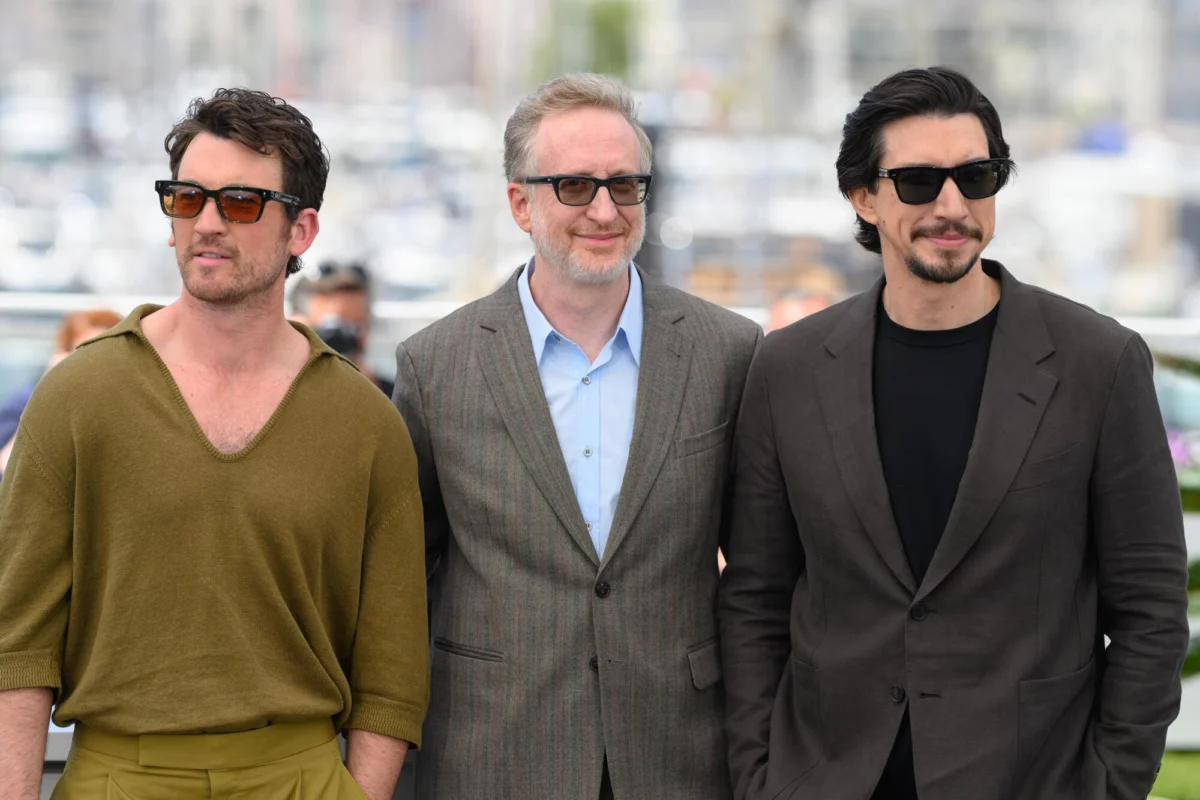
James Gray’s Paper Tiger, a tense, 1980s-set thriller unfolding in the gritty streets of Queens, has become a lightning rod for debate. While international audiences have found common ground in their admiration for the film’s atmospheric dread, it is the performance-driven nature of the project that has critics buzzing. Adam Driver and Miles Teller deliver what many are describing as career-best work, providing the kind of nuanced, high-stakes acting that typically captures the attention of a jury chaired by a director as stylistically meticulous as Park Chan-wook.
Conversely, the epic-length drama All of a Sudden by Ryusuke Hamaguchi has emerged as perhaps the most discussed title of the week. Starring the formidable Virginie Efira as a nursing home director who develops a profound, unlikely bond with a terminally ill Japanese playwright (played by Tao Okamoto), the film has been lauded for its patience, empathy, and technical grace. Among the international press corps, it is currently the leading candidate for the Palme d’Or, with many citing it as a transcendent piece of storytelling that elevates the festival’s overall prestige.

The Jury’s Mercurial Task
Predicting the outcome of Cannes is a notoriously fickle endeavor, made all the more complex by the composition of the 2026 jury. Led by Park Chan-wook, the panel features a diverse array of voices, including Chilean filmmaker Diego Céspedes, Ivorian actor Isaach de Bankolé, Irish-Scottish screenwriter Paul Laverty, and icons such as Demi Moore and Ruth Negga. They are joined by Stellan Skarsgård, Belgian director Laura Wandel, and the Oscar-winning Chloë Zhao.
This group possesses tastes that are, by design, mercurial. The history of the festival is littered with instances where critical favorites were passed over for daring, avant-garde choices. As the jury navigates a slate that includes everything from the stark, historical rigor of Polish cinema to the experimental narrative structures of contemporary Japanese directors, the final decision remains as elusive as ever.
Chronology: A Festival in Flux
The festival opened on May 12 with Pierre Salvadori’s French farce The Electric Kiss. While charming, it served as an out-of-competition appetizer, leaving the serious work of the Palme d’Or to the subsequent days.
The Opening Salvos (May 12–15)
The first wave of competition films was greeted with mixed results. Asghar Farhadi’s Parallel Tales, despite an A-list French cast including Isabelle Huppert, Catherine Deneuve, and Vincent Cassel, struggled to find its footing. The film, a loose adaptation of Krzysztof Kieślowski’s work set against a Parisian backdrop, was widely perceived as a misfire, with many critics pointing to a lack of the narrative tension that typically defines Farhadi’s best work. For the industry, the question has shifted from "Will it win?" to "Who will buy it?"
In contrast, the Japanese contingent has been a massive success. Koji Fukada’s Nagi Notes and Hamaguchi’s All of a Sudden have provided the festival with its most heartening moments. Fukada, following his 2025 success, has solidified his status as an essential voice in contemporary world cinema with a portrait of rural artistry that feels both intimate and expansive.

The Mid-Week Surge (May 16–17)
The latter half of the week saw the debut of Pawel Pawlikowski’s Fatherland. A postwar road trip film based on the works of Thomas Mann, it stars the inimitable Sandra Hüller. Fresh off her Best Actress win at the Berlinale for Rose, Hüller’s presence has lent the film a gravitas that, combined with Pawlikowski’s signature black-and-white aesthetic, has made it a darling of the critics. It is a work of austere beauty, and if the festival concluded today, it would be difficult to imagine a world where Fatherland leaves without at least one major trophy.
Supporting Data: The Current Rankings
As of May 17, the following films are currently viewed as the most serious contenders for the jury’s favor, based on aggregate critical sentiment and industry buzz:
- "Fatherland," dir. Pawel Pawlikowski
- "All of a Sudden," dir. Ryusuke Hamaguchi
- "Paper Tiger," dir. James Gray
- "Gentle Monster," dir. Marie Kreutzer
- "Nagi Notes," dir. Koji Fukada
- "Sheep in the Box," dir. Hirokazu Kore-eda
- "The Beloved," dir. Rodrigo Sorogoyen
- "A Woman’s Life," dir. Charline Bourgeois-Tacquet
- "Parallel Tales," dir. Asghar Farhadi
Note: The list remains subject to significant change as we await screenings for titles including Andrey Zvyagintsev’s "Minotaur," Ira Sachs’ "The Man I Love," and Pedro Almodóvar’s "Bitter Christmas."
Performance Highlights: The Race for Best Actress
Beyond the Palme d’Or, the race for the Best Actress award is intensifying. Léa Seydoux has received considerable attention for her role in Marie Kreutzer’s Gentle Monster. While the film itself received a tepid reception, Seydoux’s portrayal of an avant-garde pianist confronting a harrowing domestic truth has been cited as a tour de force.
Similarly, Virginie Efira’s dual-threat performance in both All of a Sudden and Parallel Tales has made her the clear frontrunner for the prize. Her ability to navigate the vastly different tonal requirements of both films—one a meditative study of mortality, the other a complex urban drama—has left observers in awe of her range.

Implications for the Global Market
While the primary focus at Cannes is always the artistry, the business implications are profound. The current "light" presence of major US studios has created a vacuum that independent distributors and international buyers are eager to fill. The buzz surrounding Club Kid, directed by Jordan Firstman, and Jane Schoenbrun’s Teenage Sex and Death at Camp Miasma—both playing in Un Certain Regard—highlights the continued viability of "eventized" indie cinema. These films are currently the hottest commodities in the Marché du Film, demonstrating that even in a climate of reduced theatrical reliance, a Cannes premiere remains the ultimate launchpad for a film’s global profile.
Looking Ahead: The Final Stretch
As we look toward the final days of the festival, the pressure on the remaining titles to deliver becomes immense. With heavyweights like Pedro Almodóvar and Cristian Mungiu still to show their hands, the leaderboard is far from set in stone.
The success of Fatherland and All of a Sudden has raised the bar, setting a standard of excellence that future screenings must meet if they hope to displace the current favorites. The Palais des Festivals continues to hum with anticipation, a reminder that in the world of cinema, the only thing more exciting than a masterpiece is the possibility that the next one is just around the corner.
For now, the jury remains in deliberation, the press corps continues to file their dispatches, and the Croisette remains the center of the cinematic universe. We will continue to provide daily updates as the 79th Cannes Film Festival reaches its climax and the jury prepares to deliver its final verdict.











No comments yet. Be the first to join the conversation!