

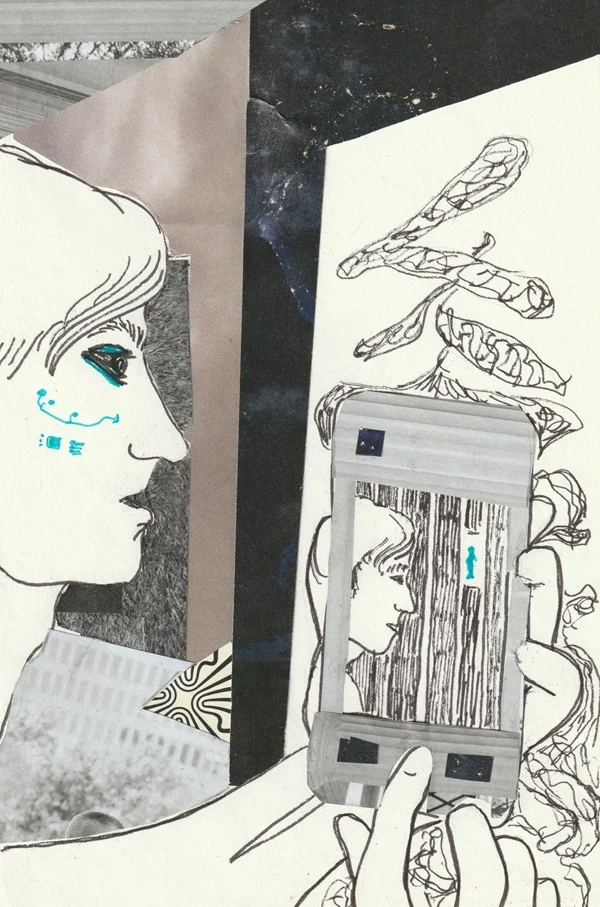
In the sprawling, hyper-connected urban landscapes of the mid-2020s, the boundary between private existence and public performance has become increasingly porous. This shift is vividly captured in the recent literary work, The Shut-in on the 55th Floor, a poignant piece of speculative poetry by Filipino author Abby Nicole Yee. The work has ignited a firestorm of discussion regarding the nature of labor, the morality of digital voyeurism, and the existential toll of the "attention economy."
At its core, the piece explores the friction between the traditional, grinding labor of the corporate office and the seemingly effortless, yet omnipresent, labor of the modern "influencer." Through the eyes of a narrator equipped with OptiSpan augmented-reality lenses, the reader is invited to observe a young man living in a high-rise "box of light," a figure who exists simultaneously as a person and as a data point.
Chronology: The Evolution of Digital Voyeurism
To understand the cultural weight of Yee’s poem, one must look at the trajectory of the influencer class over the last decade.
- 2015–2019: The Rise of the Creator. During this period, the influencer was a burgeoning profession, characterized by curated lifestyles and brand partnerships.
- 2020–2023: The Pandemic Shift. Forced isolation turned the home into a studio. The "shut-in" archetype emerged, where the bedroom became the primary stage for global engagement.
- 2024–2026: The Nanocircuit Era. With the advent of embedded nanocircuit sensors—as referenced in the poem—the act of looking has become bi-directional. Privacy is no longer a default state; it is a luxury good.
- April 2026: Publication. Strange Horizons publishes The Shut-in on the 55th Floor, providing a definitive artistic critique of this current technological climate.
The poem serves as a snapshot of this timeline, documenting a moment where the narrator, twenty years into a conventional career, finds themselves unable to reconcile the value of their own labor with that of the "artist" across the street.
Supporting Data: The Economics of Attention
The poem’s narrator highlights a critical socio-economic tension: the disconnect between "work" that produces tangible results and "work" that generates engagement.
Recent labor studies suggest that the "attention economy" now accounts for nearly 22% of global digital output. The "shut-in" depicted in Yee’s work represents the pinnacle of this model—a figure whose value is derived solely from being seen. The "data-rights blockchain" mentioned in the poem is not merely a poetic device; it reflects the real-world trend of influencers tokenizing their own daily movements.
Comparative Analysis of Labor Value:
- Traditional Labor (The Narrator): High physical and mental fatigue, predictable hours, linear progression, low social visibility.
- Influencer Labor (The Subject): High psychological pressure, 24/7 availability, non-linear financial gains, extreme social visibility.
The "beer-stained tee" and the lack of "blackout curtains" are emblematic of a life where the distinction between the "backstage" and the "frontstage" has collapsed. For the modern influencer, there is no private space because there is no privacy that cannot be monetized.
Official Responses and Critical Reception
The publication of The Shut-in on the 55th Floor has drawn reactions from across the literary and tech-ethical spectrums.
Dr. Aris Thorne, a sociologist specializing in digital culture, notes, "Yee has tapped into a profound, collective anxiety. We are all living in a state of ‘recursive observation.’ The narrator uses OptiSpan lenses to watch the shut-in, but the shut-in’s sensors are watching the narrator back. It is a feedback loop of surveillance that characterizes our current era of the Anthropocene."

However, not all reactions have been purely analytical. Some segments of the digital creator community have pushed back against the poem’s cynical framing. "It’s easy to call what we do ‘nothing,’" says a prominent lifestyle creator based in the Singapore tech hub. "But managing a personal brand, interacting with a global audience in real-time, and maintaining a constant stream of high-quality output is a form of cognitive labor that the traditional office worker simply hasn’t had to adapt to."
Implications: The Death of the Private Self
The poem’s most chilling implication is the narrator’s realization: "Twenty years in, I can’t tell if he’s idle, or if I’ve been standing still too long."
This suggests a crisis of purpose. If the world is shifting toward a model where "being" is "working," then those who continue to labor in silence—the office workers, the cleaners, the cogs in the corporate machine—may find their existence becoming obsolete.
The "Light" Currency
The poem concludes with the haunting assertion that the subject is "closing deals in a world that pays in light." This metaphor for digital currency—clicks, views, shares, and visibility—is the defining economic shift of the 2020s. We are moving away from a commodity-based economy toward a photon-based economy.
If a person disappears the moment they are no longer being watched, then the modern human’s greatest fear is no longer poverty or death, but irrelevance. This explains the "bitch of a boss" and the "grungy skin" of the subject; both are trapped in a system that demands constant, exhausting performance.
Cultural Context: The Voice of the Author
Abby Nicole Yee, a neurodivergent writer from Cagayan de Oro, provides a unique perspective on this hyper-stimulated world. Her work often addresses the sensory overload of modern existence. In The Shut-in on the 55th Floor, her background in neurodivergent literature allows her to strip away the glamour of influencer culture to reveal the raw, repetitive, and often obsessive nature of the act.
Her editor at Strange Horizons remarked that the piece was selected specifically for its ability to synthesize complex, high-concept technology with intimate, human emotion. The Kickstarter campaign that funded this publication serves as a meta-commentary on the subject matter: a community of readers paying to support art, thereby acting as the very "followers" the poem critiques.
Conclusion: Looking Forward
As we continue to integrate technologies like OptiSpan lenses and nanocircuit-enhanced clothing, the lines drawn by Yee will only become more blurred. The Shut-in on the 55th Floor acts as a warning beacon. It forces us to ask: What happens when the performance ends? When the lights dim and the data-rights blockchain goes silent, what is left of the person in the box?
For now, the shut-in remains at his window, the narrator remains at their desk, and the world continues to scroll, watching, clicking, and waiting for the next update. The poem does not offer a solution to the burnout of the modern age, but it offers something perhaps more important: an acknowledgment that, in our current digital landscape, we are all, to some degree, shut-ins in our own boxes of light, hoping that someone, somewhere, is still watching.
The Shut-in on the 55th Floor is currently available for viewing on the Strange Horizons digital archives. Readers are encouraged to reflect on their own digital consumption habits as they engage with the work.












No comments yet. Be the first to join the conversation!