

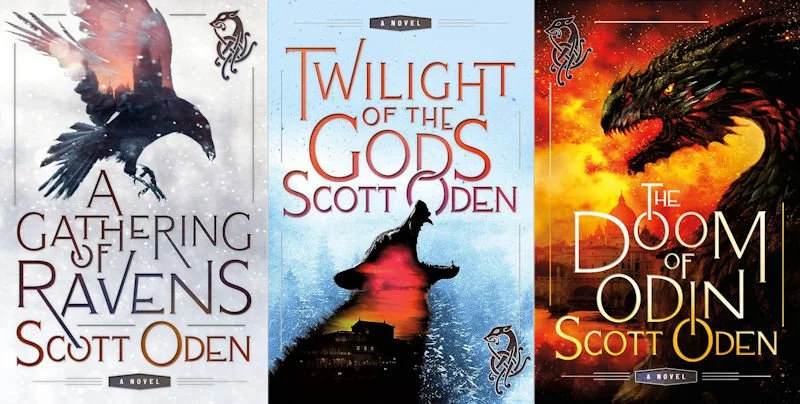
In the landscape of modern grimdark fantasy, few authors have managed to bridge the chasm between rigorous historical fiction and high-mythic epic as successfully as Scott Oden. His magnum opus, The Grimnir Saga, serves as a brutal, blood-soaked meditation on the twilight of the old gods and the inevitable encroachment of a changing world. Through the eyes of Grimnir—the last of a dying race—Oden explores the cost of vengeance, the fluidity of faith, and the crushing weight of extinction.
Main Facts: The Legend of the Corpse-Maker
At the center of this trilogy is Grimnir, a figure known by a thousand terrifying monikers across the fractured tribes of Europe. To the hymn-singers, he is the "Corpse-maker" and the "Bringer of Night." To the scholars of his own fading kin, he is kaunr. He is the final remnant of Bálegyr’s brood, a creature of orcish and ogre blood struggling to survive in a world that no longer has a place for him.
The saga spans three novels: A Gathering of Ravens, Twilight of the Gods, and the concluding volume, The Doom of Odin. Together, these works document a world defined by the collision between the primal, Norse-inflected magical traditions of the Dark Ages and the rising tide of a militant, expansionist Christianity. Grimnir, a character defined by his volatility and ancient malice, is not merely a protagonist; he is a living relic, a witness to the slow erasure of the ancient ways.
Chronology of a Dying Era
The narrative progression of The Grimnir Saga is meticulously paced, unfolding across a war-ravaged Europe where every border is contested and every faith is a potential death sentence.
The Awakening: A Gathering of Ravens
In the inaugural entry, the reader is thrust into the visceral reality of Oden’s world. Grimnir, driven by a singular, consuming thirst for vengeance, finds himself begrudgingly allied with Etain, a young Christian "hymn-singer." This pairing serves as the reader’s entry point into the moral dichotomy of the series. The tension between Etain’s burgeoning piety and Grimnir’s prehistoric savagery establishes the thematic bedrock upon which the rest of the trilogy is built.
The Conflict: Twilight of the Gods
As the trilogy progresses, the stakes escalate. Grimnir’s journey brings him into contact with Disa, a formidable shield-maiden of the North. The relationship between the last orc and the shield-maiden represents a significant departure from the solitary, hateful existence Grimnir led previously. Through this mentor-student dynamic, Oden explores the potential for empathy in a character designed for destruction. It is during this chapter that the ideological war reaches its zenith, pitting the Raven-Geats against the fanatical Christian forces led by the antagonist Konráðr the White.
The Finale: The Doom of Odin
The saga reaches its cataclysmic conclusion in the third volume. Here, Oden elevates the scale of the narrative, pushing Grimnir into the perilous depths of the underworld. For the first time in the series, the reader is afforded a deep look into the society of Grimnir’s own kin. The revelation of his people’s inherent brutality provides the final, essential layer to Grimnir’s characterization, bringing his journey toward self-actualization—and his ultimate fate—to a haunting close.
Supporting Data: Why The Grimnir Saga Defines the Genre
The critical acclaim surrounding this saga is rooted in its technical execution. Oden succeeds where many fantasy authors falter: he balances the "grimdark" aesthetic with genuine emotional depth.
- Characterization: Grimnir is the quintessential anti-hero. He is vile, bitter, and undeniably dangerous, yet he is never a caricature. Oden employs clever character interactions to peel back the layers of the orc’s psyche, revealing a being capable of trust and respect, however begrudgingly given.
- Atmospheric World-Building: By weaving Norse mythology into a historically accurate medieval setting, Oden avoids the "lore dump" traps common in high fantasy. The world feels lived-in, ancient, and dangerous. The magic, when it manifests, feels earned—a jarring reminder that the gods are not merely metaphors, but active, indifferent forces.
- Action and Pacing: While the series is undeniably violent, the brutality serves a narrative purpose. It reflects the harshness of the era and the desperation of the characters. Oden resists the urge to indulge in gratuitous combat descriptions; instead, he favors concise, impactful skirmishes that underscore the psychological toll of the conflict.
Official Reception and Critical Consensus
While the fantasy community often gravitates toward blockbuster series, The Grimnir Saga has gained a cult following as a masterclass in tone and structure. Critics have lauded Oden’s ability to imbue the "ancient religion vs. new faith" trope with renewed vigor.
The battle of wills between Grimnir and Konráðr the White is frequently cited as a highlight of modern fantasy literature. Konráðr, who functions as a mirror to Grimnir—marred by his own inner demons and fanaticism—provides a sophisticated antagonist who elevates the conflict from a simple "good vs. evil" binary into a complex, blood-soaked debate on the nature of salvation and legacy.
Literary analysts have noted that the series succeeds because it treats the "monster" as a protagonist without humanizing him to the point of absurdity. Grimnir remains a monster, but he is a monster with a code, a history, and a future that is inextricably linked to the death of his gods.
Implications: The Legacy of the Last Orc
The impact of The Grimnir Saga on the fantasy genre is significant. It stands as a defiant retort to the trend of overly sanitized or overly optimistic fantasy narratives. By grounding his story in the dark, muddy, and myth-drenched reality of the Middle Ages, Oden reminds readers of the power of historical fantasy to comment on the cyclical nature of human progress.
The implications of the ending—which we shall not spoil here—serve as a poignant commentary on the nature of extinction. The series asks a profound question: when the last of a kind is gone, what remains of the culture, the magic, and the memory that defined them? Grimnir is not just a character fighting for survival; he is the embodiment of a disappearing world.
For the reader, the saga offers more than just a series of battles; it provides a visceral, haunting experience that stays with the reader long after the final page is turned. It is a work that demands to be read not just for its action, but for its profound understanding of what it means to be an outsider in a world that is rapidly outgrowing you.
Final Verdict
Scott Oden has crafted a rare gem. The Grimnir Saga is a must-read for any enthusiast of the genre who appreciates the intersection of dark history, mythological weight, and character-driven storytelling. It is, quite simply, a brutal, beautiful, and definitive work of modern dark fantasy. Whether you are drawn to the scholarly depth of the Norse setting or the visceral thrill of the hunt, Grimnir’s story is one that commands your attention. It is a violent tale of vengeance, yes, but it is defined by the intimate, fragile connections that form between the most unlikely of allies in the shadow of the end of the world.










No comments yet. Be the first to join the conversation!