

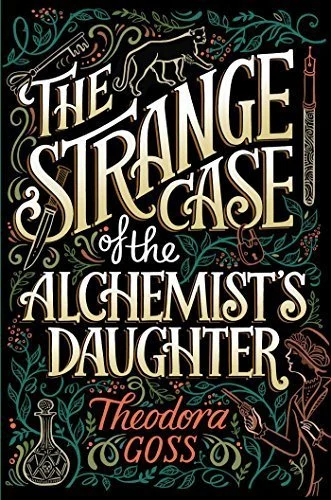
In the vast, often shadowed landscape of Victorian gothic literature, the archetypes of "the monster" have long been dominated by the singular, tormented masculine figure. From the hubris of Victor Frankenstein to the moral decay of Edward Hyde, these characters have served as cautionary tales for generations. However, a seismic shift in literary perspective has arrived in the form of Theodora Goss’s acclaimed novel, The Strange Case of the Alchemist’s Daughter. By centering the daughters of these infamous scientific pioneers, Goss has not only reclaimed the narrative but has fundamentally altered the discourse surrounding classic horror.
The Premise: A Legacy of Scientific Hubris
The narrative follows Mary Jekyll, a young woman cast into poverty and isolation following the untimely death of her parents. As she begins to pick through the remnants of her father’s life, she stumbles upon a trail of breadcrumbs—cryptic, unsettling clues that suggest her father’s former associate, the notorious murderer Edward Hyde, has emerged from the shadows.
For Mary, the prospect is not merely a quest for truth but a financial necessity. A significant bounty has been placed on Hyde’s head, and the reward promises a reprieve from her mounting destitution. Yet, what begins as a standard investigative mystery swiftly descends into a labyrinthine exploration of inherited trauma and scientific ethics. Her search leads her to Diana, the feral daughter of Hyde, raised in the austere silence of a convent, and eventually to a cohort of extraordinary women: Beatrice Rappaccini, Catherine Moreau, and Justine Frankenstein. Each woman is a byproduct of the very experiments that defined their fathers’ infamy—a living testament to the collateral damage of patriarchal ambition.
Chronology of Discovery: A Network of Monstrosity
The progression of the novel is marked by a series of revelations that mirror the investigative pacing of a Victorian procedural, albeit one infused with the sensibilities of modern character study.
- The Initial Inquiry: Mary Jekyll’s discovery of her father’s journals serves as the inciting incident, grounding the story in the familiar atmosphere of late 19th-century London.
- The Formation of the Syndicate: As Mary recruits the assistance of iconic figures—Sherlock Holmes and Dr. Watson—the scope of the mystery expands. The discovery of Diana Hyde serves as the catalyst for uniting the various "monstrous" women.
- The Synthesis of Stories: The protagonists realize they are not merely victims of circumstance but targets of a clandestine society of "immoral and power-crazed scientists." This transition from a character-driven mystery to a thriller involving a shadowy cabal raises the stakes significantly.
- The Final Confrontation: The culmination of the journey sees these women turning the lens back on their creators, asserting their autonomy in a world that intended for them to be mere laboratory specimens.
Supporting Data: Why the "Found Family" Trope Resonates
Critical reception and reader sentiment suggest that The Strange Case of the Alchemist’s Daughter succeeds precisely because it subverts expectations of what a "monster story" should look like. According to literary critics, the novel functions as a meta-narrative. By having the characters break the fourth wall—effectively writing their own book about their experiences—Goss creates a playful, self-referential layer that adds a contemporary heartbeat to a period piece.
A Comparative Analysis of Character Dynamics
- The Voice: Unlike the often austere or overly formal tone of original Victorian texts, Goss utilizes a conversational, witty, and deeply empathetic voice.
- The Accessibility Factor: One of the most compelling aspects of the work is its ability to stand alone. While those familiar with the works of Mary Shelley, Robert Louis Stevenson, and H.G. Wells will find delight in the "Easter eggs," the uninitiated reader finds the text equally inviting.
- The Gender Dynamic: By shifting the focus from the male creators to the female survivors, the narrative provides a necessary critique of the gender-imbalanced power structures of the Victorian era.
Official Perspectives: The Critique of Genre
Industry experts and reviewers, such as Julia Kitvaria Sarene of Fantasy Faction, have lauded the novel for its tonal balance. In her analysis, Sarene notes that the book occupies a unique space between Jane Austen’s societal observations and the high-stakes intrigue of a Sherlock Holmes mystery.
"On paper, this should be an absolute mess," Sarene observes. "In reality, it works far better than it has any right to." This sentiment highlights the primary success of the book: the synthesis of seemingly disparate genres into a cohesive, warm, and character-driven experience. The "found family" element serves as the emotional anchor, proving that when the plot is bolstered by genuine human (or semi-human) connection, the supernatural elements are secondary to the emotional stakes.

Implications for Modern Gothic Literature
The success of Goss’s work has broader implications for the future of literary reimaginings. It proves that the "classic" canon is not a closed book, but a living foundation upon which contemporary authors can build.
1. The Reclamation of Feminine Agency
By centering the narrative on the daughters, Goss addresses the "silence" of female characters in original gothic texts. These women are not prizes to be won or victims to be saved; they are active agents who define their own morality.
2. The Evolution of the "Monster"
The novel challenges the reader to redefine what makes a monster. Is it the creature born of scientific experimentation, or the scientist who sacrifices ethics for progress? By presenting the protagonists as sympathetic, intelligent, and deeply loyal to one another, the narrative forces a moral pivot: the "monstrous" are those who lack empathy, not those who possess unique biological traits.
3. The Future of Meta-Fiction
The use of the fourth wall serves as a blueprint for future authors looking to blend historical fiction with meta-narrative elements. It bridges the gap between the reader and the character, fostering a sense of intimacy that is rare in the genre.
A Lasting Legacy
As the literary world continues to evolve, The Strange Case of the Alchemist’s Daughter stands as a testament to the power of perspective. It is a work that manages to be many things at once: a gripping mystery, a sharp social critique, and a deeply moving story of belonging.
The warmth of the narrative—the witty banter between characters, the shared sense of purpose, and the refusal to succumb to the darkness of their origins—provides a "feel-good" conclusion that is rarely found in the grim, shadowed corners of classic gothic literature. It leaves the reader with a profound sense of satisfaction, not merely because the mystery was solved, but because the characters found their place in a world that sought to exclude them.
In the final assessment, Goss has not just written a book about monsters; she has written a book about the resilience of the human spirit. She reminds us that even when we are forged in the fires of someone else’s ambition, we have the power to define our own legacy. Whether you are a lifelong fan of the classics or a newcomer looking for a story that combines intellect with heart, this Victorian-era reimagining offers a masterclass in narrative innovation. It is, quite simply, a triumph of storytelling that will likely remain a fixture in the fantasy and gothic canon for years to come.










No comments yet. Be the first to join the conversation!