

In the intersection of fast-food culture and the fervent world of Japanese animation fandom, few phenomena are as volatile as the limited-edition Happy Meal promotion. On May 15, 2026, McDonald’s Japan launched its latest collaboration with the cultural phenomenon Chiikawa, a series known for its deceptively simple, adorable characters and its massive, highly protective fanbase.
For many, the launch was a test of endurance—not just of supply, but of social order. Following a string of chaotic promotions that saw secondary markets flooded with marked-up goods and local restaurants overwhelmed by opportunistic resellers, McDonald’s implemented a stringent, multi-layered defense strategy. This report examines how the fast-food giant successfully navigated this launch, the mechanics of their anti-scalper protocols, and what this means for the future of promotional merchandise in Japan.
![McDonald’s Japan’s new Chiikawa Happy Meal figures are here![Photos]](https://soranews24.com/wp-content/uploads/sites/3/2026/05/mc-1-1.jpg?w=1000&h=525&crop=1)
Main Facts: The Chiikawa Collection
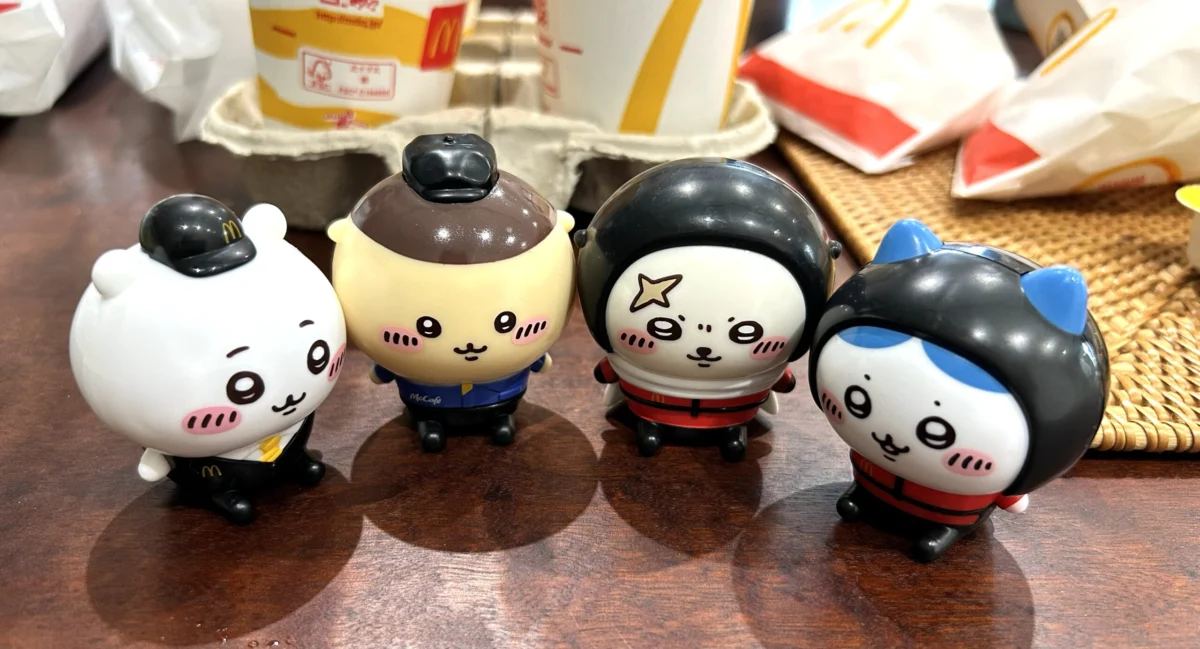
The Chiikawa franchise, which chronicles the daily lives of small, emotive creatures, has become a juggernaut in Japanese media. The McDonald’s collaboration features four distinct figures, each designed with a nod to the lore of the series. The characters are depicted in various McDonald’s-themed roles: the protagonist, Chiikawa, wears a manager’s uniform; Hachiware and Rakko are dressed as delivery personnel, reflecting their established roles in the series’ narrative; and the enigmatic, chestnut-shaped Kuri-Manju is kitted out as a McCafe by Barista staff member.
Each figure stands approximately eight centimeters (3.1 inches) tall, a size specifically chosen to be both display-friendly and functional, featuring a base hole that allows the figures to serve as pencil or pen toppers. The collection is being released in two distinct waves, with the current batch available until May 28, followed by a second wave from May 29 to June 11.
![McDonald’s Japan’s new Chiikawa Happy Meal figures are here![Photos]](https://soranews24.com/wp-content/uploads/sites/3/2026/05/mc-2.jpg?w=640)
Chronology of a Controlled Launch
The path to this launch was paved with apprehension. In August 2025, a similar promotion involving Pokémon trading cards descended into disarray at numerous branches, with reports of long, unruly queues and aggressive behavior. McDonald’s Japan, cognizant of the potential for a repeat performance, began rolling out preventive measures days before the Chiikawa launch.
- Pre-Launch (May 12, 2026): Public announcements were made regarding new purchase restrictions. In a move backed by major online resale platforms, it was declared that listings of the new figures on sites like Mercari would be actively monitored and removed if identified as scalped inventory.
- Launch Day (May 15, 2026): The primary restriction went into effect: all purchases of the Chiikawa Happy Meal were restricted to users of the official McDonald’s mobile application.
- Transactional Caps: To prevent bulk buying, the chain enforced a strict limit of four Happy Meals per transaction block (divided into morning and afternoon/evening sessions).
- Post-Launch Observation: Throughout the initial release period, reports from various locations indicated a significant decrease in the "loitering" and "bulk-purchase" issues that had plagued previous campaigns.
Supporting Data: Why the Measures Succeeded
The effectiveness of the strategy was not merely anecdotal. By shifting the point of sale to the mobile application, McDonald’s effectively created a digital "paper trail" for every purchase. This discouraged the kind of anonymity that allows professional scalpers to cycle through a store multiple times in a single day.
![McDonald’s Japan’s new Chiikawa Happy Meal figures are here![Photos]](https://soranews24.com/wp-content/uploads/sites/3/2026/05/mc-3-1.jpg?w=640)
Furthermore, the scale of the figures—while larger than those distributed in previous collaborations with chains like Matsuya—was balanced by the limited availability of the meals themselves. By coupling the 540 yen (US$3.50) price point with the four-meal cap, the restaurant ensured that the inventory remained accessible to families and fans rather than being wholesale scooped up by third-party re-sellers.
The logistical success was highlighted by the observation of quiet, orderly queues. Unlike past events, where abandoned, uneaten food littered the streets outside branches—a byproduct of "scalpers" who only wanted the toy and discarded the meal—the Chiikawa release saw a higher percentage of genuine patrons, likely because the barrier to entry was higher for those not intending to eat the food.
![McDonald’s Japan’s new Chiikawa Happy Meal figures are here![Photos]](https://soranews24.com/wp-content/uploads/sites/3/2026/05/mc-4.jpg?w=640)
Official Responses and Industry Implications
The decision by platforms like Mercari to cooperate with McDonald’s marks a significant shift in the Japanese retail landscape. In the past, these platforms often adopted a "hands-off" approach, claiming they were merely the digital host for private transactions. However, the recurring public outcry regarding scalping has forced a more proactive stance.
McDonald’s Japan, in their internal communications, emphasized that their primary goal was to "maintain a safe and enjoyable environment for all customers." The decision to limit the sale to app users is not just a tactical choice; it is a long-term data collection strategy that allows the company to better predict demand in specific regions, thereby preventing the artificial scarcity that scalpers rely on to drive up prices.
![McDonald’s Japan’s new Chiikawa Happy Meal figures are here![Photos]](https://soranews24.com/wp-content/uploads/sites/3/2026/05/IMG_6897.jpg?w=640)
Industry analysts suggest that this "Chiikawa Model" may become the new standard for high-profile anime collaborations. By digitizing the transaction and enforcing strict, time-gated limits, brands can protect their public image and ensure that their marketing efforts result in customer loyalty rather than consumer frustration.
The Future of "Otaku" Marketing
As the second wave of the Chiikawa collection approaches on May 29, the eyes of the retail industry remain fixed on McDonald’s. The success of the first wave has provided a blueprint for other companies struggling with the "scalper economy."
![McDonald’s Japan’s new Chiikawa Happy Meal figures are here![Photos]](https://soranews24.com/wp-content/uploads/sites/3/2026/05/mc-5.jpg?w=640)
The integration of lore-accurate designs—such as Kuri-Manju’s assignment to the McCafe counter—demonstrates that the marketing team understands their audience. Fans are not just buying a piece of plastic; they are buying an extension of a narrative they care about. When the purchasing process feels "fair," that emotional connection is strengthened. Conversely, when the process is dominated by resellers, the brand risks alienating the very demographic it seeks to engage.
Ultimately, the Chiikawa promotion serves as a case study in corporate responsibility. By treating the distribution of toys with the same seriousness as the food safety standards of the kitchen, McDonald’s has managed to turn a potential PR liability into a successful, orderly, and highly positive customer experience. Whether this will permanently deter the scalper market remains to be seen, but for now, the fans have won a victory—and a very cute, uniform-clad souvenir to show for it.
![McDonald’s Japan’s new Chiikawa Happy Meal figures are here![Photos]](https://soranews24.com/wp-content/uploads/sites/3/2026/05/mc-6.jpg?w=640)
As we look toward the second wave, the message to the public is clear: the rules are there for a reason, and in the case of the Chiikawa campaign, they are working exactly as intended.












No comments yet. Be the first to join the conversation!