

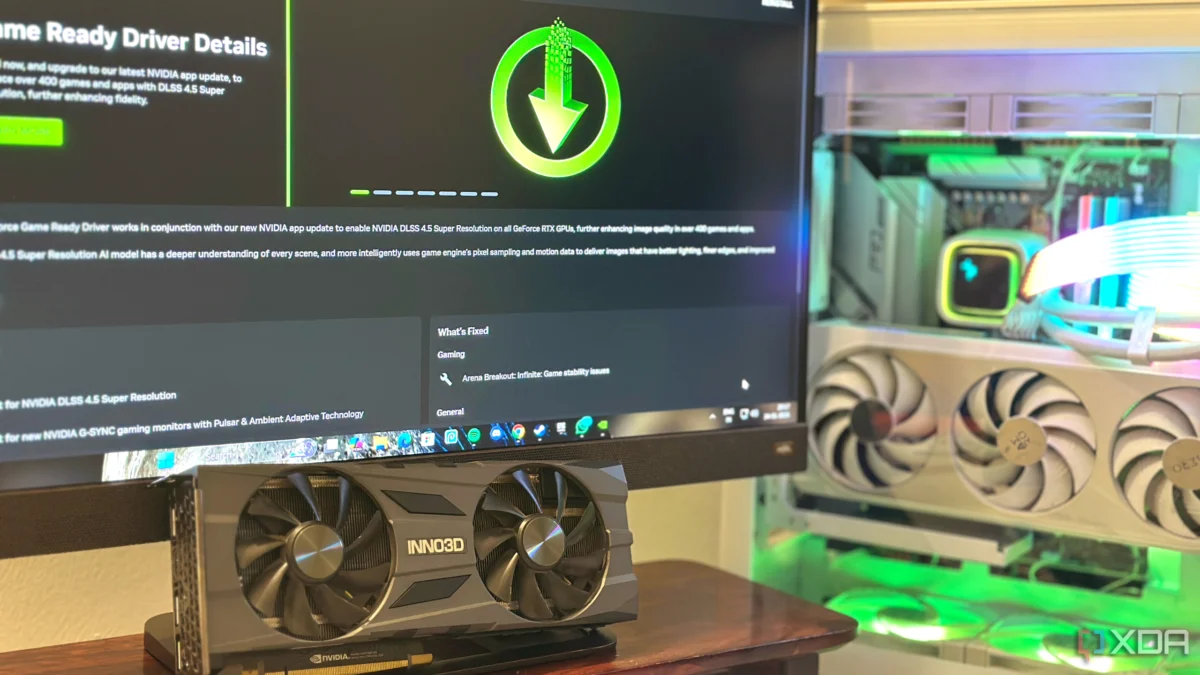
For over a decade, Nvidia’s "Game Ready" driver program was the gold standard of the PC gaming industry. It was a promise: a seamless, plug-and-play experience that ensured your hardware was optimized for the latest AAA titles the moment they hit the shelves. If you were an Nvidia user, you simply installed the update, rebooted your machine, and played. It was a reliable, background process that rarely demanded your attention, provided the promised performance gains, and—most importantly—did not break your system.
That era of "it just works" appears to be fading. In recent months, the experience of updating Nvidia drivers has transitioned from a routine maintenance task to a high-stakes gamble. With a string of problematic releases, including the disastrous GeForce 595.71 update, the reputation of Nvidia’s software stack is facing a crisis of confidence. For a company that has built its brand on premium hardware and seamless software integration, the current state of driver stability is a glaring anomaly that threatens to alienate its most loyal enthusiast base.

The Chronology of Instability: A Pattern of Regress
The recent decline in driver quality is not merely a string of bad luck; it is a documented trend that has been escalating throughout the 2025–2026 cycle. To understand the frustration felt by the community, one must look at the timeline of recent failures that have turned the Nvidia App into a source of anxiety rather than utility.
The 595.59 and 595.71 Debacle
The catalyst for the current wave of outrage was the release of Game Ready Driver 595.59. Intended to provide support for the then-impending Resident Evil Requiem, the update instead unleashed a cascade of technical issues for RTX 30, 40, and 50-series card owners. Reports flooded forums and social media regarding erratic fan behavior, inconsistent GPU utilization, and power draw limitations that seemingly appeared out of nowhere.

For enthusiasts who rely on overclocking to squeeze the maximum potential from their high-end GPUs, the update was particularly egregious. The software constraints caused cards to thermal throttle or underperform by tens of watts, leading to frequent system crashes and the dreaded "black screen" errors, even during light desktop workloads.
In a rare move, Nvidia attempted to "unlaunch" the driver, effectively pulling it from distribution. They quickly followed up with Driver 595.71, intended to serve as a corrective patch. Instead, the situation worsened. The new driver introduced even more restrictive voltage caps, resulting in a staggering 16% performance degradation for RTX 50-series users. Whether running the flagship RTX 5090 or the mid-range 5070 Ti, the impact was severe and immediate. It wasn’t until the release of the 595.76 hotfix that the worst of these issues were mitigated, but by then, the damage to user trust was already cemented.
A History of "Beta Testing" the RTX 50-Series
The 595 series is merely the latest chapter in a broader story of instability. Throughout 2025, RTX 50-series owners have frequently reported feeling like unpaid quality assurance testers.
- February 2025 (Driver 572.60): This update was characterized by widespread reports of DisplayPort signal loss, installation crashes, and system freezes upon waking from sleep modes. For users with multi-monitor setups or high-refresh-rate panels, this driver rendered daily tasks nearly impossible.
- April 2025 (Drivers 576.02 and 576.15): The spring of 2025 saw a rapid-fire release of "stable" drivers that were anything but. Users reported broken frame pacing, DLSS instability, and frequent stuttering in popular titles. The frequency with which Nvidia pushed out hotfixes during this period created a confusing landscape where users were often unsure which version of the driver was actually the "stable" branch.
Supporting Data: Why Enthusiasts are Sounding the Alarm
The primary grievance from the community is the lack of predictability. A driver update is meant to improve performance, not introduce new hardware-limiting bugs. The 16% performance drop observed by independent analysts and users post-595.71 is an extreme metric that suggests a fundamental breakdown in Nvidia’s regression testing protocols.

Furthermore, the shift in how drivers are managed—moving toward the new "Nvidia App"—has left many users feeling that the company is prioritizing interface aesthetics and marketing integration over core driver stability. When release notes claim "Game Ready" support, users expect a validation process that includes rigorous testing across the hardware stack. Currently, that process appears to be bypassing the rigorous standards that defined Nvidia’s market dominance in the 2010s.
The Silence from Headquarters: Official Responses
To date, Nvidia has remained largely reactive rather than proactive regarding these systemic issues. While the company has been quick to push out "hotfixes" and "unlaunch" broken versions, there has been a notable absence of high-level communication addressing the root cause of these quality control failures.
In the industry, when a major player faces repeated software failures, there is an expectation of transparency. Are these issues stemming from the increased complexity of the RTX 50-series architecture? Is there an over-reliance on AI-driven code generation that has introduced "vibe-coded" logic errors into the driver kernel? Without an official statement acknowledging the degradation in software quality, Nvidia risks allowing the narrative to be shaped entirely by disgruntled users on Reddit and technical forums.
The Implications: Why Trust Matters
The implications of this downward trend are significant for the PC gaming ecosystem.
- The "Wait and See" Culture: The most immediate impact is the change in user behavior. It is now common practice for PC enthusiasts to wait several days—or even weeks—after a driver update is released before installing it. They turn to community forums first to see if the update is "safe." This is a complete inversion of the purpose of a "Game Ready" driver, which is meant to be installed immediately upon a game’s release.
- Hardware Depreciation of Value: When software limitations—such as the arbitrary voltage capping seen in 595.71—prevent users from accessing the full performance of their expensive hardware, the perceived value of the product drops. A user who pays a premium for an RTX 5090 expects that performance to be consistent throughout the life of the card. When software updates artificially throttle that performance, it feels like a breach of the purchase agreement.
- The Competitive Landscape: For years, Nvidia’s superior driver support was the primary argument against choosing AMD. While AMD has historically struggled with its own "driver reputation" issues, the gap is narrowing—not because AMD has become perfect, but because Nvidia has begun to stumble. If Nvidia loses its reputation for stability, the primary differentiator between the two giants will disappear, potentially triggering a shift in market share.
Conclusion: Earning Back the Enthusiast
The current state of GeForce drivers is a reminder that in the tech world, no reputation is bulletproof. Nvidia has spent years cultivating an image of technological perfection, backed by the most powerful hardware on the market. However, that hardware is only as good as the software that commands it.
A decent, stable update should not be a cause for celebration; it should be the expected baseline. If Nvidia wishes to maintain its position as the preferred choice for PC enthusiasts, it must treat its software engineering with the same rigor it applies to its hardware silicon and AI keynotes. The "Game Ready" label needs to mean something again. Until it does, every update notification will be met with apprehension rather than anticipation—a position that a company of Nvidia’s stature cannot afford to occupy for long.
The path forward is clear: more transparency in release notes, a return to rigorous pre-release testing, and an acknowledgment that for the user, stability is the most premium feature of all.












No comments yet. Be the first to join the conversation!