Ammar Sabilarrohman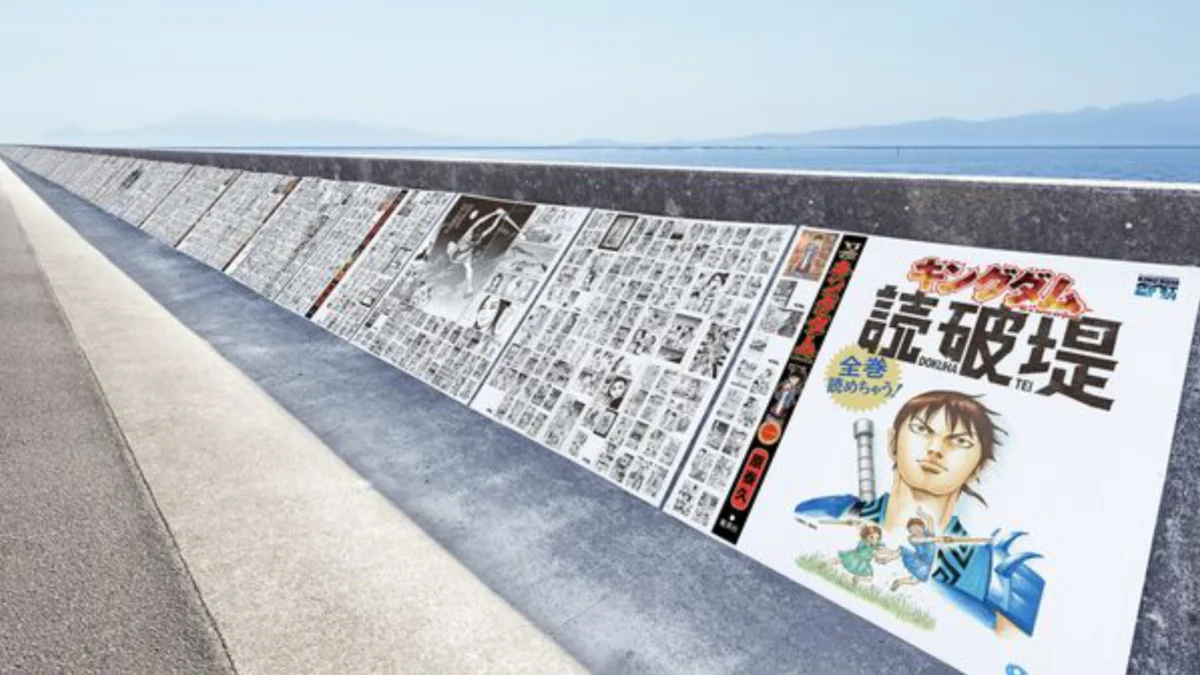
In a breathtaking fusion of pop culture and public infrastructure, the Japanese prefecture of Saga has etched its name into the history books—and the Guinness World Records. On May 19, 2026, the prefecture successfully completed the "longest continuous outdoor display of manga pages," a feat that transformed a 300-meter stretch of a local embankment into a sprawling, immersive literary gallery. The exhibit featured an staggering 16,290 individual pages from the legendary manga series Kingdom, encompassing all 78 volumes of the epic saga.
This unprecedented installation, titled "Kingdom Dokuhatei," serves as the centerpiece for the 20th-anniversary celebrations of Yasuhisa Hara’s magnum opus. By turning a public space into a massive, free-to-read library, Saga Prefecture has not only honored one of the most successful manga series in history but has also set a new standard for cultural tourism and public art installations.
The Magnitude of the Display: Breaking Records in Saga
The sheer logistical scale of the "Kingdom Dokuhatei" project is difficult to overstate. Spanning 300 meters, the display required the meticulous arrangement of thousands of printed panels, effectively creating a "walking scroll" of history. Visitors were invited to traverse the embankment, reading the story of China’s unification through the eyes of Shin and Ying Zheng in a setting that mirrors the epic scope of the narrative itself.
To add a layer of interactivity for dedicated fans, organizers embedded three rare, hand-signed autographs from Yasuhisa Hara himself within the massive sequence of pages. This "treasure hunt" element turned the act of reading into an exploration, encouraging fans to examine every panel with the scrutiny of a scholar. The certification by Guinness World Records on May 19 confirmed that this was, unequivocally, the longest continuous display of its kind, marking a milestone that marries the traditional landscape of Saga with the modern phenomenon of manga.
A Chronology of a Masterpiece: Two Decades of ‘Kingdom’
To understand the gravity of this celebration, one must look back at the journey of Kingdom. The series made its debut in January 2006 in Shueisha’s Weekly Young Jump, and from its inception, it was clear that Yasuhisa Hara had created something unique.

The Rise of an Epic
- 2006: Kingdom begins serialization, introducing readers to the Warring States period of ancient China.
- 2013: The series receives widespread critical acclaim, winning the prestigious Grand Prize of the Tezuka Osamu Cultural Prize, cementing its place in the pantheon of elite manga.
- 2012–2024: The franchise expands significantly, with Studio Pierrot producing six seasons of high-octane anime, followed by four blockbuster live-action films that brought the historical battles to life.
- January 2026: As the series hits its 20th anniversary, it reaches a staggering milestone of over 120 million copies sold, solidifying its status as one of the best-selling manga series in the history of the medium.
- May 2026: The "Kingdom Dokuhatei" project launches in Saga, culminating in the Guinness World Record achievement.
The Historical Context of ‘Kingdom’
At its core, Kingdom is a fictionalized retelling of the Warring States period in China, a time of immense political instability and transformation. The story centers on the protagonist, Shin, a war orphan who dreams of becoming the "Greatest General under the Heavens," and Ying Zheng, the young King of Qin who harbors the monumental ambition of unifying all of China under a single banner.
The series is lauded for its tactical complexity, character development, and its ability to weave historical figures into a gripping, high-stakes narrative. By grounding the story in the year 221 BC—the year the Warring States period effectively ended—Hara created a narrative that resonates with the timeless themes of leadership, sacrifice, and the brutality of ambition. The display in Saga provides a unique opportunity to view this grand history in a linear, physical format, emphasizing the "march of time" that defines the manga’s plot.
Official Responses and Local Pride
The project was not merely a fan event; it was a collaborative effort between the prefecture and the creative team behind Kingdom. The pride emanating from local government officials was palpable, as this marked the first time Saga Prefecture had secured a Guinness World Record.
Governor Yamaguchi of Saga Prefecture expressed his enthusiasm during the certification ceremony: "This is the first time a project from Saga Prefecture has achieved a Guinness World Record. We have long been proud of our culture, but this puts us on the global stage. We will continue to strive towards world-class records and continue to promote the incredible creative talent that calls Saga home."
The connection between the prefecture and the series is deeply personal. Yasuhisa Hara is a native of Saga, and the prefecture has embraced its role as the "birthplace of Kingdom" with fervent dedication. Beyond the embankment display, the local infrastructure has been fully integrated into the celebration. The Saga Airport, for example, was temporarily rebranded as "Saga Kingdom Airport," complete with extensive exhibitions of original artwork and character statues, effectively turning the region into a pilgrimage site for fans of the franchise.

Cultural and Economic Implications
The success of the "Kingdom Dokuhatei" project highlights a growing trend in Japan: the use of "manga tourism" to revitalize regional areas. By leveraging the immense popularity of global franchises like Kingdom, prefectures like Saga are finding creative ways to boost local tourism and foster a sense of community pride.
Impact on Tourism
The exhibition has drawn thousands of visitors, ranging from die-hard manga fans to casual tourists curious about the world record. This influx of visitors provides a tangible economic boost to the local area, supporting local businesses, hotels, and restaurants. By integrating the exhibition into a scenic outdoor space, the organizers have ensured that the event is accessible and environmentally respectful, demonstrating a sustainable model for future cultural events.
The Evolution of Manga Consumption
Furthermore, this exhibition challenges the traditional way manga is consumed. By taking the pages out of the book and placing them on a 300-meter embankment, the project forces a shift in perspective. Readers are no longer sitting in a private room with a volume in their hands; they are standing in the open air, walking alongside the narrative, and sharing the experience with others. It turns a solitary hobby into a collective, public act of appreciation.
Conclusion: A Legacy Carved in Stone and Paper
The "Kingdom Dokuhatei" project is more than just a list of numbers or a certificate on a wall. It is a testament to the enduring power of storytelling. For 20 years, Yasuhisa Hara has captivated audiences with the epic struggles of the Warring States period, and in doing so, he has bridged the gap between ancient history and contemporary pop culture.
By earning the Guinness World Record, Saga Prefecture has ensured that the 20th anniversary of Kingdom will be remembered as a watershed moment in manga history. It serves as a reminder that stories have the power to define places, to unify communities, and to turn the simple act of reading into an experience that can span hundreds of meters—and perhaps, in the case of Kingdom, reach across the entire world. As the exhibition concludes, it leaves behind a legacy of innovation, proving that even a 2,000-year-old story can find new life when presented with vision and passion.


 Asro
Asro
 Muslim