Ali Ikhwan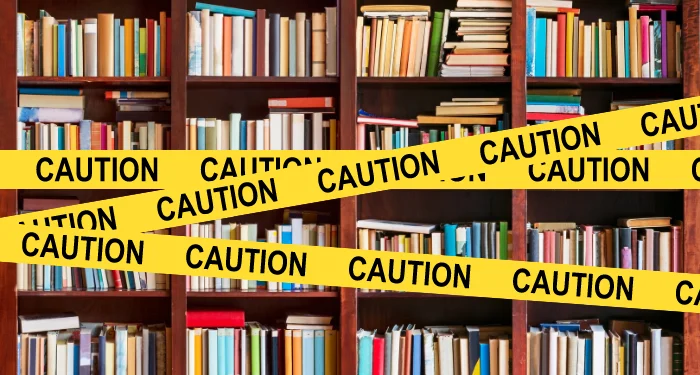
For half a decade, the American publishing industry has been locked in an escalating struggle against a wave of censorship that threatens to permanently alter the literary landscape. What began as localized challenges to specific titles has evolved into a systemic, national crisis. Today, authors, librarians, educators, and publishers find themselves at a breaking point, navigating a hostile environment that is not only silencing marginalized voices but actively dismantling the economic infrastructure that sustains diverse storytelling.
The crisis, characterized by a persistent surge in anti-LGBTQ+ rhetoric and legislative action, has reached a critical juncture. From the halls of Congress to local school board meetings, the "freedom to read" is under siege, and the consequences for queer authors—particularly those of color and those from other multiply marginalized backgrounds—are profound.
The Chronology of a Crisis
To understand the current state of the industry, one must look at the trajectory of the last five years. The movement began with organized, often aggressive, campaigns targeting school libraries, frequently focusing on books featuring LGBTQ+ themes or protagonists.
- The Early Phase (2019–2021): Initial efforts were largely decentralized, focusing on individual library shelves. These challenges were often framed as parental rights issues, though they disproportionately targeted queer kidlit and Young Adult (YA) novels.
- The Escalation (2022–2023): The rhetoric shifted from "parents’ rights" to state-level legislation. Bans on classroom discussions, the "Don’t Say Gay" movement, and sweeping library policies forced institutions to preemptively remove titles to avoid litigation or loss of funding.
- The Systemic Collapse (2024–Present): We are now witnessing the "market-side" phase of censorship. Publishers are no longer just reacting to bans; they are proactively self-censoring. Editors are turning down manuscripts featuring queer protagonists, and wholesalers—the vital middlemen between publishers and retailers/libraries—are increasingly omitting LGBTQ+ titles from their inventories.
The recent passage of federal legislation, such as the "Don’t Say Trans" bill in the House, underscores that this is no longer a localized issue. It is a national legislative push that has created a "chilling effect" throughout the entire supply chain of the book industry.
Data and Economic Impact: The Erosion of a Market
The financial toll on the literary community is staggering. The decline in visibility for queer literature has translated directly into a collapse in revenue for authors and small, independent publishing houses.
The Sales Crater
Data from independent and niche publishers suggest that sales to educational institutions—a primary revenue stream for children’s and YA literature—have dropped by as much as 50%. Jason Low, co-owner of Lee & Low Books, the nation’s largest independent publisher specializing in diversity, has provided alarming anecdotes regarding these trends. According to Low, sales representatives report that even books featuring generic rainbows on their covers are being flagged or omitted from library and school orders, as buyers fear backlash from local activists who conflate any rainbow imagery with Pride advocacy.
The Impact on Authors
For authors, the economic reality is equally bleak. Children’s book authors, who traditionally rely on school visits to supplement their income, report that invitations have evaporated. Award-winning YA novelist Adib Khorram recently disclosed that his royalty income has plummeted by 70% in the wake of the heightened censorship climate. Other established authors, some with over a decade of successful titles, have seen their books go out of print as demand in the institutional market has withered.
Official Responses and Industry Shifts
The shift in acquisition strategy is perhaps the most damning evidence of the crisis. Literary agents and editors, who serve as the gatekeepers of the industry, have begun to openly discuss their changing criteria for new projects.
The Agent’s Perspective
Rebecca Podos, a prominent literary agent, noted in a recent interview that for the first time in a decade, she is receiving rejection letters from editors that explicitly cite the "difficulty of placing queer books in stores" as the primary reason for passing on a manuscript. This is a marked departure from the industry’s previous ethos, which generally prioritized artistic merit and market potential over political fear.
The Publisher’s Dilemma
Literary agent Jim McCarthy echoed these sentiments, highlighting that the current environment is the first "backwards step" in recent memory. He describes receiving rejections where editors openly admit that the perceived lack of a market—due to institutional fear—is the deciding factor.
Furthermore, author and creator of the database LGBTQ Reads, Dahlia Adler, has tracked a noticeable decline in queer book deal announcements within industry trade publications like Publishers Weekly. Perhaps more disturbingly, she observes that when queer books are acquired, the marketing language used to announce them is often coded or obfuscated to hide the queer content, effectively attempting to "sneak" the books past potential censors.
The Human Cost: Burnout and Doxxing
Beyond the balance sheets, the industry is suffering a human resource crisis. The professionals on the front lines—librarians, teachers, and publishers—are running on fumes.
The emotional labor required to fight constant, often vitriolic, challenges is immense. Professionals have reported:
- Doxxing and Harassment: Many have been targeted by online mobs, leading to professional and personal instability.
- Death Threats: The intensity of the opposition has moved beyond mere disagreement into threats of violence.
- Professional Attrition: Experienced librarians and educators are leaving the profession in record numbers, citing a work environment that has become hostile and untenable.
Implications for the Future
The long-term implications of this systemic pressure are severe. If the industry continues to self-censor, a generation of young readers will be deprived of narratives that validate their experiences and offer comfort. The "chilling effect" does not just remove books from shelves; it narrows the scope of human experience that is deemed "acceptable" for public discourse.
However, the resilience of the community remains a bright spot. While large publishers may be retreating, independent queer bookstores are seeing a resurgence across the United States. These spaces serve as vital hubs for community, mutual aid, and political organization. They are the new bastions of literary freedom, proving that while the institutional market may be shrinking, the demand for authentic, queer-centered stories remains robust.
The Call to Action
The crisis requires more than passive observation; it demands active participation. Experts suggest that the survival of queer literature depends on "reinforcements"—new advocates who can engage in the following ways:
- Civic Engagement: Attending school and library board meetings to voice support for intellectual freedom.
- Political Advocacy: Contacting state and federal representatives to oppose legislation that restricts access to information.
- Community Support: Directly supporting independent, queer-owned bookstores and publishers.
- Information Literacy: Actively correcting misinformation regarding the content of challenged books.
As we approach Pride Month, the industry faces a choice: succumb to the pressure of censorship or recommit to the fundamental democratic necessity of free expression. The survival of queer literature is not merely a matter of artistic importance; it is a battle for the soul of our public institutions and the right of every reader to see themselves reflected in the stories they consume. The fight is far from over, and the outcome will define the literary heritage of the next generation.

 Layla Zulfa