

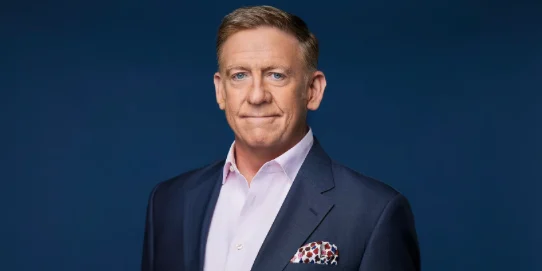
The venerable halls of CBS News, long considered the gold standard of American broadcast journalism, are currently the site of a high-stakes power struggle that threatens to dismantle the legacy of 60 Minutes. As the news organization navigates a post-acquisition landscape following Paramount’s sale to Skydance Media, the appointment of tech journalist and filmmaker Nick Bilton as executive producer has acted as a catalyst for an internal revolt. At the center of this storm is veteran correspondent Scott Pelley, whose recent, highly public confrontation with leadership has ignited a broader debate regarding the future of journalistic independence, the influence of political pressure, and the eroding culture of the network’s flagship newsmagazine.
The Confrontation: A Clash of Cultures
The tensions reached a boiling point on Monday during an introductory staff meeting led by the newly appointed executive producer, Nick Bilton. According to reports confirmed by The New York Times, the meeting—intended to serve as a bridge between the old guard and the new administration—devolved into a heated confrontation.
Scott Pelley, a stalwart of the program and a standard-bearer for the CBS News tradition, did not mince words. Facing Bilton, Pelley reportedly launched a scathing critique of the current direction of the organization. He directed his ire toward Bari Weiss, the recently installed editor-in-chief of CBS News, accusing her of "murdering" 60 Minutes. This accusation was fueled by the recent, sweeping staff cuts that have seen veteran producers and correspondents unceremoniously ousted from the newsroom.
Beyond the staffing crisis, Pelley took aim at the legitimacy of the new leadership itself. He openly questioned Bilton’s qualifications, describing the documentarian and tech-focused journalist as possessing only "slender" experience in the rigors of high-level television news. For Pelley, the appointment of someone outside the traditional investigative broadcast lineage signaled a fundamental shift away from the "Murrow-esque" values that have defined the program for decades.
A Legacy in Flux: The Context of the Exodus
The current volatility at CBS did not emerge in a vacuum. It is the culmination of years of structural, cultural, and ownership shifts. To understand the gravity of the recent resignations and terminations, one must look at the tenure of Bill Owens, Pelley’s former executive producer who resigned in 2025.
Owens left the program citing a profound loss of journalistic independence, an atmosphere he described as increasingly suffocating. His departure was precipitated by the fallout from CBS News’ handling of a legal settlement with President Donald Trump, which Owens and other senior staff viewed as a compromise of the network’s editorial autonomy.
The recent purge of talent has been described by insiders as a systematic dismantling of the 60 Minutes DNA. The list of those dismissed or pushed out is extensive and includes high-profile figures who served as the backbone of the broadcast:
- Tanya Simon: The veteran producer who assumed the helm after Owens’ departure.
- Draggan Mihailovich: A cornerstone of the investigative team.
- Guy Campanile: A long-time producer instrumental in the program’s most significant exposes.
- Correspondents: The removal of Cecilia Vega and Sharyn Alfonsi has sent shockwaves through the industry, signaling that no position within the network is secure from the current management’s restructuring efforts.
The "Truth to Power" Defense: Bill Owens Speaks Out
The most significant defense of Scott Pelley’s conduct has come from Bill Owens himself. During his acceptance of the Gabe Pressman Truth to Power Award at the 2026 New York Press Club Journalism Awards, Owens broke his silence, offering a scathing indictment of the current leadership at CBS.
"Scott Pelley can smell fraud a mile away," Owens declared to the assembly of journalists, framing Pelley’s confrontation not as an act of insubordination, but as a moral imperative. Owens emphasized that the staff of 60 Minutes—both current and departed—stood behind Pelley’s willingness to challenge the new regime.
Owens’ remarks shed light on the pressures he faced during the lead-up to the Paramount-Skydance merger. He alleged that his resignation was a strategic move designed to draw public attention to the undue interference from corporate stakeholders who were prioritizing the optics of a media sale over the integrity of the newsroom.
Perhaps most damning were Owens’ revelations regarding the dismissal of Claire Day, the former CBS News London bureau chief. According to Owens, Day’s termination was tied to her editorial decision-making, specifically the securing of visas for a team to report from Tehran. Owens claimed that the new leadership in New York deemed the prospect of such reporting a "bad look," a phrase that suggests a move toward editorial cowardice and political timidity rather than journalistic courage.
The Implications: Is the "60 Minutes" Model Obsolete?
The crisis at 60 Minutes represents a pivotal moment in American media history. The fundamental question being posed is whether a legacy investigative institution can survive under the management of an entertainment-focused media conglomerate.
The Shift in Editorial Standards
The accusations made by Pelley and Owens suggest that the current leadership is prioritizing "brand safety" and corporate alignment over the pursuit of hard-hitting, uncomfortable stories. When a bureau chief is penalized for seeking access to a volatile region like Iran, it signals to the newsroom that the appetite for risky, consequential journalism has evaporated.
The Credibility Gap
The appointment of Nick Bilton, while intended to modernize the program, has inadvertently highlighted a chasm between the digital-first, tech-focused journalism of the new era and the long-form, source-heavy investigative work that defined 60 Minutes. For viewers who have tuned in for over half a century, the fear is that the show is being hollowed out—transformed into a high-production-value talk show that lacks the teeth of its predecessors.
The Corporate-Journalism Nexus
The influence of the Paramount-Skydance merger remains the elephant in the room. As media companies face shrinking ad revenues and increased public scrutiny, the pressure to appease shareholders and political entities has become an existential threat to the Fourth Estate. Owens’ warning that the culture of the newsroom is being sacrificed for corporate convenience serves as a case study for the industry at large.
Official Responses and the Silence from 26 West 52nd Street
In the wake of these accusations, CBS News has maintained a posture of strategic silence. Requests for comment regarding the specific allegations made by Bill Owens—particularly the claims regarding the firing of Claire Day and the interference in journalistic independence—have gone unanswered.
This silence is telling. In the traditional media landscape, such an aggressive public critique from a former executive producer would have been met with a firm, point-by-point rebuttal. By remaining quiet, the current leadership may be signaling a desire to move past the controversy by simply ignoring it, or it may indicate a lack of a coherent narrative to defend the recent restructuring.
Conclusion: A Turning Point
The industry now watches with bated breath to see if Scott Pelley will remain at the helm of the program, or if the friction between his traditional values and the new corporate mandates will necessitate his exit. The defense mounted by Bill Owens has galvanized many in the journalism community, creating a narrative that frames the conflict not as a simple personnel dispute, but as a battle for the soul of investigative broadcasting.
As 60 Minutes prepares for its next chapter, it faces an identity crisis that may determine its relevance in the coming decade. If the program continues to shed the talent and the editorial fire that made it a household name, it risks becoming a relic of a bygone era—a polished, empty shell of what was once the most powerful investigative platform in the world. The "murder" of the show, as Pelley described it, may not be a sudden event, but a slow, painful erosion of the principles that once made 60 Minutes the gold standard of American television.












No comments yet. Be the first to join the conversation!