

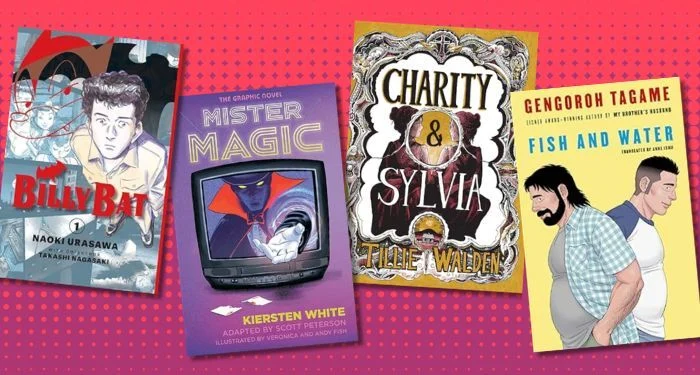
As the summer solstice approaches, the comic book and graphic novel industry is experiencing a surge of creative energy. June 2026 is shaping up to be a landmark month for both independent creators and major publishers, offering a curated blend of high-stakes mysteries, poignant queer narratives, and speculative fiction that challenges the boundaries of the medium.
While much of the industry buzz centers on the annual Pride Month anthologies—most notably the Adventure Time Pride Special: PB & Marcy’s Infinite Mixtape #1 and IDW’s Star Trek: Celebrations—the real depth of the month’s offerings lies in a collection of standalone graphic novels. These works explore themes of identity, the search for meaning in a post-industrial world, and the reclamation of dark, buried truths.

Main Facts: The Changing Face of June Releases
The current release slate reflects a broader trend within the comics medium: a shift toward longer-form, character-driven storytelling that leans into literary themes. This month’s titles are notably varied in tone, moving from the psychological suspense of Naoki Urasawa’s latest work to the historical intimacy of Tillie Walden’s exploration of early 19th-century queer life.
For readers, this represents a shift away from the traditional episodic superhero dominance. Instead, the focus has moved toward “prestige” graphic novels that function more like self-contained novels. Whether it is an adaptation of a prose thriller or an original exploration of the gig economy, the common thread across all major June releases is the examination of the “lost” or “directionless” individual finding a path forward.

Chronological Breakdown of Key Releases
The release calendar for June 2026 is densely packed, with major titles dropping weekly to keep pace with an eager readership.
Week 1: Mystery and Adolescence (June 2–9)
- June 2: Billy Bat Volume One (Naoki Urasawa and Takashi Nagasaki). Urasawa returns to his mastery of suspense, following a cartoonist in post-war America whose career is threatened by a plagiarism scandal. The narrative quickly transcends its premise, spiraling into a complex mystery that demands reader attention.
- June 2: Encore! (Miles Toriko Burks). This coming-of-age story captures the specific tension of high school theater, focusing on the strained dynamic between former best friends Clay and Aron. It is a nuanced look at unrequited love and the silent barriers that form between people.
- June 9: Mister Magic (Kiersten White, adapted by Scott Peterson). An adaptation of the popular prose novel, this graphic narrative delves into the unsettling history of a cancelled children’s show, peeling back layers of nostalgia to reveal a dark, occult underbelly.
Week 2: History and Wilderness (June 16)
- June 16: Charity and Sylvia (Tillie Walden). Walden brings her signature visual style to this true story of a 19th-century lesbian couple in Vermont. It is a masterclass in historical fiction, proving that queer joy and resilience have deep, often-overlooked roots in the American experience.
- June 16: Finish Lines (Sarah Broyles and Hanna Schroy). This survival story pits high-pressure academic burnout against the raw reality of the wilderness, as a student finds solace in an unlikely canoe trip with her grandfather.
- June 16: Gigs (Mark Mosedale and Si Smith). A timely, speculative exploration of a world dominated by AI, examining how human beings define their worth when their labor is no longer required.
Week 3: Intimacy and Romance (June 23–30)
- June 23: Fish and Water (Gengoroh Tagame). Set against the backdrop of the global pandemic, Tagame explores the shift from platonic friendship to romantic longing, providing a quiet, contemplative look at the intimacy that grew in the face of isolation.
- June 30: Mirka Andolfo’s Sweet Paprika: Open for Business (Steve Orlando and Emilio Pilliu). A spin-off of the hit Sweet Paprika series, this volume brings a high-octane, adult-oriented romantic comedy tone to the end of the month, focusing on the chaotic professional and personal life of Aubrey Jean.
Supporting Data: The Rise of the Graphic Novel Market
The 2026 market data suggests that readers are increasingly gravitating toward "Graphic Novel" branding rather than traditional "Comic Book" serials. According to industry analysts, sales of standalone graphic novels have seen a 14% year-over-year increase compared to the same period in 2025.

Publishers like Pantheon and Drawn & Quarterly are capitalizing on this by securing high-profile talent—such as Tillie Walden and Gengoroh Tagame—to anchor their monthly release schedules. The “literary graphic novel” sector is now the fastest-growing segment in bookstores, outperforming standard periodicals in shelf longevity and digital backlist sales.
Official Responses and Publisher Perspectives
Industry spokespeople have noted that the June 2026 slate is the result of a deliberate effort to diversify the types of stories being told.

“We aren’t just looking for serialized content anymore,” stated a representative from a leading publishing house. “The market is telling us that readers want a beginning, a middle, and a definitive end. They want stories that address the complexities of modern life, from the anxiety of AI to the specific, intimate realities of LGBTQ+ history. Our June lineup is a direct response to that demand for substance.”
Furthermore, the integration of “prestige” adaptations—such as the transition of Mister Magic from prose to graphic format—indicates that publishers are treating comics as a primary storytelling medium rather than a secondary one. This shift in sentiment is supported by the increasing number of library acquisitions for these titles, which serve as a critical metric for long-term cultural impact.

Implications for the Future of the Medium
The success of the current crop of releases carries significant implications for the future of the industry:
- The Decline of the "Superhero Monopoly": With non-superhero titles dominating the critical conversation this June, it is clear that the medium has finally achieved the "literary legitimacy" that creators have sought for decades.
- Increased Focus on Mature Themes: The inclusion of titles like Sweet Paprika and Gigs suggests that publishers are no longer shying away from mature, adult-oriented themes. This is not limited to explicit content but extends to the complex psychological and existential questions posed by modern life.
- The "Slow-Burn" Aesthetic: As evidenced by works like Fish and Water and Charity and Sylvia, there is a growing appetite for pacing that prioritizes atmosphere and character development over rapid action. This suggests a future where the "graphic novel" is treated with the same intellectual rigor as high-end literary fiction.
- Sustainability in Storytelling: The prevalence of themes regarding human purpose in a technological age—as seen in Gigs—suggests that comics are becoming the preferred vehicle for social commentary. As society grapples with rapid technological change, the visual nature of the graphic novel allows for a unique, immediate interrogation of these issues that text-only media sometimes struggles to capture.
As we look toward the remainder of 2026, the trajectory established this June suggests that the industry is in a period of unprecedented maturity. Readers are being offered a diverse, challenging, and deeply rewarding library of work that proves, once and for all, that the graphic novel is a versatile and vital component of our modern cultural narrative. Whether you are seeking a dark mystery to keep you up at night or a historical romance to warm the heart, the June 2026 collection provides a roadmap for the future of the medium.










No comments yet. Be the first to join the conversation!