Ammar Sabilarrohman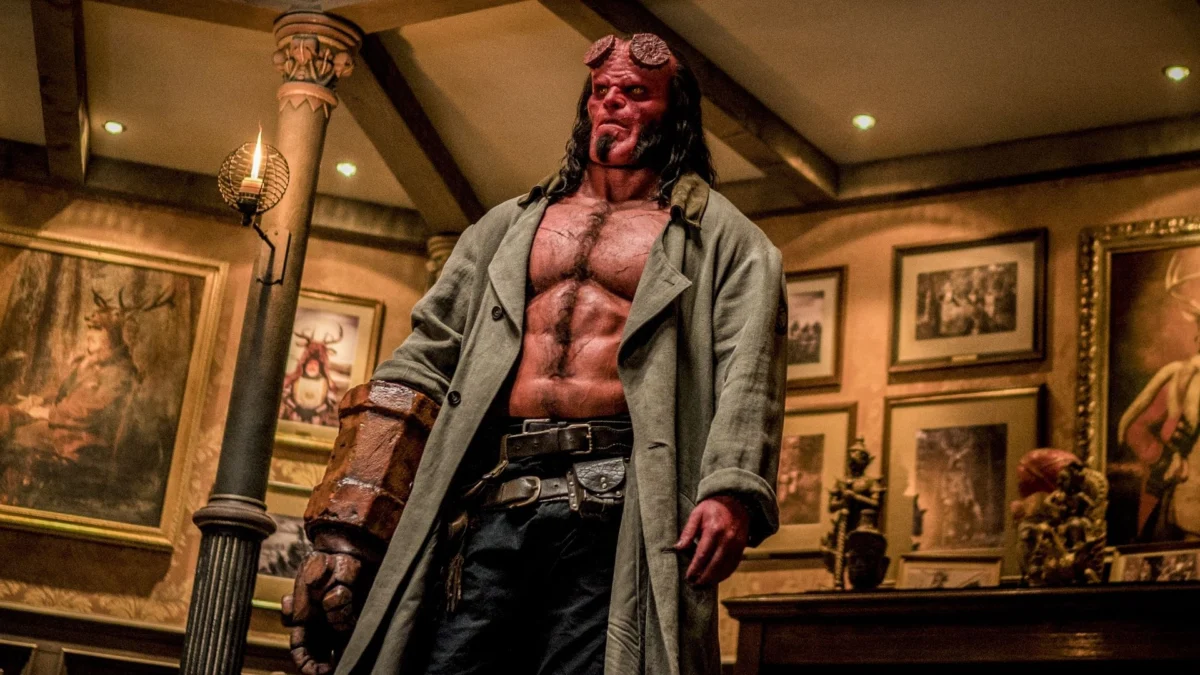
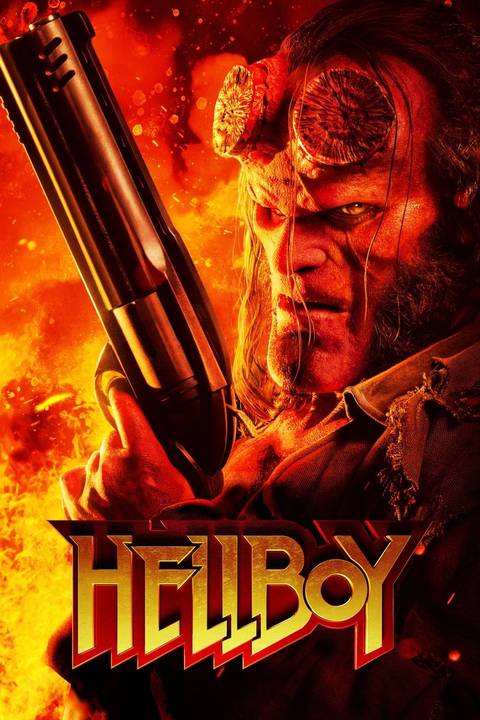
The 2019 reboot of Hellboy remains one of the most polarizing entries in the history of comic book adaptations. Stepping into the oversized, stone-clad shoes of a character previously defined by Ron Perlman and director Guillermo del Toro was never going to be an easy task for David Harbour. However, as new details emerge regarding the production, it has become clear that Harbour’s challenges were not merely limited to audience expectations or critical scrutiny—they were embedded in the very fabric of the film’s troubled script.
In a candid recent revelation to Variety, Harbour admitted that he took extraordinary, and perhaps technically unauthorized, measures to inject life into the production. Recognizing that the film was drifting, the Stranger Things actor reached out to his personal circle of screenwriters in Los Angeles to "punch up" the dialogue, attempting to save a project that he felt was slipping away from its potential.
The Anatomy of a Troubled Production
To understand the weight of Harbour’s intervention, one must look at the climate surrounding the 2019 Hellboy release. Eleven years after the critically acclaimed Hellboy II: The Golden Army, the franchise was handed to director Neil Marshall with the intent of creating a grittier, more horror-leaning adaptation of Mike Mignola’s iconic Dark Horse Comics source material.
The production was plagued by reports of creative interference and behind-the-scenes friction. While the film was meant to pull from fan-favorite story arcs such as The Wild Hunt and The Storm and the Fury, the finished product struggled to find a cohesive tone. Critics and audiences alike noted that the film felt disjointed, pacing poorly between excessive CGI spectacle and a narrative that failed to capture the soulful, melancholic heart of Mignola’s original work.
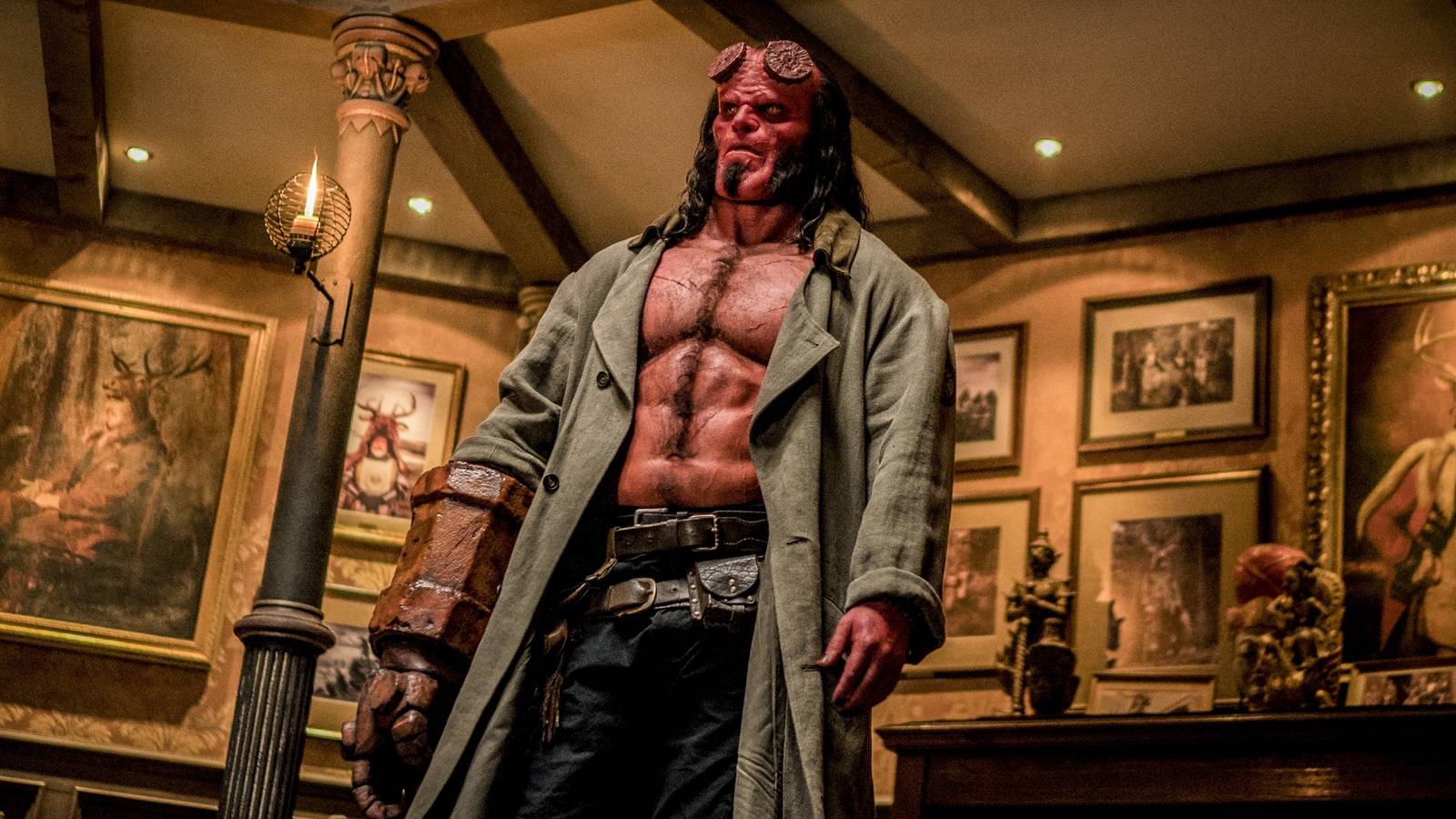
Harbour’s admission highlights a desperate attempt to bridge these gaps. "I was really trying real hard to bring something to this movie," Harbour told Variety. "Had a bunch of writer buddies in LA. This is probably illegal from the [Writers Guild]… and I used to just send them scenes and just be like, ‘Help me save this movie. Just write me some funny one-liners.’ And they did."
The "Unauthorized" Script Doctoring
Harbour’s confession shines a light on the often-murky waters of Hollywood script development. While major motion pictures have formal processes for revisions, "script doctoring" or unofficial punch-ups are common, albeit usually kept behind closed doors to avoid complications with the Writers Guild of America (WGA).
By bypassing official channels, Harbour was essentially crowdsourcing creative salvation for a sinking ship. The actor pointed to specific, hyper-stylized lines of dialogue—such as, "My cage? My cage! I’m gonna specifically ask that you clean my sawdust. Can’t wait until you smell demon shit, pal!"—as examples of the kind of tonal shifts he was trying to achieve. While Harbour remained ambiguous about whether those specific lines were the product of his friends or the original script, the anecdote underscores a performer attempting to assert agency over a character that felt under-served by the official screenplay.
Officially, the screenwriting credit for the 2019 reboot belongs solely to Andrew Cosby, who worked alongside creator Mike Mignola and Christopher Golden. The gap between the official credit and Harbour’s account of his "writer buddies" suggests a production environment where the star felt the script was not yet ready for the camera, leading him to take matters into his own hands.

A Chronology of Failure and Fan Backlash
The release of Hellboy (2019) was met with a swift and harsh critical consensus. ScreenRant’s own review at the time branded the film as a "surprisingly boring superhero epic that drags between sequences of fantasy action spectacle."
The film’s commercial performance further cemented its status as a disappointment. Produced on a budget of roughly $50 million, the film struggled to recoup its costs, pulling in only $55 million worldwide. This financial failure effectively shuttered any hopes of a franchise expansion, despite the film’s post-credits sequence teasing the introduction of fan-favorite character Abe Sapien and the ongoing threat of the Baba Yaga.
The fallout was immediate:
- 2020: David Harbour publicly addressed the failure, pinning much of the blame on the shadow of the del Toro films. He argued that the audience’s deep-seated love for the previous iterations made it nearly impossible for his version to be judged on its own merits.
- 2023: Harbour adopted a more humorous, self-deprecating stance, revealing that he keeps a framed photo of himself in the full Hellboy makeup in his closet. He described it as a way to "remember where I came from" whenever he feels his ego growing too large.
- 2024: Director Neil Marshall broke his silence, admitting that the Hellboy experience was difficult and that he finds it hard to separate his feelings about the process of making the film from the final, underwhelming result.
Implications for the Genre and the Actor
The case of Hellboy (2019) serves as a cautionary tale for studios attempting to reboot beloved properties without a clear creative vision. It illustrates the danger of focusing on "grittiness" at the expense of character depth and narrative structure.
For David Harbour, however, the project did not mark the end of his career in comic book adaptations; rather, it served as a pivot point. Having navigated the wreckage of the 2019 reboot, Harbour successfully transitioned into the Marvel Cinematic Universe as the Red Guardian. His performance in Black Widow and his upcoming role in Avengers: Doomsday have solidified his standing as a major player in the superhero landscape, proving that one high-profile misstep does not define an actor’s trajectory.
The legacy of the 2019 Hellboy is perhaps best defined by the recent release of Hellboy: The Crooked Man. While this new iteration attempted to return to the roots of the character with a more low-budget, horror-centric approach, it too failed to capture the imagination of the general public, suggesting that the brand itself may be struggling to find a place in the modern superhero ecosystem.
Final Reflections
David Harbour’s willingness to speak openly about his "illegal" script-doctoring efforts provides a rare, transparent glimpse into the desperate measures actors take when they realize the product they are starring in is not meeting the required standard. It highlights a professional who cared deeply about the character and the project, even when the stars—and the script—were not aligned.
While the 2019 reboot remains a footnote in the history of comic book cinema, the story of its creation continues to resonate. It is a reminder that even in the multi-million dollar world of blockbuster filmmaking, the difference between success and failure often comes down to the quality of the written word—and that sometimes, even the star of the movie knows when the dialogue just isn’t working.

As Harbour moves forward into the massive machine of the MCU, he leaves behind the brimstone and the sawdust of 2019, carrying with him the hard-learned lessons of what happens when a vision—no matter how well-intentioned—fails to ignite.

 Nana Wu
 Jia Lissa