Azzam Bilal Chamdy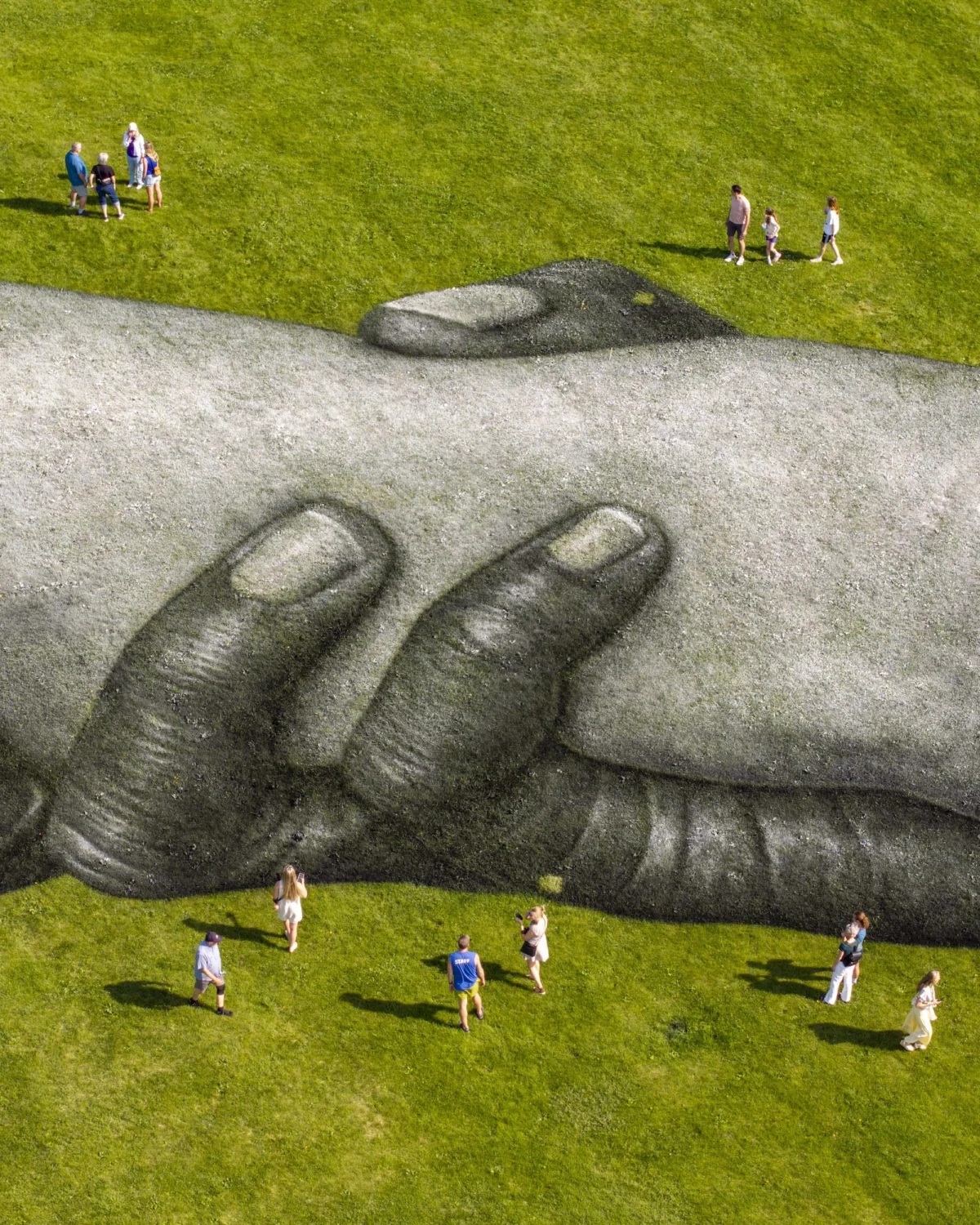
Introduction: Art as a Bridge Across Fractured Landscapes
In early June, the sprawling green expanse of Minneapolis’s Boom Island Park became the canvas for a profound act of visual storytelling. Franco-Swiss artist Saype, renowned for his colossal, temporary land art, unveiled the 22nd iteration of his globally acclaimed Beyond Walls project. This installation, stretching 310 by 75 feet, features two enormous hands clasping one another—a universal symbol of human connection, solidarity, and the dismantling of societal barriers.
Marking the project’s inaugural appearance in the United States, the work serves as a poignant counterpoint to the turbulent history that has defined Minneapolis in recent years. As the mural sits against the backdrop of the Mississippi River—known to the Indigenous Anishinaabe people as Misi-ziibi, or "Giant River"—it invites viewers to reflect on themes of unity, environmental stewardship, and the enduring strength of a community that has navigated profound trauma.

The Landscape of Struggle: Contextualizing Minneapolis
To understand the significance of Saype’s intervention, one must acknowledge the unique, often painful, position Minneapolis occupies in the contemporary American consciousness. Since the 2020 murder of George Floyd, the city has become a symbolic epicenter for the global Black Lives Matter movement. The resulting protests, while a catalyst for necessary national discourse on racial justice, also left the city grappling with the raw aftermath of systemic inequality and police reform debates.
The situation was further compounded earlier this year when intensified immigration enforcement activities sparked new rounds of civil unrest. The tragic deaths of Renée Nicole Good and Alex Pretti during encounters with agents further fractured the community’s sense of safety and trust. Against this backdrop, the arrival of Beyond Walls is not merely an aesthetic event; it is a therapeutic, communal response to a city searching for a path toward reconciliation.

A Chronology of the Installation
The realization of the Minneapolis mural was a multi-stage process that bridged the gap between artistic vision and civic participation.
- Preparation (Late May 2026): Saype and his team arrived at Boom Island Park, conducting environmental assessments to ensure the site-specific installation would respect the local ecology.
- The Application (Early June 2026): Utilizing a proprietary, biodegradable paint made from charcoal, chalk, and natural pigments, Saype began the laborious process of hand-spraying the mural. Unlike traditional street art, this medium is designed to be temporary, eventually fading away due to the natural elements and routine park maintenance.
- Community Engagement (June 6–7, 2026): As the mural neared completion, hundreds of Minneapolis residents flocked to the park. The gathering transformed into a spontaneous demonstration of solidarity. Participants linked arms, forming a human chain that mirrored the mural’s design, physically embodying the concept of "beyond walls."
- Public Unveiling: Once completed, the work was captured by drone photography, revealing the vast scale of the interlaced fingers reaching across the grass, oriented toward the river.
The "Minneapolis Paradox": Resilience Amidst Turmoil
While the city’s recent history is marked by conflict, there is a secondary, quieter narrative in Minneapolis that defines the daily lives of its citizens. The city possesses a deep-seated culture of mutual aid and neighborly intervention. From innovative, post-modern food sharing initiatives to the common, unspoken practice of neighbors shoveling one another’s walks during the harsh winters, the city operates on a foundation of collective care.

Supporting this, a recent report by the State of the Nation index ranked Minnesota as the number one state in the U.S. for overall quality of life. This paradox—a city defined by both deep systemic trauma and exceptional community cohesion—is precisely why Saype chose Minneapolis for this historic U.S. debut.
Official Perspectives and Artist Intent
In a statement regarding the project, Saype emphasized the transformative power of public art. "I found an incredible humanity in Minneapolis—in the welcome of its people, their stories, and their kindness. I am deeply grateful for that," the artist remarked. "This is the power of art: to bring people together. I hope this work will make people dream—here and far beyond."

Local officials and community leaders have largely lauded the project for providing a neutral, reflective space for residents. By moving the conversation from the streets of the urban center to the natural environment of the riverfront, the artwork allows for a "cooling off" period—a space for reflection that is often denied in the fast-paced, confrontational environment of modern political discourse.
Ecological Integrity: Art That Returns to the Earth
A defining characteristic of Saype’s work is its fleeting nature. In an era where monuments are often sites of contention, the Beyond Walls project avoids permanence. The use of a biodegradable medium is a deliberate ethical choice, ensuring that the art does not leave a lasting, invasive footprint on the land.

The Mississippi River, the lifeblood of the city, serves as a silent witness to the mural. By acknowledging the Anishinaabe name, Misi-ziibi, the project also engages with the deeper history of the land. It frames the human effort of "breaking walls" within the larger, cyclical patterns of the natural world, suggesting that true unity must include an acknowledgment of the environmental and historical context of the space we occupy.
Implications for Future Public Art
The success of the Minneapolis installation raises critical questions about the role of large-scale art in urban policy. Can art be an effective tool for social healing?

The "Beyond Walls" Legacy
- Civic Engagement: The project proved that public art can serve as a magnet for diverse demographics, bringing people together in a shared physical space to participate in a symbolic act of unity.
- Economic and Social Value: By creating a landmark that is "Instagrammable" yet meaningful, the city of Minneapolis successfully utilized culture to shift its international image from one of "protest city" to one of "community resilience."
- Scalability: The Beyond Walls model, which has now appeared in 22 global cities, provides a blueprint for other American municipalities to host similar, temporary interventions that focus on social cohesion.
Conclusion: The Fading Mural as a Lasting Memory
As the summer progresses, the mural at Boom Island Park will inevitably begin to fade. The grass will grow, the elements will wash away the charcoal and chalk, and the images of the clasping hands will return to the earth.
However, the impact of the installation remains in the memories of those who witnessed it. For a city that has been through so much, the presence of Saype’s work served as a necessary reminder of the strength found in human connection. It offered a brief, beautiful, and profoundly hopeful interlude, proving that even in the most hardened landscapes, there is always room for a new, shared vision.

For those unable to visit the site in person, Saype has released an official print edition of the work, with all proceeds dedicated to the funding of future Beyond Walls projects. As the mural vanishes, the conversation it started—about how we treat our neighbors and how we build bridges across the walls that divide us—continues to ripple outward, far beyond the banks of the Mississippi.

 Nana
Nana
 Basiran