Layla Zulfa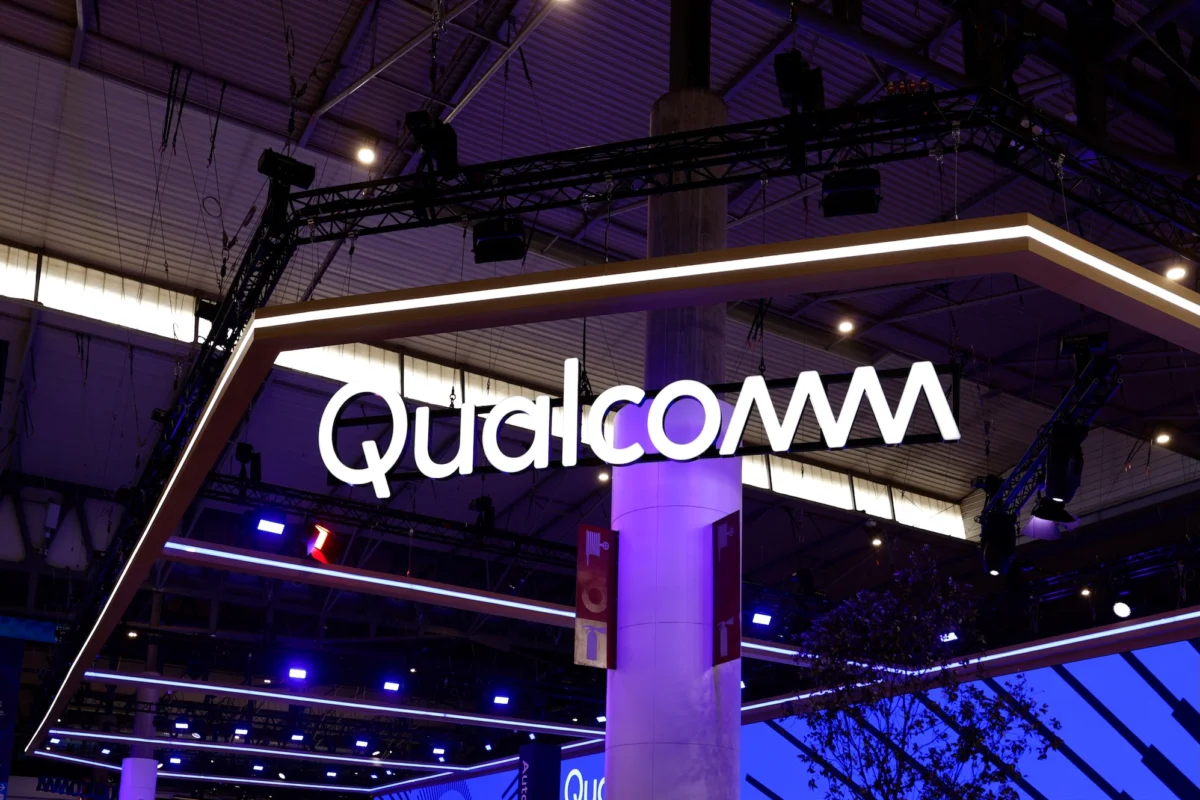
For over a decade, the smartphone has reigned supreme as the primary interface between humanity and the digital world. However, if Qualcomm CEO Cristiano Amon’s recent projections hold true, the era of the handheld glass rectangle may be nearing its twilight. In a bold strategic shift, Qualcomm is moving to cement itself as the foundational silicon architecture for the next generation of computing: the "always-on" AI wearable.
During a recent industry briefing, Amon revealed that the San Diego-based chip giant is currently collaborating on more than 40 distinct AI-integrated wearable devices. This diverse portfolio—ranging from smart jewelry and intelligent earbuds with built-in cameras to specialized pins and advanced watches—signals a paradigm shift in how the company views the future of human-computer interaction. Qualcomm is not merely betting on a single device; it is betting on an entire ecosystem of form factors designed to untether the user from the smartphone.
The Foundation: Snapdragon Reality Elite and START
To facilitate this transition, Qualcomm has unveiled two critical pillars of its new strategy: the Snapdragon Reality Elite platform and the Scalable Turnkey AI-Ready Toolkit (START). These announcements represent a dual-pronged approach, targeting both high-end immersive hardware and the broader market of lightweight, AI-first accessories.
Snapdragon Reality Elite: Powering the Immersive Future
The Snapdragon Reality Elite is designed to serve as the brain for sophisticated mixed-reality (MR) glasses. It represents a significant architectural leap over its predecessor, the XR2+ Gen 2. According to internal benchmarks, the new platform delivers a 60% increase in GPU performance, a 30% jump in CPU power, and a staggering 160% boost in NPU (Neural Processing Unit) efficiency.
These numbers are more than just marketing jargon; they translate to tangible capabilities. Most notably, the chip is capable of processing a 3-billion-parameter large language model (LLM) at a speed of 45 tokens per second. This speed is crucial for the "real-time" feel required for fluid conversational AI. Furthermore, the platform supports 4.4K per-eye resolution at 90 frames per second. By pushing the boundaries of visual fidelity and refresh rates, Qualcomm aims to mitigate the motion sickness and eye strain that have plagued early VR/AR headsets, thereby improving the long-term wearability of the devices.
START: Lowering the Barrier to Entry
Recognizing that the path to a post-smartphone world requires a vast array of manufacturers, Qualcomm introduced the Scalable Turnkey AI-Ready Toolkit (START). START is a comprehensive suite of hardware modules and software stacks designed to help startups and traditional eyewear manufacturers enter the tech space with minimal friction.
Through a white-label program, Qualcomm is providing reference designs for three distinct form factors:
- The Meta-style setup: An audio and camera integration similar to Ray-Ban smart glasses.
- Monocular displays: Single-lens heads-up displays for notifications and basic data.
- Binocular displays: Full-field-of-view systems for augmented reality.
By providing these "blueprints," Qualcomm is essentially acting as an incubator for the hardware startups that will define the next decade of personal computing.
Chronology of a Strategic Shift
The trajectory toward this "wearable-first" strategy did not happen overnight. It is the result of years of iterative development and a growing recognition that AI agents require a different kind of sensory input than a phone can provide.
- Early Foundations: Years of development in the XR (Extended Reality) space allowed Qualcomm to refine its tracking and spatial computing technologies.
- The AI Awakening: With the explosion of Generative AI, Qualcomm shifted its focus from purely graphical performance to "on-device" intelligence, prioritizing the NPU.
- The Proliferation Phase: Throughout 2024 and 2025, Qualcomm began quietly signing partnerships with boutique hardware makers, leading to the current state where over 40 distinct designs are in the pipeline.
- The Present Day: The announcement of Reality Elite and START serves as the "public launch" of this ecosystem, signaling that the company is ready to support mass production for third-party vendors.
Supporting Data and Technical Context
The shift toward AI-wearables is driven by the necessity of context. As Amon noted, smartphones are limited by their position in a pocket or on a desk. They lack the "first-person" perspective of the world around the user.
Performance Metrics of Reality Elite
| Feature | Improvement Over XR2+ Gen 2 |
|---|---|
| GPU Performance | +60% |
| CPU Performance | +30% |
| NPU (AI) Performance | +160% |
| Resolution | 4.4K per eye |
| Refresh Rate | 90 fps |
The 160% increase in NPU performance is the most critical metric. For an AI to act as a helpful assistant, it must be able to "see" what the user sees, process that visual data locally (for privacy and latency reasons), and respond instantaneously. By enabling 3-billion-parameter models to run on-device, Qualcomm removes the need for constant cloud connectivity, which is often too slow for real-time interaction.
Official Responses and Strategic Logic
In his interview with CNBC, CEO Cristiano Amon provided the strategic justification for this aggressive expansion. He argued that the fundamental problem with the current smartphone-centric model is that it is a "disconnected" experience.
"I think there’s going to be a lot of experimentation with different form factors," Amon stated. "Right now, we have over 40 designs of those devices, and the types of form factors are very, very broad."
Amon’s logic is built on the concept of the "always-on" AI agent. For an AI to be truly effective, it must understand the user’s environment, observe their surroundings, and be available for voice interaction without the user having to unlock a device. He emphasizes that the "principle" of these new devices is constant availability. Whether it is a pair of lightweight glasses or a discreet pin, the device must be "with you all the time."
By positioning itself as the "foundational silicon layer," Qualcomm is attempting to become the Intel or the ARM of the wearable age. They are betting that even if the hardware market fragments into hundreds of specialized, niche devices, all of them will require the same core processing power that Qualcomm is now providing.
Implications for the Industry
The implications of this shift are profound, particularly for established tech titans.
The Challenge to Apple and Samsung
For years, Apple and Samsung have controlled the ecosystem of the smartphone. By shifting the computing platform to wearables, Qualcomm is providing the tools for smaller, more agile startups to challenge these incumbents. If the "next big thing" is a pair of AI-powered glasses from a niche manufacturer, the competitive landscape of the consumer electronics market will be fundamentally rewritten.
The Privacy and Data Frontier
As wearables become the primary interface for gathering real-world data, the conversation around privacy will intensify. These devices, by design, are meant to "see the world." Qualcomm’s focus on "on-device" processing is a strategic move to address these concerns. By running AI models locally rather than in the cloud, the company is attempting to provide a privacy-first value proposition that could be a significant selling point for consumers wary of constant surveillance.
The Future of Software Development
For developers, the rise of 40+ diverse form factors creates a new challenge: fragmentation. Unlike the relatively standardized iOS and Android environments, developers may soon have to optimize their software for a wide array of wearables, each with different sensors, displays, and compute capabilities. Qualcomm’s software stack, included in the START program, is an attempt to create a unified framework, but the industry remains in a period of "wild west" experimentation.
Conclusion
Qualcomm is not merely selling chips; they are orchestrating a transition. By providing the processing power, the reference designs, and the AI software stack, they are lowering the barrier for hardware innovation to a level rarely seen in the tech industry.
While the smartphone is unlikely to disappear overnight, the move toward specialized AI wearables represents the most significant shift in consumer hardware in the last decade. As Cristiano Amon and his team continue to refine the Reality Elite and START platforms, the focus will shift to whether consumers are ready to embrace a future where their digital assistant is not in their pocket, but woven into the very glasses they wear or the jewelry they don. The era of the "always-on" agent has begun, and Qualcomm is clearly aiming to be the engine behind it.


 Azzam Bilal Chamdy