Ammar Sabilarrohman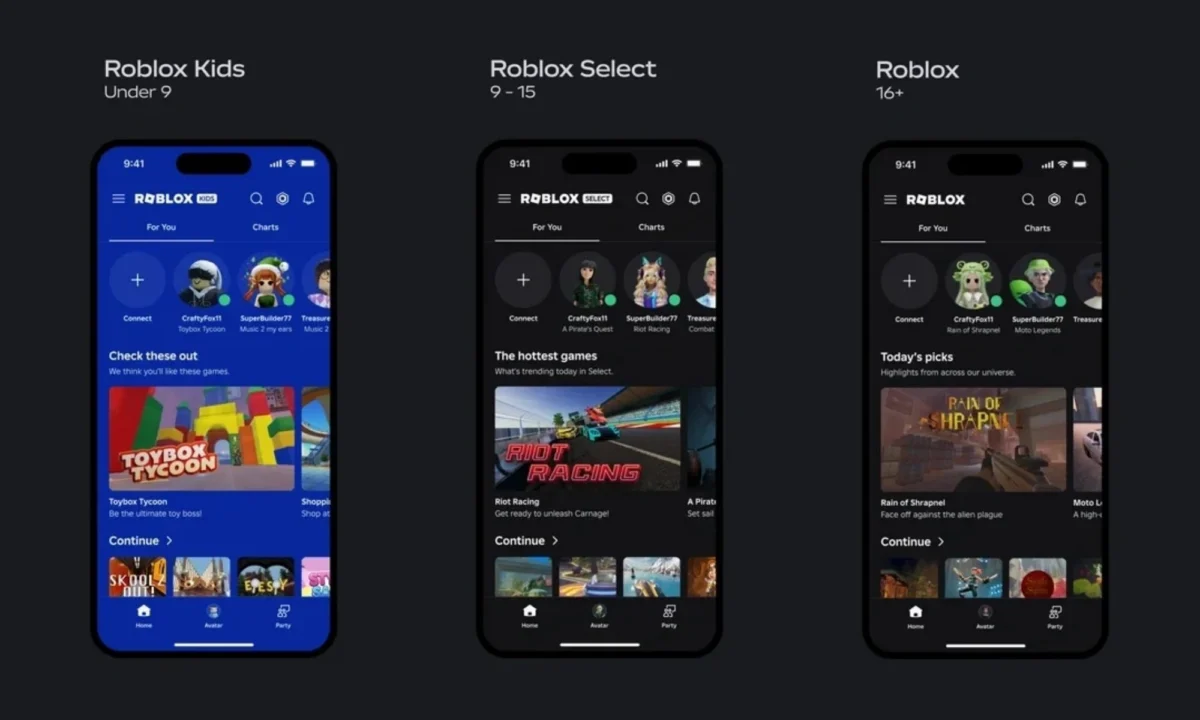
In a major shift for one of the world’s most popular digital playgrounds, Roblox has officially launched its new "Roblox Kids" and "Roblox Select" account systems on a global scale. Following a successful pilot program in Australia, Indonesia, the Netherlands, and New Zealand, the platform is now mandating these age-appropriate safeguards for users under the age of 16. This strategic move marks a transition from a one-size-fits-all approach to a tiered ecosystem that aims to provide developmental-appropriate experiences, reflecting the platform’s ongoing efforts to balance user freedom with rigorous child safety standards.
The Core Mechanics: How Age-Based Accounts Function
The new system functions as an automated, age-gated architecture. By assigning specific tiers based on the user’s birthdate, Roblox is essentially creating a “walled garden” that matures alongside the player.
Roblox Kids (Ages 5 to 8)
Designed for the platform’s youngest cohort, the "Roblox Kids" tier acts as the most restrictive environment. By default, these accounts are siloed from the broader, more chaotic aspects of the platform. Key limitations include:

- Curated Content: Access is strictly limited to experiences labeled with "Minimal" or "Mild" content maturity ratings. These games must pass through a rigorous, ongoing vetting process by Roblox’s moderation teams.
- Disabled Communication: Social interaction is the primary concern for parents, and in this tier, chat features are disabled by default.
- Restricted Environments: High-risk features, such as social hangouts and free-form drawing tools, are completely excluded from the library available to these users.
Roblox Select (Ages 9 to 15)
As children enter their pre-teen and early teen years, the "Roblox Select" account provides a slightly broader, yet still heavily moderated, experience.
- Expanded Library: Access is granted to "Moderately" rated games.
- Adaptive Social Features: Chat settings in this tier are calibrated based on both the user’s age and their specific geographic region, ensuring compliance with local digital safety laws.
- Continued Safeguards: Despite the expanded access, the most sensitive types of content—including free-form social spaces—remain off-limits to ensure that interaction remains within the bounds of curated game environments.
A Brief Chronology of Implementation
The path to this global rollout began in the shadow of increasing regulatory scrutiny regarding child safety in the metaverse.
- Early 2026: Roblox signals a shift in strategy, focusing on "Safety by Design."
- April 2026: Initial details are announced regarding the split between "Kids" and "Select" tiers, with the company emphasizing that safety should be dynamic rather than static.
- May 2026: A limited pilot program launches in Australia, Indonesia, the Netherlands, and New Zealand. This trial period allowed the company to observe user behavior and refine the moderation algorithms necessary to scale the program.
- June 2026: Following the successful trial, Roblox officially transitions the new account structure to a global standard.
This phased approach has been critical for the platform, as it allowed them to stress-test their "tougher entry requirements" for developers before forcing a global migration of millions of accounts.

Supporting Data and Security Protocols
The security architecture underpinning these accounts is not merely a set of soft rules; it is a complex, technical barrier. To ensure that only safe, high-quality content enters these tiers, Roblox has implemented a series of stringent requirements for developers:
- Developer Identity Verification: Creators must now undergo a more rigorous verification process to ensure accountability.
- Two-Factor Authentication (2FA): Mandatory for all developers to prevent account hijacking, which has historically been a vector for malicious content injection.
- Financial and Subscription Barriers: To deter bad actors, developers must either maintain an active Roblox subscription or pay a refundable publishing fee, creating a tangible barrier to entry that discourages "spam" development.
- Facial Age Checks: In a first-of-its-kind move for a major gaming platform, Roblox now requires facial age estimation technology for users who wish to access chat functions. Those who decline or fail to meet the age requirement are effectively barred from communication, reinforcing the platform’s commitment to age-gating social features.
Official Responses and Corporate Strategy
The leadership at Roblox has framed these changes as an evolution of the "metaverse" concept. In various press briefings, company representatives have underscored that the goal is not to limit creativity, but to "foster an environment where trust is the foundation of digital expression."
By integrating these controls, Roblox is also positioning itself ahead of the curve regarding the International Age Rating Coalition (IARC) framework. By adopting these standards later this year, the company is effectively aligning its internal moderation logic with global industry benchmarks, a move that is likely intended to appease regulators in the European Union and the United States who have been pressuring tech companies to provide better protections for minors.

Implications for Parents and Families
For the average parent, the new update represents a significant shift in the "burden of monitoring." Previously, parents had to manually navigate complex, often opaque settings to limit their child’s exposure. Now, the system acts as a proactive guardian.
Enhanced Parental Controls
The new dashboard for parents, which can be linked directly to a child’s account, offers unprecedented granularity:
- Monitoring Activity: Parents can now view friend lists and gameplay activity with ease.
- Screen Time and Spending: Hard limits on time and virtual currency expenditure are now more accessible, helping to prevent both excessive gaming and unexpected financial charges.
- The "Game Approval" Feature: Perhaps the most significant addition, this feature allows parents to grant access to specific games that may fall outside the default category, giving families the ability to curate the platform based on their own unique values and requirements.
The Future of Digital Playgrounds
The move by Roblox highlights a broader industry trend: the death of the "wild west" era of online gaming. As platforms like Roblox grow into massive social networks, the responsibility of the operator has shifted from that of a simple software provider to that of a digital architect who must manage the safety of millions of concurrent, vulnerable users.

By mandating these changes, Roblox is taking a calculated risk. While some users may be frustrated by the tighter restrictions and the required identity verification, the long-term benefit is a more stable, trustworthy, and parent-friendly platform. It is a tacit acknowledgment that for Roblox to remain the dominant force in youth gaming, it must satisfy the concerns of the parents who ultimately hold the purse strings and the regulatory bodies that hold the keys to the company’s ongoing operations.
As the industry watches, the success of this global rollout will likely set a blueprint for other social platforms. If the "Kids" and "Select" tiers prove effective at reducing toxicity and exposure to inappropriate content, it is highly probable that similar tiered, age-gated structures will become the standard across the entire digital gaming landscape by the end of the decade.
Conclusion
The introduction of Roblox Kids and Roblox Select accounts is a definitive statement that user safety is no longer an optional add-on—it is a core product feature. By automating the protection process and shifting the platform toward a more mature, tiered model, Roblox is attempting to safeguard its future while providing a more controlled environment for its youngest users.

For parents, the tools provided are powerful, but they are also a reminder that in the modern digital age, the lines between play, socialization, and commercial activity are increasingly blurred. With the implementation of facial recognition for chat access and rigorous developer vetting, the platform is betting that the path to long-term growth is built on the bedrock of safety and accountability. As these changes take root globally, the "Roblox experience" will look vastly different than it did even a year ago, signaling a new, more guarded, but hopefully more secure, era for digital entertainment.

 Neng Nana
 Rifan Muazin