Rifan Muazin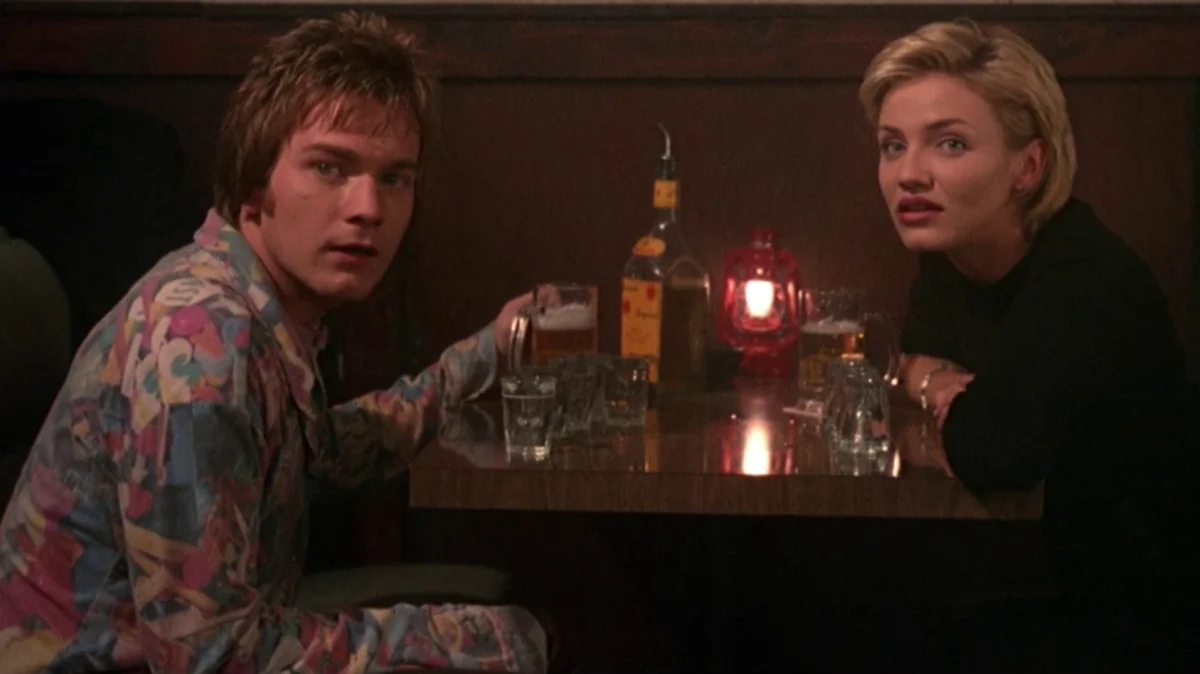
In the pantheon of 1990s cinema, few directors ascended as rapidly—or as chaotically—as Danny Boyle. Between 1994 and 1996, Boyle transformed from a promising British filmmaker into a global auteur, anchored by the dark, claustrophobic brilliance of Shallow Grave and the visceral, generation-defining energy of Trainspotting. By 1997, the industry held its breath to see what Boyle would do with a bigger budget, a Hollywood star, and the momentum of a burgeoning cultural icon. The result was A Life Less Ordinary, a film that remains one of the most polarizing and inscrutable entries in his filmography.
Equal parts screwball romantic comedy, crime caper, and celestial fantasy, A Life Less Ordinary is a movie that defies easy categorization. While it failed to capture the zeitgeist like its predecessor, Trainspotting, it serves as a fascinating case study of a director attempting to reconcile his indie sensibilities with the glossy, high-concept demands of a major studio production.
The Chronology of an Ambitious Misstep
To understand the trajectory of A Life Less Ordinary, one must look at the climate of mid-90s British cinema. Boyle’s earlier successes were lean, mean, and quintessentially "British." Shallow Grave was a masterclass in tension, while Trainspotting was a frenetic, drug-fueled odyssey that arguably introduced Ewan McGregor to the world stage as a leading man.
When Boyle reunited with McGregor for A Life Less Ordinary in 1997, the expectations were seismic. Backed by PolyGram Filmed Entertainment, the film was designed to bridge the gap between European arthouse sensibilities and American mainstream appeal. By casting Cameron Diaz—then the "it girl" following The Mask and My Best Friend’s Wedding—Boyle signaled his intention to play in the big leagues.
However, the production process was fraught with a unique type of "style-over-substance" pressure. The film follows Robert (McGregor), a janitor fired from his job and replaced by an automated cleaning machine, who impulsively kidnaps his employer’s daughter, Celine (Diaz). What begins as a gritty kidnapping plot quickly devolves into a bizarre, whimsical romance. Yet, the film’s narrative engine is not the human drama, but the divine: angels, played by Holly Hunter and Delroy Lindo, are tasked by the Almighty to ensure these two humans fall in love, lest the angels be cast out of heaven forever.
The Unbelievable Premise: Angels in the Office
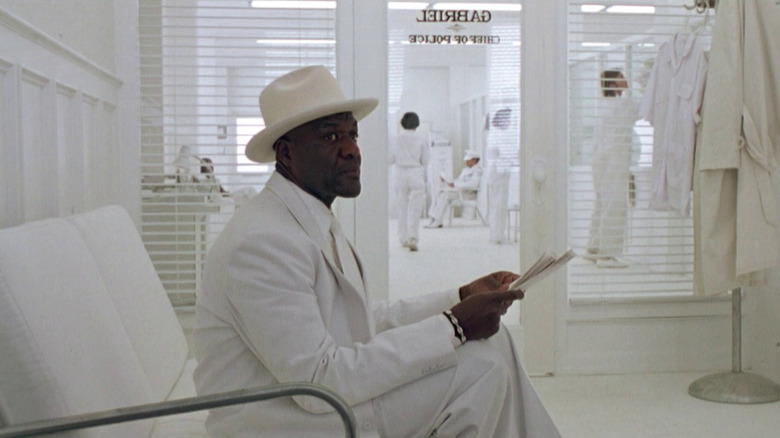
The B-plot of A Life Less Ordinary is, by any metric, eccentric. Screenwriter John Hodge, a frequent Boyle collaborator, crafted a world where the celestial and the terrestrial blur. The archangel Gabriel (Dan Hedaya) operates out of a mundane police station, acting as a bureaucratic overseer for the divine mission.
The central conflict—the requirement for the angels to force love—is a direct critique of the "destiny" tropes prevalent in 90s cinema. At the time, Quentin Tarantino’s influence on the crime genre was at its zenith. Films like True Romance and Natural Born Killers framed criminal behavior as a byproduct of a "love against the world" narrative. A Life Less Ordinary seems to take this trope to its logical, if absurd, conclusion: if these criminals are destined to be together, perhaps it is because the universe is literally tilting the scales in their favor.
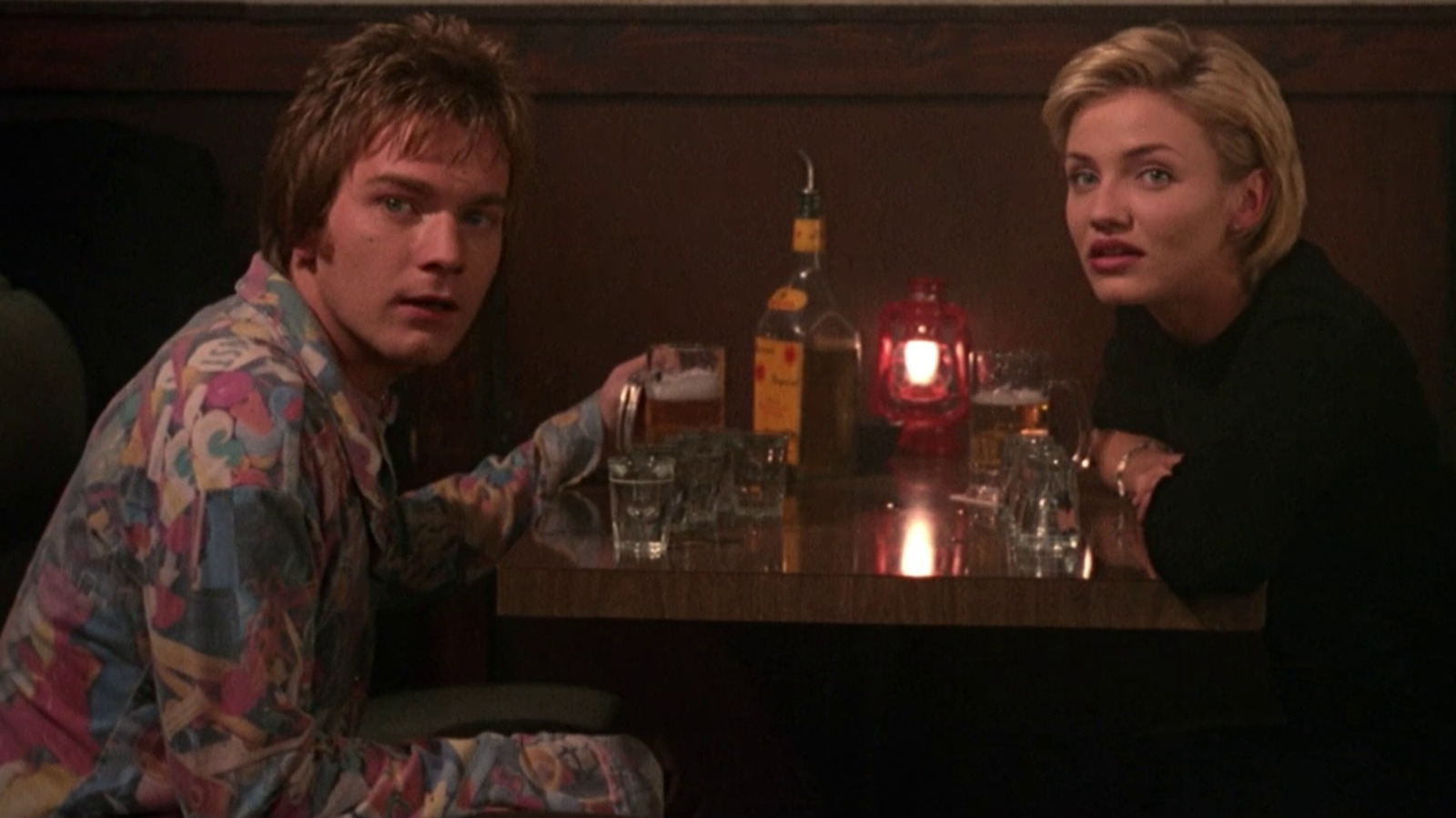
Boyle’s aesthetic choices during this period were famously aggressive. He utilized saturated colors, rapid-fire editing, and surreal visual metaphors—most notably the literal visualization of a heart as a glowing lantern—to distinguish his work from the standard romantic comedies of the era.
Critical Reception and The Soundtrack Paradox
If one were to measure the success of a 1997 film, the soundtrack was often as important as the box office receipts. A Life Less Ordinary excelled here. The film’s curation was a masterclass in 90s eclecticism, featuring high-energy contributions from The Prodigy, Sneaker Pimps, and Beck, juxtaposed against the swing-revival charm of the Squirrel Nut Zippers and the timeless crooning of Elvis Presley.
Despite a legendary soundtrack, the critical response was nothing short of brutal. The film grossed approximately $14.6 million against a $12 million budget, barely breaking even after accounting for marketing costs. Critics were largely baffled. Roger Ebert, in his two-star review, noted that the film felt "tedious and contrived," arguing that the narrative structure was a hollow shell dressed up in stylistic pyrotechnics.
Owen Gleiberman of Entertainment Weekly famously gave the film an ‘F’, characterizing it as a movie that had completely "gone off the rails." The consensus at the time was that Boyle had overreached—that his "quirkiness" had become a crutch rather than a tool for storytelling.
Implications for Boyle’s Career
The aftermath of A Life Less Ordinary was significant for the trajectory of those involved. For Danny Boyle, the film served as a "necessary failure." It proved that he could not simply transplant his kinetic, urban grit into a polished Hollywood romance without losing the essential soul of his characters.
The most painful implication of the project, however, was the erosion of the partnership between Boyle and his muse, Ewan McGregor. Their creative fallout is now the stuff of film lore. Following the lukewarm reception of A Life Less Ordinary, Boyle moved on to The Beach, a project he notoriously cast Leonardo DiCaprio in, effectively bypassing McGregor. This betrayal reportedly left a lasting rift in their friendship that took over a decade to mend.
Retrospective: Why We Still Talk About It
Decades later, A Life Less Ordinary occupies a strange space in film history. It is neither a forgotten disaster nor a rediscovered masterpiece; it is a time capsule. It represents the height of 90s "cool" filmmaking—the era of the music-video aesthetic, the ironic crime caper, and the belief that any premise, no matter how nonsensical, could be sold if the style was sharp enough.
The film serves as a reminder that even the most talented directors are prone to "creative bloat." The audacity to mix celestial intervention with a blue-collar kidnapping plot is, in hindsight, a bold move that speaks to the risks directors were encouraged to take in the 1990s. While it fails to cohere into a meaningful emotional experience, its visual language and stylistic choices paved the way for the more polished, grander storytelling Boyle would eventually achieve in Slumdog Millionaire and 127 Hours.
In analyzing A Life Less Ordinary, we learn less about the quality of the film itself and more about the evolution of a filmmaker. It was the moment Boyle looked into the mirror of Hollywood, saw his own reflection, and decided that he needed to break that glass to find his true voice again. It was a failure of narrative, certainly, but it was also a glorious, messy, and loud experiment that refused to play by the rules of the genre. For that reason alone, it remains a vital, if difficult, chapter in the Danny Boyle legacy.
Ultimately, A Life Less Ordinary reminds us that the line between a visionary project and an "extravagantly misconceived" one is often thinner than we like to admit. It is a film that demands to be seen not for its success, but for the sheer, unbridled ambition that allowed it to exist in the first place.

 Nana Wu
 Layla Zulfa