Asro
Asro
In an era where consumers are inundated with thousands of marketing messages daily, the ability to cut through the noise is not just a competitive advantage—it is a survival necessity. For modern businesses, this "cut-through" factor often resides in a single, intangible asset: Brand Voice.

Brand voice is the consistent, distinct way a company portrays itself through words. It is, in essence, the personality of the organization expressed through tone, vocabulary, and stylistic choices. Far from being a mere creative exercise, establishing a robust brand voice is a strategic imperative that builds trust, fosters recognition, and drives bottom-line growth.

The Foundation: What is Brand Voice?
At its core, a brand voice is the human element of your organization. It represents how your brand would sound if it were a person—whether it is authoritative and formal, or witty and irreverent. A well-defined voice ensures that whether a customer is reading a tweet, an email newsletter, or a product description, the experience remains cohesive.
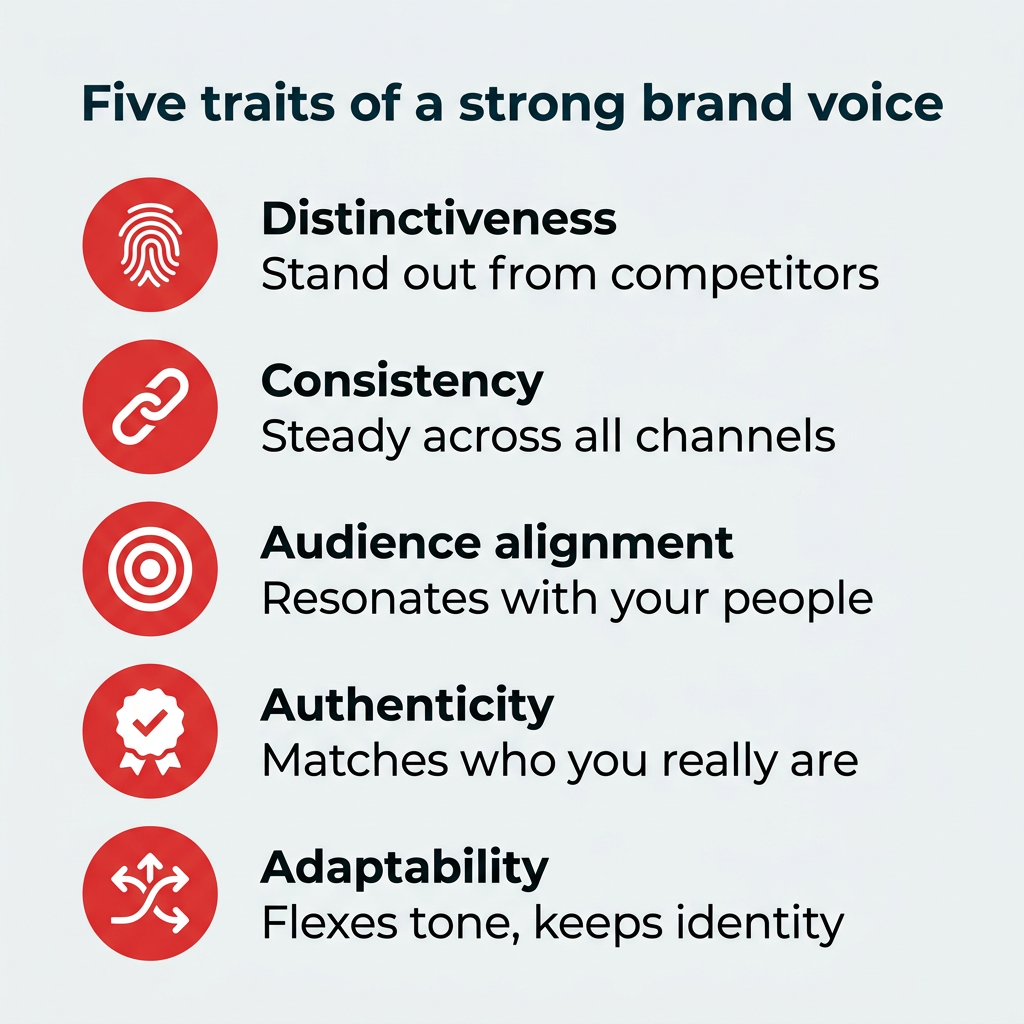
While many practitioners use the terms interchangeably, it is vital to distinguish between brand voice and brand tone:
- Brand Voice (The Personality): This is the constant. It is your identity, which remains unchanged regardless of the channel or the medium. It is defined by your core values and mission.
- Brand Tone (The Context): This is the variable. Tone shifts based on the specific situation. For instance, a brand with a "witty" voice might remain witty while announcing a product launch (high energy) but shift to a "calm and professional" tone when addressing a customer’s billing dispute.
Supporting Data: Why Consistency Matters
The business case for a unified brand voice is supported by significant data. Research consistently shows that consistent brand presentation across all platforms can increase revenue by as much as 33%.
The reasons for this are multi-faceted:

- Recognition: Much like a visual identity (colors, logos), a consistent voice makes your brand instantly identifiable. Audiences begin to recognize your "vibe" before they even see your logo.
- Trust and Authenticity: According to the 2025 Edelman Trust Barometer, 73% of consumers report higher levels of trust in brands that authentically reflect current culture and maintain clear, honest communication.
- Risk Mitigation: In an age where AI-generated content is becoming ubiquitous, maintaining a strong, human-led brand voice acts as a safeguard. A study by Klaviyo and Datalily found that consumers are four times more likely to lose trust in a brand that relies heavily on robotic, off-brand AI output.
Chronology: The Evolution of a Brand Voice Strategy
Developing a voice is not an overnight task. It requires a systematic approach that moves from abstract identity to concrete execution.
Phase 1: The Audit (The "Current State")
Before you can define where you are going, you must evaluate where you are. This involves auditing existing social media posts, blog content, and email campaigns. Look for patterns: Which posts performed best? Which ones felt disjointed or "off"? Flagging these discrepancies creates the blueprint for your new guidelines.

Phase 2: The Competitive Landscape
Analyze your competitors. If the industry is dominated by overly formal, "corporate-speak" messaging, there may be a significant opportunity for a brand that adopts a warmer, more human tone. The goal is not to mimic the competition, but to occupy a space they are ignoring.

Phase 3: Defining the Persona
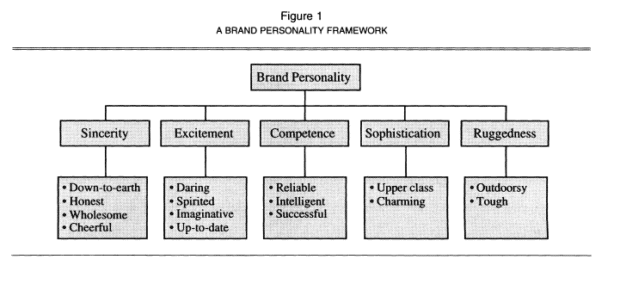
Utilizing frameworks such as Jennifer L. Aaker’s Dimensions of Brand Personality (Sincerity, Excitement, Competence, Sophistication, and Ruggedness), teams can begin to map out their core traits. This turns an abstract concept into a tangible set of descriptors that can be used to guide copywriters and social media managers.

Implications: The Operational Impact
A strong brand voice serves as a "communications blueprint" for the entire organization. When a company scales, maintaining a consistent message becomes difficult across multiple departments—Marketing, Sales, Customer Support, and Product.
Empowering Teams and External Partners
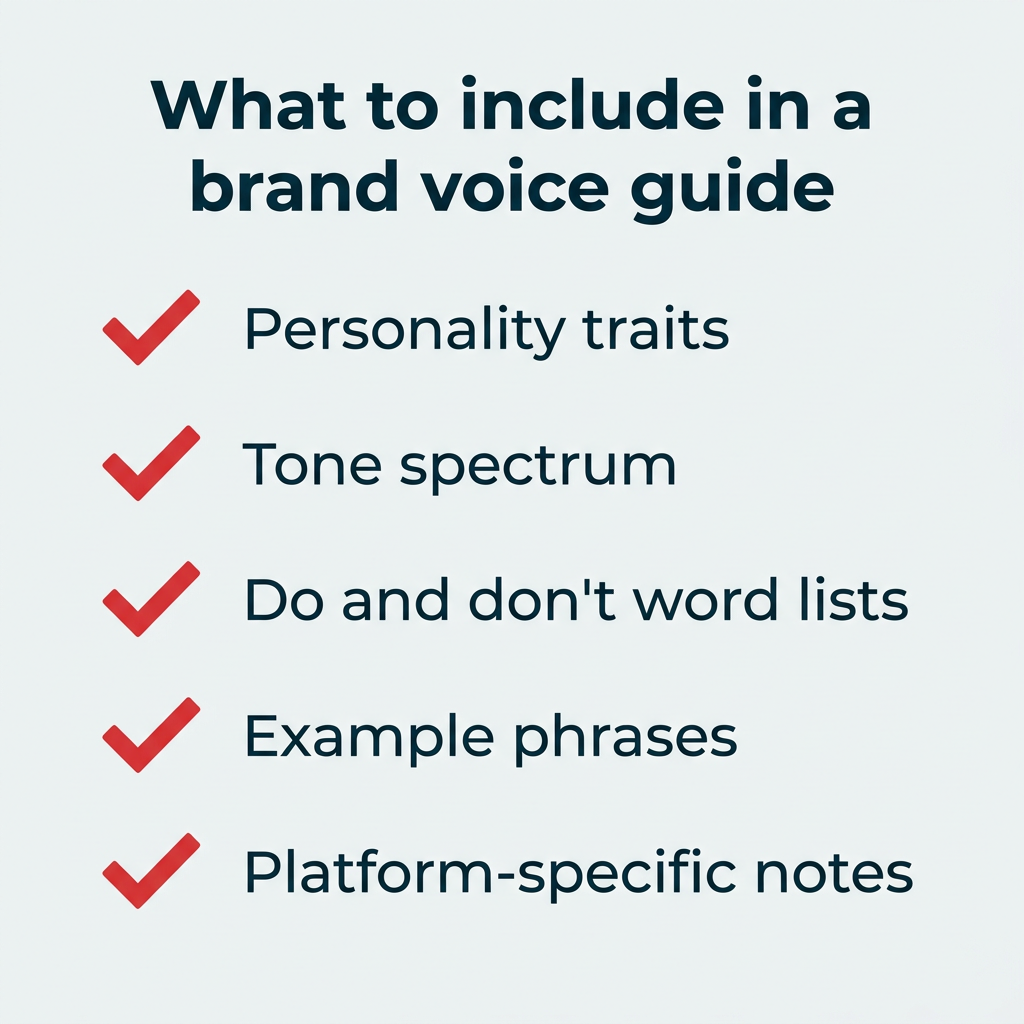
Clear guidelines reduce the friction for freelancers, agencies, and new hires. When a writer has a "Do’s and Don’ts" chart, they are far more likely to produce high-quality, on-brand content on the first draft. This saves time on revisions and ensures that the brand’s image remains pristine.

Navigating High-Pressure Moments
The true test of a brand voice occurs during crises. When a company faces negative feedback or a PR challenge, having a pre-defined "crisis tone" ensures that the response is measured, professional, and aligned with the brand’s core values. It prevents the knee-jerk, reactive communication that often leads to viral social media disasters.

Case Studies: Learning from the Leaders
Different brands have mastered the art of voice by leaning into specific character traits:

- Liquid Death: By adopting a "heavy metal" and irreverent persona, they have turned the commoditized business of bottled water into a high-engagement brand. They treat the brand as a character, making the voice distinct and memorable.
- La Croix: Their strategy relies on a "bestie" energy—using emojis, puns, and a cheerful, informal tone that resonates deeply with their target demographic.
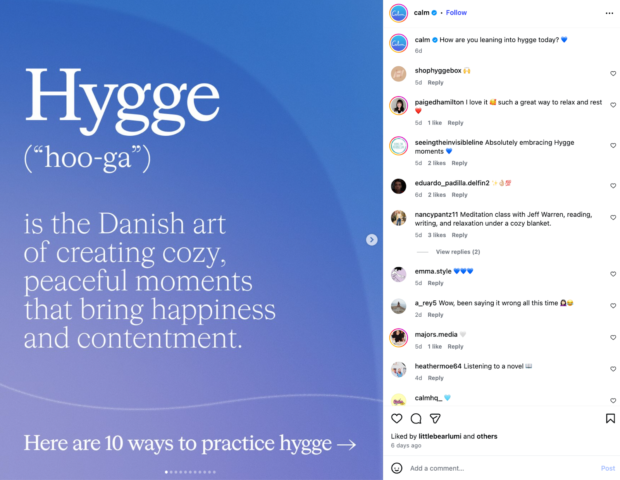
- Calm and Headspace: These two competitors offer a masterclass in differentiation. While both are in the mindfulness space, Calm uses a "soothing and grounded" voice with muted, minimalist visuals, whereas Headspace utilizes a "playful and bright" tone with bold illustrations. Even within the same industry, two different voices can successfully capture different market segments.
- Slack: As an enterprise brand, Slack proves that B2B does not have to be boring. By using plain, human language to explain complex software, they have built a brand that feels approachable and efficient.
Implementation: The Nine-Step Framework
To build and maintain a strong voice, organizations should follow this structured roadmap:

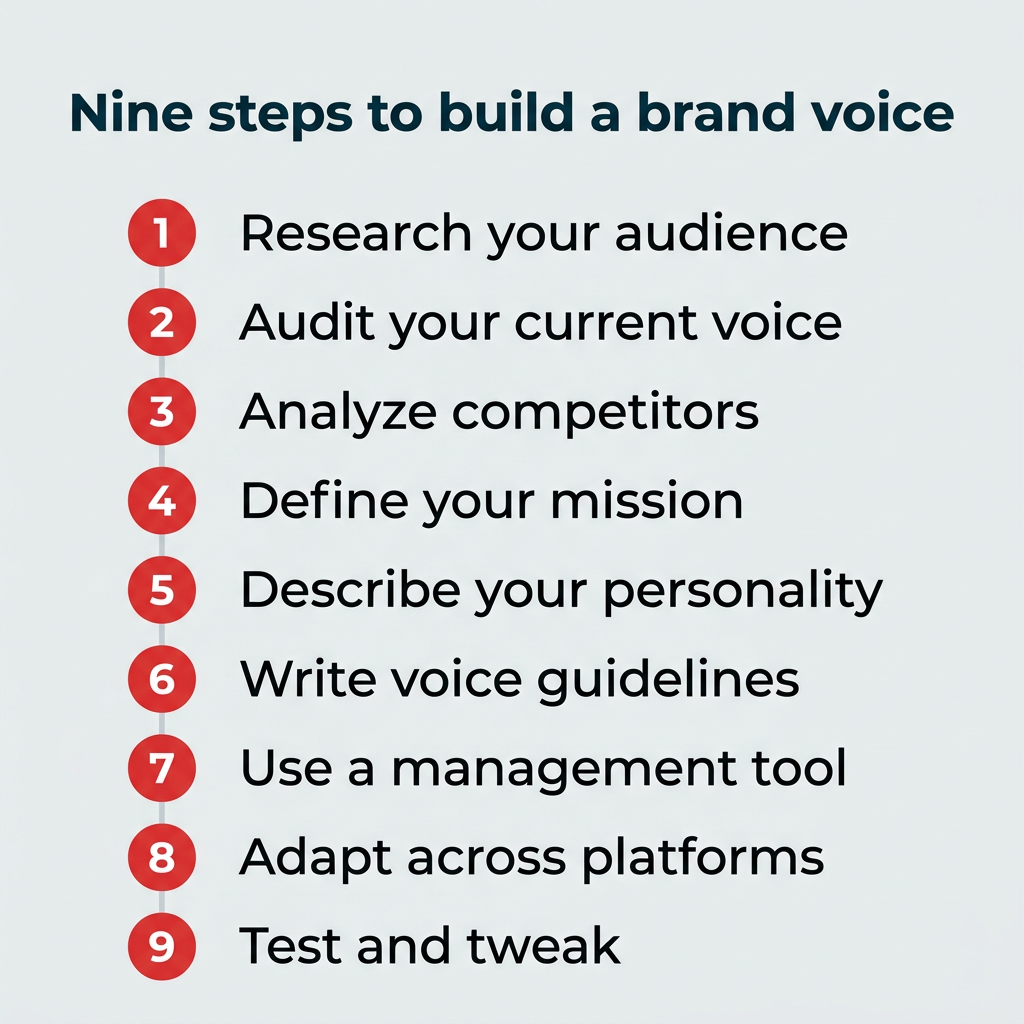
- Research the Audience: Understand not just who they are, but where they communicate and what language they use.
- Conduct an Audit: Assess your current content for consistency.
- Analyze Competitors: Identify gaps in the market.
- Define Mission: Align your messaging with your core goals.
- Describe Personality: Use the Brand Personality Framework to find your "traits."
- Create Guidelines: Document the dos, don’ts, and specific word choices.
- Utilize Tools: Leverage social media management platforms (such as Hootsuite) to automate approval workflows and ensure only "on-brand" content goes live.
- Adapt for Platforms: While the voice remains constant, the execution should flex. A LinkedIn post will naturally differ in tone from a TikTok video.
- Test and Tweak: Use analytics to see what is working. A brand voice is a living entity—it should evolve as your audience and the culture change.
Conclusion
A brand voice is not a static document that sits in a folder on a shared drive. It is the living, breathing manifestation of your company’s purpose. In a crowded digital marketplace, consistency is the ultimate currency. By investing the time to define, document, and defend your brand voice, you aren’t just writing better copy—you are building a relationship with your customers that is grounded in familiarity, trust, and long-term loyalty.

As your organization grows, remember that the most successful brands are those that sound like real people. In an age of automation, that human touch is not just a differentiator; it is your greatest asset.


 Ammar Sabilarrohman
 Rifan Muazin