Nana Muazin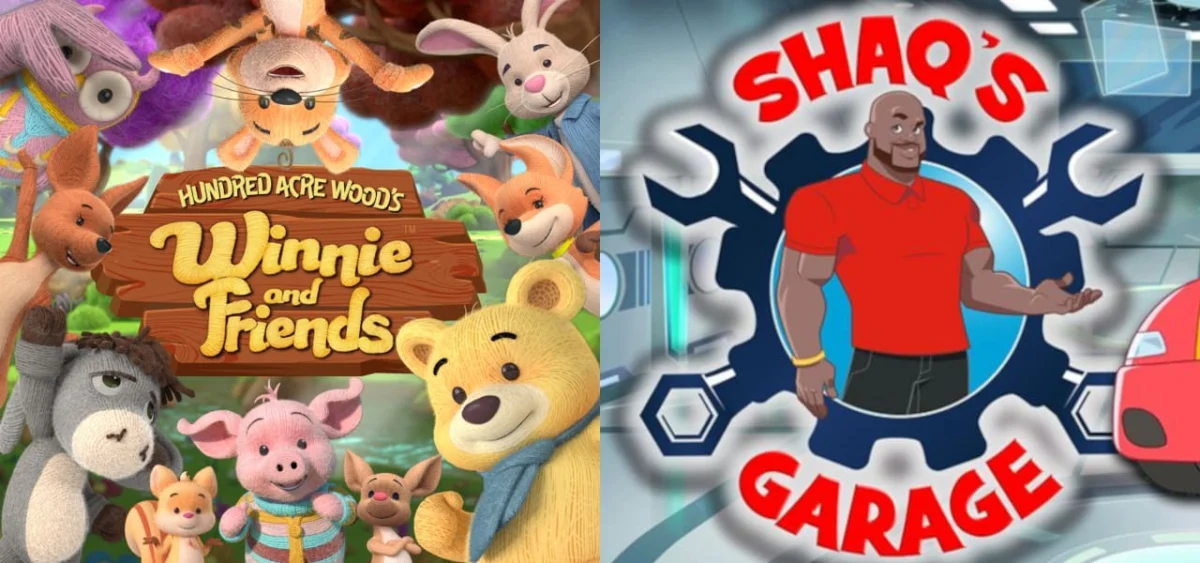
By Staff Reporter
In a development that has sent ripples through the independent animation sector, Kartoon Studios, the publicly traded entity formerly known as Genius Brands International, announced this week that it has secured approximately $78.5 million in legal settlements. The resolution of this long-standing shareholder derivative lawsuit marks a pivotal, transformative moment for the company, providing a liquidity injection that dwarfs its recent annual revenue streams.
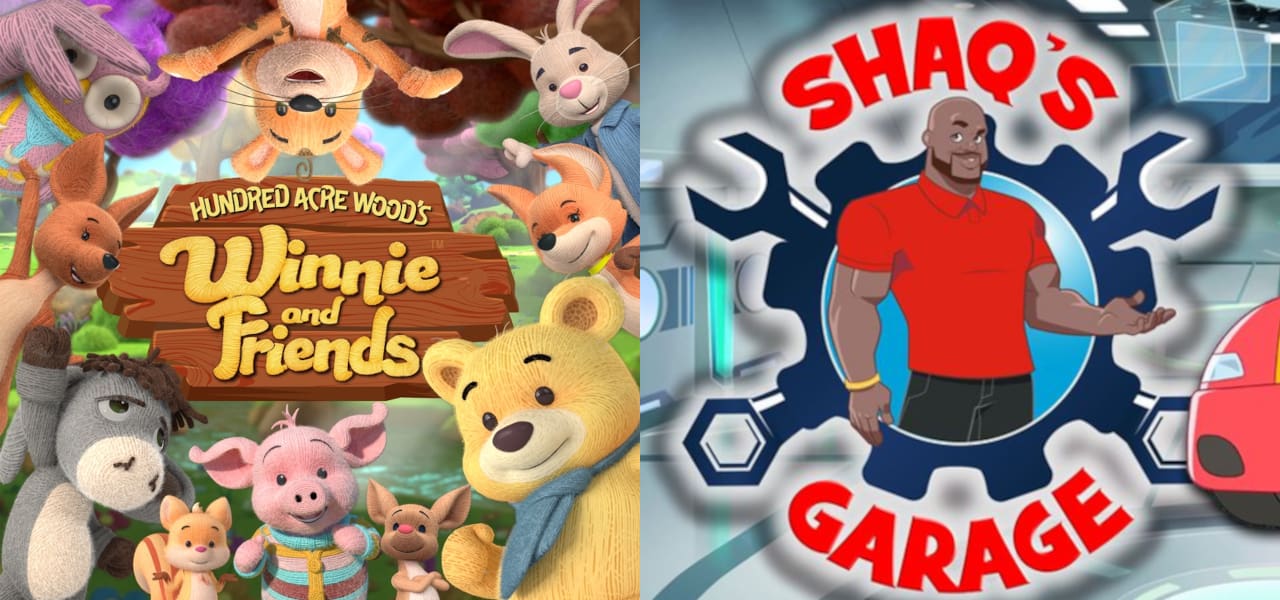
As the owner of Canada’s renowned Mainframe Studios and a diverse portfolio of intellectual property—including stakes in the Stan Lee Universe and A.A. Milne’s Hundred Acre Wood—Kartoon Studios has historically operated under significant financial constraints. This influx of capital, categorized as non-dilutive, promises to reshape the studio’s strategic trajectory as it navigates an increasingly complex media landscape defined by generative AI integration and high-stakes licensing.
The Core Facts: A Regulatory Disgorgement
The $78.5 million settlement stems from a complex litigation saga centered on U.S. securities laws, specifically the rules governing "short-swing" profits. Under Section 16(b) of the Securities Exchange Act of 1934, directors, officers, or beneficial owners who own more than 10% of a company’s stock are prohibited from profiting from the purchase and sale of that company’s securities within a six-month period.
The lawsuit, filed on behalf of the company, alleged that certain investment firms engaged in trading activities that violated these provisions. Rather than enduring the unpredictable outcomes of a protracted jury trial, the defendants opted for a settlement. Crucially, the settlement structure dictates that the $78.5 million is paid directly into the corporate treasury of Kartoon Studios. Unlike a class-action settlement where funds are distributed among individual litigants, this capital becomes a corporate asset, intended to bolster the company’s balance sheet and operational capacity.
Chronology: From Genius Brands to a Legal Watershed
The roots of this legal victory trace back several years to a period of high volatility for the entity then known as Genius Brands International.
- The Growth Phase (2020–2022): Genius Brands aggressively expanded its footprint, acquiring Mainframe Studios and securing high-profile intellectual properties like the Stan Lee Universe. During this era, the company’s stock experienced significant fluctuations, drawing the attention of institutional investors and active traders.
- The Filing (2022–2023): As market scrutiny intensified, the company identified potential breaches of securities law regarding the trading patterns of certain major stakeholders. Legal counsel was retained to pursue claims on behalf of the company, asserting that profits made from short-term trading of the company’s shares should be disgorged back to the corporation.
- The Litigation Period (2024–2026): For the past two years, the case moved through the court system, involving discovery processes and motions to dismiss. The process was marked by the complexity of interpreting securities law in the context of modern digital-era trading.
- The Settlement (June 2026): On June 17, 2026, the company officially announced that the litigation had reached a breakthrough, with multiple defendants agreeing to pay the $78.5 million total.
The legal proceedings are not entirely closed; two defendants remain embroiled in the litigation, leaving the door open for additional financial recoveries in the future.
Supporting Data: Why $78.5 Million Matters
To understand the magnitude of this settlement, one must look at Kartoon Studios’ historical financial performance. In recent fiscal cycles, the company has often operated on thin margins, reinvesting the bulk of its revenue into the production of animated content and the acquisition of rights.
The company’s move into the generative artificial intelligence space—as evidenced by its recent launch of AI-driven animated series—has required significant R&D expenditure. In an industry where production budgets are ballooning and traditional broadcast windows are shrinking, liquidity is king.
The $78.5 million infusion represents more than just cash; it represents a drastic reduction in the cost of capital. By receiving this money, the company avoids the need to dilute current shareholders through secondary offerings or take on high-interest debt to fund its ambitious 2027 slate. For a studio competing against major conglomerates, this liquidity allows for a level of agility that was previously unattainable.
Official Responses and Corporate Strategy
In the wake of the announcement, Kartoon Studios CEO Andy Heyward issued a statement emphasizing the stability this brings to the company’s long-term planning.
"This is a watershed moment for Kartoon Studios and, most importantly, for our shareholders," Heyward noted. "These recoveries are non-dilutive and return substantial value directly to the Company and its shareholders. This enhanced financial position will enable us to accelerate the commercialization of our flagship franchises, including Hundred Acre Wood and the Stan Lee Universe, while also pursuing strategic opportunities that were previously beyond our reach."
The emphasis on "non-dilutive" is key. In the eyes of an investor, this means that the value of existing shares is not being watered down by the issuance of new stock. By strengthening the balance sheet without increasing the total share count, management has arguably positioned the company for a more favorable reception from analysts and institutional investors who may have previously been wary of the company’s debt-to-equity ratios.
Implications: The Future of Kartoon Studios
With the legal distraction moving into its final phases, the industry is now looking to see how Kartoon Studios will deploy its newfound wealth. Several strategic avenues appear likely:
.png)
1. Accelerated Production Cycles
The company has been aggressive in its pursuit of AI-assisted animation. With $78.5 million in the bank, the studio can move faster to scale its production capacity, reducing the time from script to screen for its upcoming titles. This could prove to be a competitive advantage if the company can successfully navigate the creative and legal nuances of AI-augmented content.
2. Intellectual Property Expansion
The rights to the Stan Lee Universe and the Hundred Acre Wood characters are lucrative, but they require substantial capital to develop into multi-platform franchises. The studio can now afford to invest in higher-quality animation, broader marketing campaigns, and international distribution deals that were previously cost-prohibitive.
3. Mergers and Acquisitions
The animation industry is currently in a state of consolidation. While Kartoon Studios has been a consolidator in the past, the current financial landscape suggests they might be looking for strategic partnerships or technology acquisitions that would further integrate their AI workflows with traditional creative pipelines.
4. Market Perception and Stock Stability
For years, the company has fought against the "penny stock" stigma often associated with high-volatility entertainment firms. This settlement, if managed with fiscal discipline, provides the company with a "war chest" that could shift the narrative toward long-term sustainability. However, the pressure is now on management to deliver results that translate this cash into measurable growth in revenue and audience engagement.
Conclusion: A Turning Point
The $78.5 million settlement is not a cure-all, but it is undeniably a game-changer. As the studio enters the second half of 2026, it faces a market that is increasingly skeptical of speculative technology but hungry for premium content. By effectively leveraging these funds, Kartoon Studios has the opportunity to transition from a scrappy player in the children’s entertainment space to a more formidable, well-capitalized entity.
Whether this capital will be used to revolutionize production through AI or to secure global dominance for their established characters remains to be seen. What is clear, however, is that the company has moved out of the shadow of its past litigation and into a phase of potential expansion. For the animation industry, the developments at Kartoon Studios will serve as a bellwether for how mid-sized studios can survive and thrive in an era of rapid technological and structural change.
As the final two defendants await their fate in the courts, the management at Kartoon Studios is likely already looking toward the next fiscal quarter—not as a firm in survival mode, but as one with the resources to set the pace.

 Suro Senen
 Laily UPN