Raul Delapena Setiawan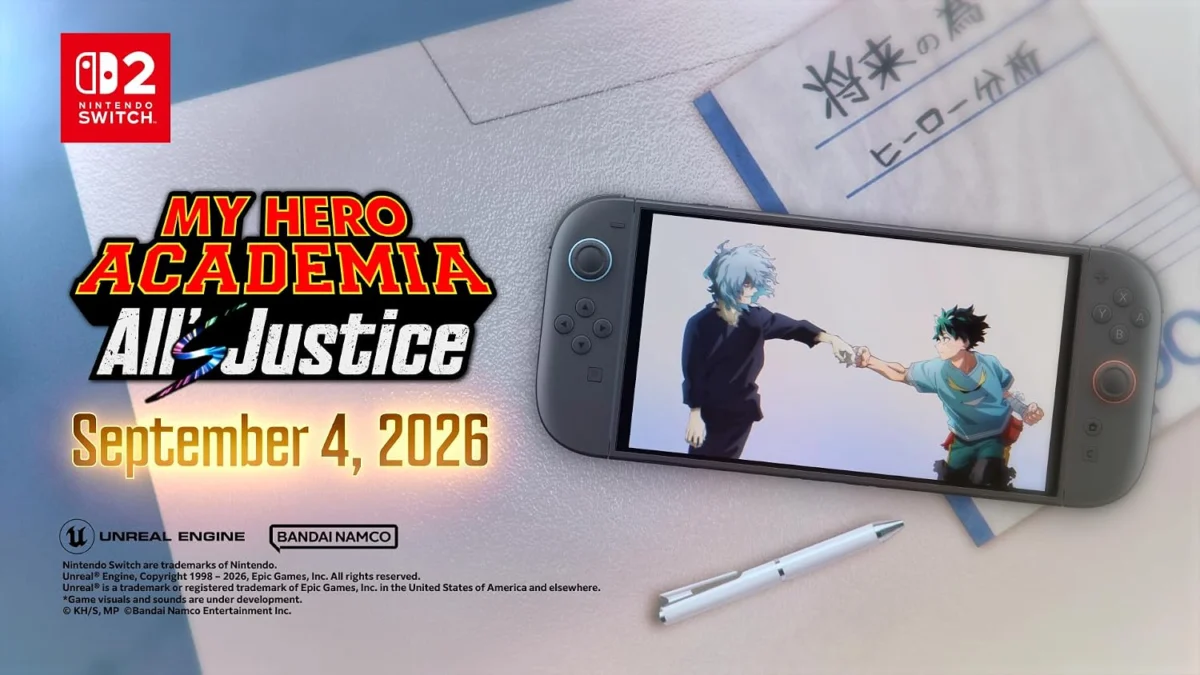
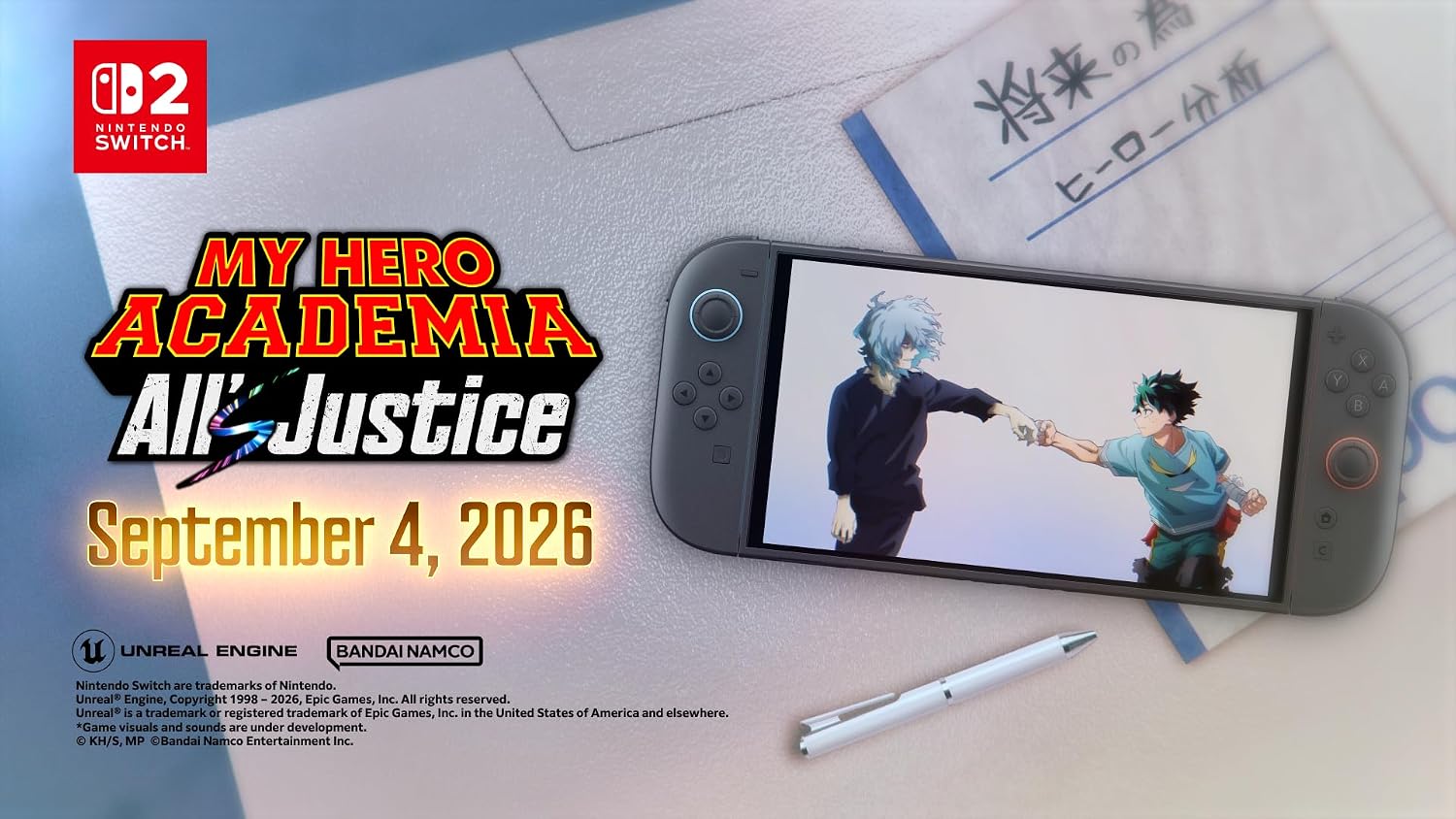
The landscape of arena fighters is set to expand significantly as Bandai Namco officially confirms the arrival of My Hero Academia: All’s Justice on the highly anticipated Nintendo Switch 2. Following a successful rollout on PlayStation 5, Xbox Series X, and PC earlier this year, the latest entry in the beloved anime-fighting franchise is making its way to Nintendo’s next-generation hardware. With a scheduled release date of September 4, 2026, the game aims to bridge the gap between console-level fidelity and the unique hybrid portability that has defined the Nintendo ecosystem for the past decade.
Main Facts: A New Chapter for the UA High Roster
The announcement confirms that My Hero Academia: All’s Justice will arrive on the Switch 2 exactly seven months after its initial multi-platform launch. This port is not merely a downscaled version; rather, it arrives with a specific set of feature enhancements tailored to the capabilities of the new console.
Key details regarding the launch include:
- Release Date: September 4, 2026.
- Exclusive Feature: The introduction of "GameChat" online battles, a system that allows players to share the gaming experience in a collaborative, localized fighting environment, even when only one copy of the game is owned by the host.
- Launch Content: All versions of the game, including the Switch 2 release, will receive the "Mini Game (All 10 Types)" update on day one, which notably features a Pac-Man style arcade tribute.
- Pre-order Incentives: While official Nintendo eShop pre-orders are currently pending, listings on major retailers like Amazon have confirmed that early adopters will receive 30,000 Hero Coins, along with exclusive early unlocks for "All for One Chaos" and "Izuku Midoriya Rising."
Chronology: The Evolution of the All’s Justice Series
To understand the significance of this release, one must look at the historical trajectory of the My Hero Academia gaming franchise. The relationship between Bandai Namco and the Nintendo Switch has been symbiotic since the inception of the series.
The Foundation (2018–2020)
The journey began with My Hero One’s Justice in 2018, which brought the high-octane action of Kohei Horikoshi’s manga to a portable format for the first time. The game was praised for its faithful art style and accessible combat mechanics. Its sequel, My Hero One’s Justice 2, followed in 2020, expanding the roster and refining the destructible environments. Both titles were staples of the original Switch library, proving that there was a massive, dedicated audience for anime-based fighting games on the platform.
The Current Era (2026)
Following the release of All’s Justice on current-gen consoles in February 2026, the wait for a Nintendo port was characterized by intense fan speculation. By confirming this release for September 2026, Bandai Namco is ensuring that the transition to the Switch 2 is supported by recognizable, high-tier anime properties. As part of this transition, the publisher has slashed the prices of the previous two titles on the current Switch eShop until June 22, 2026, allowing newcomers to catch up on the narrative and mechanical history of the series for a fraction of the cost.
Supporting Data and Technical Implications
The decision to port All’s Justice to the Switch 2 speaks volumes about the perceived power gap between the original Switch and its successor. The technical requirements to maintain the fluid, particle-heavy combat of an arena fighter like All’s Justice are significant.
Performance and Visuals
In the trailer released alongside the announcement, the game demonstrates a level of visual fidelity consistent with the PlayStation 5 and Xbox Series X builds. The cell-shaded aesthetic, which mimics the anime’s animation style, appears to run at a consistent frame rate, suggesting that the Switch 2 hardware is capable of handling the game’s demanding shaders and environmental destruction systems with minimal compromise.
The "GameChat" Innovation
Perhaps the most intriguing aspect of the Switch 2 release is the "GameChat" feature. In traditional console gaming, sharing a game usually implies local couch co-op or complex remote-play setups. "GameChat" appears to leverage the Switch 2’s unique hardware architecture to allow for a more seamless, social online experience. By allowing users to share the game and engage in joint battles, Bandai Namco is leaning into the "social-first" philosophy that has kept the Nintendo Switch relevant for so long.
Official Responses and Industry Context
Bandai Namco has been relatively quiet regarding the specific technical specifications of the port, focusing instead on the "Plus Ultra" experience for fans. In a brief statement accompanying the trailer, a spokesperson for the development team emphasized the goal of creating a "seamless transition between home console and handheld combat," noting that the team prioritized the integrity of the game’s high-speed movement system above all else.
The move is also a strategic win for Nintendo. By securing a high-profile Bandai Namco title, Nintendo reinforces its commitment to third-party developers, ensuring that the Switch 2 is not just a platform for first-party exclusives like Mario or Zelda, but a viable home for the most popular anime-adjacent software in the world.
Implications for the Future of Anime Gaming
The release of My Hero Academia: All’s Justice on the Switch 2 carries significant implications for the future of the medium:
1. The Normalization of Multi-Platform Parity
For years, Switch ports of major titles were often labeled as "inferior" or "late." The seven-month gap for All’s Justice is a marked improvement over previous generations, where ports could take years to manifest. If the Switch 2 can handle these games with parity to the PS5 and Xbox Series X, we may see a future where "Switch-exclusive" performance modes become standard in multi-platform development.
2. Expanding the "Arena Fighter" Niche
Arena fighters often rely on strong community engagement. By bringing All’s Justice to the Switch 2, Bandai Namco is effectively doubling the potential player base for online matchmaking. The inclusion of the "Mini Game" update, including the Pac-Man homage, suggests that developers are looking for ways to keep players engaged beyond the standard combat loop, potentially setting a new standard for post-launch support in the genre.
3. The Digital and Physical Ecosystem
With pre-orders for the physical copy already surfacing on platforms like Amazon, the retail presence of the game remains robust. This suggests that publishers still see value in physical media for the Nintendo market, even as digital distribution becomes the industry standard. The reliance on legacy stores like Amazon alongside the digital eShop highlights a dual-pronged strategy to capture both the casual consumer and the hardcore collector.
Conclusion
My Hero Academia: All’s Justice on the Nintendo Switch 2 is more than just a port; it is a statement of intent. It represents the maturation of Nintendo’s hardware capabilities and the continued strength of the My Hero Academia brand. As the September 4 release date approaches, players should expect more details regarding the specific performance metrics and potential cross-platform compatibility.
For now, the message to the UA High student body is clear: whether you are playing in the comfort of your living room or taking the battle on the go, the next generation of My Hero Academia action is ready to push boundaries. As the series continues to evolve under the guidance of Viz Media’s localized manga and Crunchyroll’s streaming dominance, the video game adaptations remain a vital piece of the puzzle, bringing the world of Quirks to life in ways that only a dedicated, high-performance console can achieve. Prepare your controllers, sharpen your Quirks, and get ready for the next level of justice.


 Asro
Asro
 Muslim