Muslim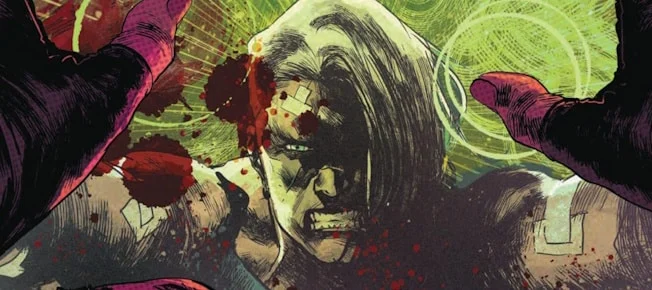
The DC Absolute Universe continues to redefine the foundational myths of its most iconic heroes, and nowhere is this more apparent than in the harrowing second issue of Absolute Green Arrow. As the narrative shifts from standard superhero fare into the gritty, psychological depths of a murder mystery, readers are forced to confront a central, unsettling question: Is the "Green Arrow Killer" a mere psychopath, or is he a symptom of a much deeper rot within the city’s heart?
Following the bombshell revelations of the series’ debut, Absolute Green Arrow #2—penned by Pornsak Pichetshote with visceral artwork by Rafael Albuquerque—sees Black Canary (Dinah Lance) spiraling into a web of deceit. As she hunts for a killer who mirrors the tactics and weaponry of the legendary archer, she is forced to confront her own proximity to the violence and the uncomfortable reality that Oliver Queen’s past may hold the key to the carnage currently plaguing their streets.
Main Facts: The Hunt for the Archer
The core conflict of Absolute Green Arrow #2 centers on Dinah Lance’s investigation into the Green Arrow Killer. Unlike traditional villain-of-the-week tropes, the antagonist here presents a philosophical and tactical challenge to Dinah. The killer’s precision suggests someone with intimate knowledge of high-level archery, narrowing the suspect pool to those within Oliver Queen’s inner circle.
The narrative momentum picks up immediately where the debut issue left off. Dinah, acting as a relentless detective, turns her sights toward Mia Dearden. In the traditional DC canon, Dearden is a protégé, a figure of hope and redemption. However, in the Absolute Universe, the lines between hero and antagonist are blurred. As Dinah closes in on Dearden, the investigation takes a sharp detour, revealing a secret from Oliver Queen’s history that threatens to dismantle the entire foundation of the Green Arrow mythos.
This issue serves as a masterclass in tension, utilizing a noir-inspired aesthetic to emphasize the moral ambiguity of the setting. The creative team—including colorist Marcelo Maiolo and letterer Jeff Powell—has crafted a tone that feels claustrophobic, dangerous, and deeply personal.
Chronology: A Descent into Darkness
To understand the gravity of Absolute Green Arrow #2, one must look at the timeline of events leading up to this point:
- The Origin of the Absolute Universe: The introduction of the Absolute line reimagined DC’s "Trinity" and their allies, stripping away the comfort of established wealth and status. For Oliver Queen, this meant a life defined by struggle rather than privilege.
- The Debut of the Killer: Issue #1 introduced the Green Arrow Killer, a figure who uses the Green Arrow’s iconography to carry out brutal murders, effectively turning the public’s perception of the hero against himself.
- The Discovery: At the end of the first issue, Dinah discovered evidence that suggested the killer’s ties to the "real" Green Arrow were not just coincidental, but hereditary or historical.
- The Investigation (Current Issue): Dinah Lance begins her systematic profiling of fellow archers. Her confrontation with Mia Dearden serves as the catalyst for the issue’s primary plot twist—a revelation regarding Queen’s past that recontextualizes his early years and his motivation for picking up the bow.
Supporting Data: The Creative Powerhouse
The success of this series is largely attributed to the synergy between its creators. Pornsak Pichetshote’s writing leans heavily into the investigative thriller genre, a departure from the typical action-heavy Green Arrow stories of the past.
- Pornsak Pichetshote (Writer): Known for his ability to blend horror with grounded character drama, Pichetshote ensures that every arrow fired has a psychological cost.
- Rafael Albuquerque (Artist): His stark, high-contrast style perfectly captures the grime of an urban landscape under siege. His character designs for this version of Dinah and Mia emphasize resilience and suspicion.
- Marcelo Maiolo (Colorist): The palette is muted, dominated by shadows and the signature, sickly neon of a city losing its way.
- Jeff Powell (Letterer): The lettering is tight and deliberate, emphasizing the internal monologue of a character who is increasingly untrusting of those around her.
The collaborative effort has resulted in a book that doesn’t just ask "who did it?" but rather "who are we?" when the heroes we idolize have skeletons in their closets that are literally coming back to haunt the city.
Official Responses and Industry Reception
While DC Comics has kept the specific plot details of the "secret from Oliver Queen’s past" under wraps to preserve the reader experience, industry insiders have noted the bold direction the Absolute line is taking. Retailers report high demand for Absolute Green Arrow #2, citing the "darker, more mature" tone as a primary draw for older readers who have grown weary of the traditional superhero power fantasy.
Early reviews from the comic community have praised the series for its willingness to deconstruct the Green Arrow legacy. Critics have particularly noted the way the book handles the "monster vs. hero" dichotomy. The implication is clear: in the Absolute Universe, the hero is not inherently good, and the villain is not necessarily a monster—they are simply products of a world that has failed them.
Implications: Changing the Green Arrow Mythos
The revelation presented in this issue has significant implications for the future of the series and potentially the broader Absolute Universe. If Oliver Queen’s past is as compromised as the narrative suggests, the very definition of a "hero" in this timeline is at stake.
1. The Erosion of Trust
Dinah Lance’s trust in Oliver Queen is the anchor of the series. If that anchor is severed, the dynamic of the "team" (or lack thereof) will shift fundamentally. We are likely to see a fractured alliance where Dinah must decide if she is fighting for the man she knew or the man she is uncovering.
2. The Legacy of Violence
By linking the Green Arrow Killer to Queen’s history, the narrative posits that the violence occurring in the city is an inheritance. It suggests that the sins of the past are not buried; they are actively shaping the present. This gives the "Green Arrow" mantle a burden of guilt that makes the character infinitely more complex than his mainstream counterpart.
3. A New Genre Standard
This series is pushing the boundaries of what a mainstream comic book can achieve in terms of tonal shift. By embracing the tropes of true crime and political thriller, Absolute Green Arrow is signaling to the industry that readers are ready for, and indeed hungry for, stories that challenge the status quo of superhero comics.
Conclusion: Why You Must Read It
Absolute Green Arrow #2 is not merely an installment in a monthly series; it is a critical piece of a larger, evolving puzzle. It demands that the reader pay attention to every panel, as the clues regarding the killer’s identity are woven into the dialogue and the background details of Albuquerque’s art.
Whether you are a long-time fan of the Emerald Archer or a newcomer to the DC Absolute Universe, this issue provides a chilling look at what happens when the hero’s journey takes a sharp, dark turn. The story is an essential read for anyone interested in the deconstruction of archetypes and the power of a well-told mystery.
How to Secure Your Copy:
The issue is currently available at local comic book shops nationwide. To support your local retailer, use the Comic Shop Locator or call 1-888-comicbook. Digital editions are also available via major platforms, including Kindle and various comic-specific storefronts.
As Dinah Lance continues her search for the truth, one thing remains clear: nothing will ever be the same for Oliver Queen. The monster is not just at the gate—he is part of the family.
Disclaimer: This post contains affiliate links. If you click on one of the product links and make a purchase, we will receive a percentage of the sale. We appreciate your support in helping us continue to provide high-quality coverage of the comic book industry.

 Sagoh
Sagoh
 Ammar Sabilarrohman