Iffa Jayyana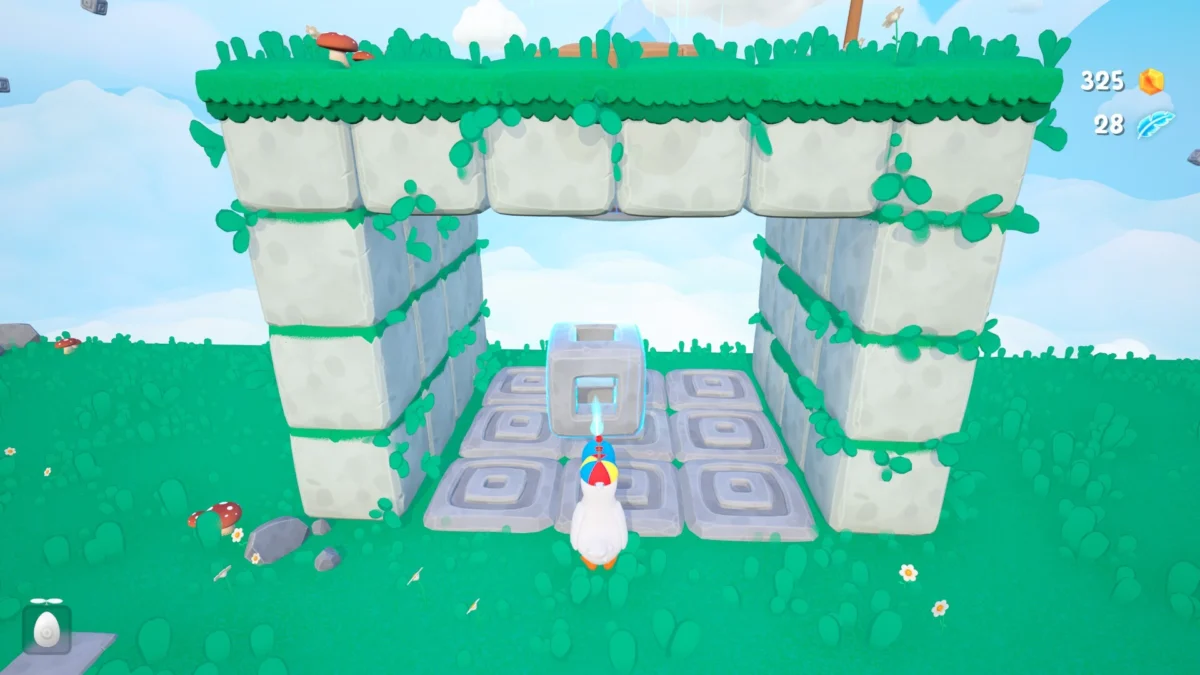
If the modern gaming landscape feels like an endless gauntlet of high-stakes, high-stress titles designed to test the limits of human reflexes—a reality defined by the punishing precision of games like Hollow Knight: Silksong or Elden Ring—then Dodo Duckie arrives not a moment too soon. Developed by BornMonkie, this vibrant, perspective-shifting platformer offers a delightful departure from the "masocore" trend, proving that innovation in game design doesn’t always need to be paired with crushing difficulty.
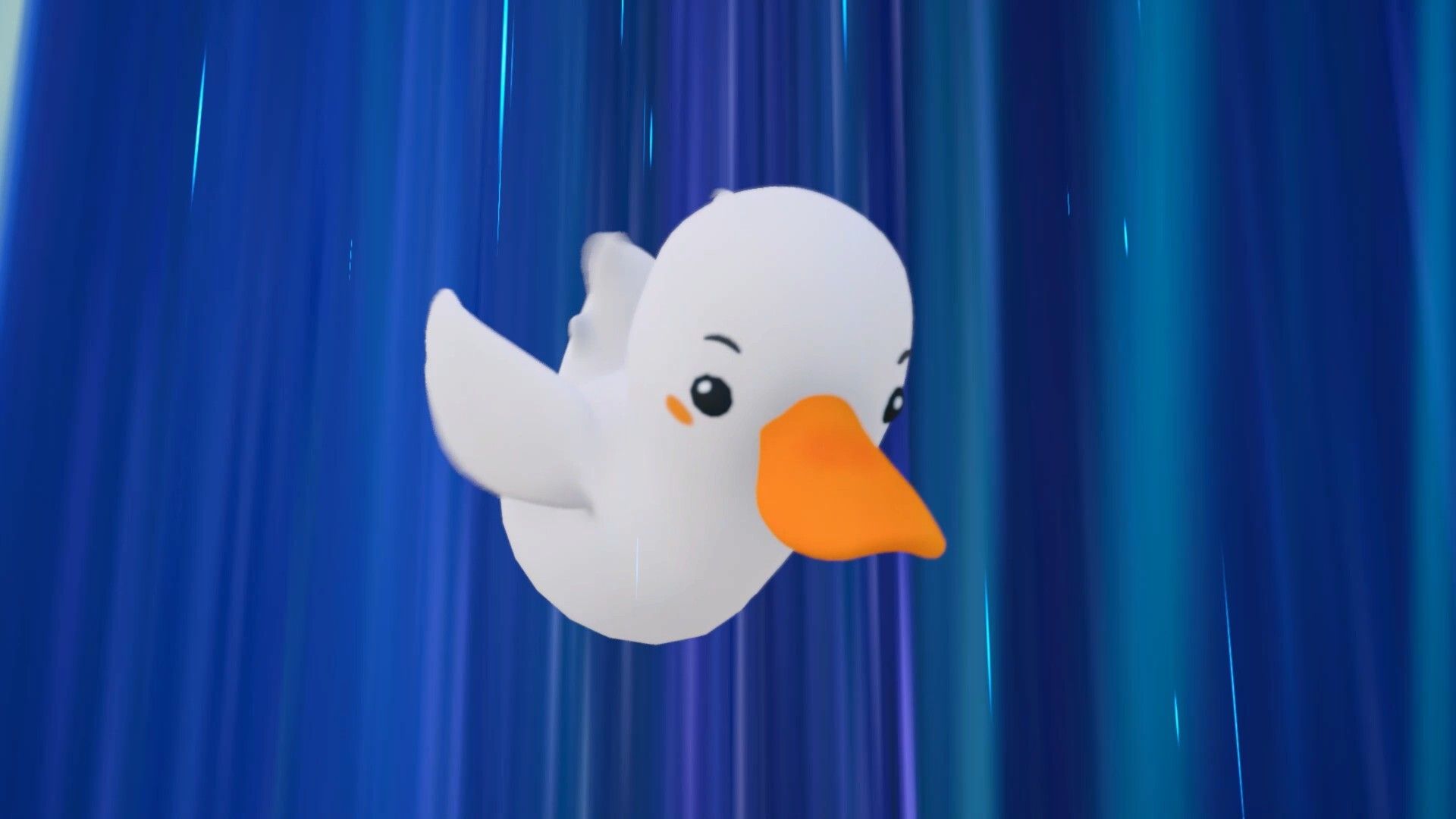
At its core, Dodo Duckie is a whimsical adventure about a duck on a mission to rescue his kidnapped chicken friends from a group of greedy, encroaching aliens. However, beneath its charming, cartoonish exterior lies a sophisticated mechanical hook: the ability to seamlessly transition between two-dimensional and three-dimensional planes. With the aid of a magical propeller hat gifted by a friendly capybara named Capie, players are invited to master a world where geometry is merely a suggestion.
The Core Concept: Dimensional Duality
The central conceit of Dodo Duckie is its "dimensional-shifting" mechanic. Unlike other games that use depth as a stylistic choice, here, it is a functional requirement for traversal and puzzle-solving.
In the 2D plane, the game functions as a classic, side-scrolling platformer. This mode is optimized for speed and distance, allowing players to leap across gaps, dodge projectiles, and navigate intricate obstacle courses with the precision inherent to traditional platforming. Conversely, shifting into 3D transforms the gameplay, opening up the environment for exploration. In this mode, the player can scout hidden nooks, uncover secret collectibles, and—perhaps most importantly—align their trajectory before committing to a precarious jump.
This constant toggle between the two perspectives creates a rhythm of play that feels both cerebral and kinetic. Players aren’t just running; they are constantly analyzing the environment for the optimal "plane" to be in.
A Chronology of Discovery: How the Mechanics Evolve
The brilliance of Dodo Duckie lies in its pacing. During the early stages of the game, players are introduced to the mechanic in a low-pressure environment. It begins with simple navigation: a ledge is too far to jump in 2D, so the player enters 3D to walk around an obstacle, then pops back into 2D to make the leap.
As the game progresses, these mechanics are woven into increasingly complex environmental puzzles. A recurring challenge involves the use of stone cubes that must be placed on weighted pressure plates to unlock doors. The "catch" that elevates these puzzles from mundane to clever is the limitation on interaction: you can only manipulate physical objects while in the 3D dimension, yet your platforming abilities—specifically your jump—are significantly more fluid and effective in 2D.
This creates a "dimensional juggling" effect. Players must pick up a cube in 3D, calculate where that cube needs to land in 2D space, shift to 2D to carry the object, and then navigate a platforming section while burdened by the weight of the puzzle element. It is a satisfying loop that challenges the player’s spatial reasoning without ever feeling like a chore.
The Philosophical Shift: Moving Away from ‘Masocore’
For many in the gaming community, the "tough-as-nails" platformer has become the standard. Titles that demand absolute perfection are celebrated, but they often leave players feeling burnt out or demoralized. Dodo Duckie serves as a counter-narrative to this movement.
The design philosophy behind the game seems rooted in the concept of "forgiving challenge." While the puzzles require thought and the platforming requires rhythm, the game never punishes the player for failing to execute a maneuver on the first try. This creates a psychological space where experimentation is encouraged. You are free to fail, reset, and try again, which ultimately makes the process of solving a difficult room far more rewarding than if the stakes were purely punitive.
In a recent playtest of the demo, the fluidity of the shift was the standout feature. The transition between 2D and 3D is near-instantaneous. There is no loading, no stuttering, and no confusing UI feedback. It is a seamless "flick" of a button that feels as natural as sprinting or crouching in a conventional shooter.
Supporting Data: The Rise of Indie Perspective-Shifters
Dodo Duckie joins a storied lineage of games that have played with spatial dimensionality. From the legendary Super Paper Mario on the Wii to the mind-bending puzzles of Fez, the concept of "perspective shifting" has historically been a hallmark of high-quality indie design.
Market data suggests that players are increasingly looking for these "cerebral platformers." Steam wishlist trends for 2024 and 2025 show a significant uptick in interest for titles that prioritize creative movement and puzzle-solving over pure combat difficulty. BornMonkie’s entry into this market is well-timed. By leaning into a vibrant, colorful aesthetic—and yes, including plenty of adorable capybaras—the developers have created a game that is not only fun to play but also highly shareable in the age of social media and streaming.
Official Stance and Developer Vision
While BornMonkie has kept their long-term roadmap under wraps, their focus remains clear: accessibility and joy. In various interviews, the development team has emphasized that the game’s primary goal is to provide a sense of "wonderment."
"We wanted a game where the environment itself is the primary antagonist, not the difficulty spike," says one representative for the studio. This approach is evident in the art direction, which favors soft lighting, bright palettes, and character designs that feel approachable. Even the "enemy" aliens are designed with a comedic flair that avoids the grim, dark tone typical of modern platformers.
The Implications for the Genre
What does Dodo Duckie imply for the future of the platformer genre? It signals a potential pivot point. While there will always be a place for high-difficulty games, the success of Dodo Duckie indicates that there is a massive, underserved audience hungry for games that reward intelligence and curiosity over pixel-perfect twitch reflexes.
Furthermore, the game’s success in its early demonstrations highlights the importance of "mechanical purity." By stripping away unnecessary skill trees, complex inventory systems, and convoluted lore, Dodo Duckie allows its one core mechanic—the dimension swap—to shine. It is a masterclass in focus. Developers who look to replicate this success should take note: you don’t need to reinvent the genre; you just need to find one interesting hook and refine it until it feels perfect.
Final Thoughts: A Welcome Respite
As we look toward the future of the indie gaming scene, Dodo Duckie stands out as a beacon of creative optimism. It is a game that respects the player’s time and intelligence, offering a challenge that feels like a puzzle to be solved rather than a wall to be smashed against.
Whether you are a seasoned veteran of the genre looking for a change of pace, or a casual player seeking a charming world to inhabit, Dodo Duckie offers something genuinely special. It invites you to step out of the shadows of difficult, punishing games and into a world where a propeller hat, a bit of spatial awareness, and a few friendly capybaras are all you need to save the day.
For those who have spent the last few years feeling the weight of the industry’s obsession with "challenge," consider this your invitation to take a breather. The rescue mission for those kidnapped chickens isn’t just a job; it’s an adventure worth taking in every dimension.


 Asro
Asro
 Muslim