Nana Muazin
For decades, the art of lightning photography was a game of extreme patience and pure, unadulterated luck. Professional storm chasers would spend hours sitting in the humid dark, eyes glued to the horizon, thumb hovering over a mechanical shutter release in hopes of catching a jagged bolt of electricity that lasts for only a fraction of a second. But as with so many manual processes in the modern era, the intersection of affordable computing and open-source software has fundamentally shifted the paradigm.
The emergence of the "Stormwatch-Pi," a DIY project developed by GitHub user sheet315, marks a significant milestone for hobbyist photographers and weather enthusiasts alike. By leveraging the low-cost power of the Raspberry Pi and standard USB webcams, this project has democratized the ability to capture high-definition, perfectly timed lightning strikes, effectively automating a process that previously required professional-grade trigger sensors costing hundreds of dollars.
The Core Concept: Bridging Human Limitation with Machine Precision
The fundamental challenge of capturing lightning is physiological. Even the most alert human photographer suffers from reaction latency—the time it takes for the eye to perceive a flash and the brain to command the finger to press the shutter button. By the time a human reacts, the bolt has already dissipated.
The Stormwatch-Pi project bypasses human reflexes entirely. At its heart, the system functions as an autonomous sentinel. The Raspberry Pi continuously processes the video feed from a connected USB webcam, monitoring for sudden, dramatic spikes in pixel luminosity across the frame. When the software detects a flash—a process measured in milliseconds—it triggers a recording sequence. The system captures a buffer of the ten frames preceding the event and the ten frames following it, ensuring that the critical moment of the strike is preserved in high resolution.
Chronology of Development: From Concept to Community Tool
The development of the Stormwatch-Pi represents the iterative nature of the maker community. While the idea of using a computer to trigger a camera is not new, sheet315’s contribution lies in the accessibility of the implementation.
- Early 2026: The project begins as a personal experiment to solve the frustration of missing lightning strikes during local storms.
- Mid-2026: Initial coding focuses on frame-differencing algorithms to detect brightness changes without triggering false positives from clouds moving or general ambient light fluctuations.
- June 2026: Following successful field tests, the developer publishes the project on GitHub and shares the results on the Raspberry Pi subreddit.
- Present Day: The community has begun to refine the code, suggesting enhancements such as integration with local weather APIs to automatically start the monitoring process only when storm conditions are detected.
The reception has been overwhelmingly positive. Within hours of the Reddit announcement, dozens of users reported setting up their own "test benches" using older Raspberry Pi models gathering dust in their drawers, proving that the project is not just a technical curiosity but a highly replicable tool.
Supporting Data and Technical Architecture
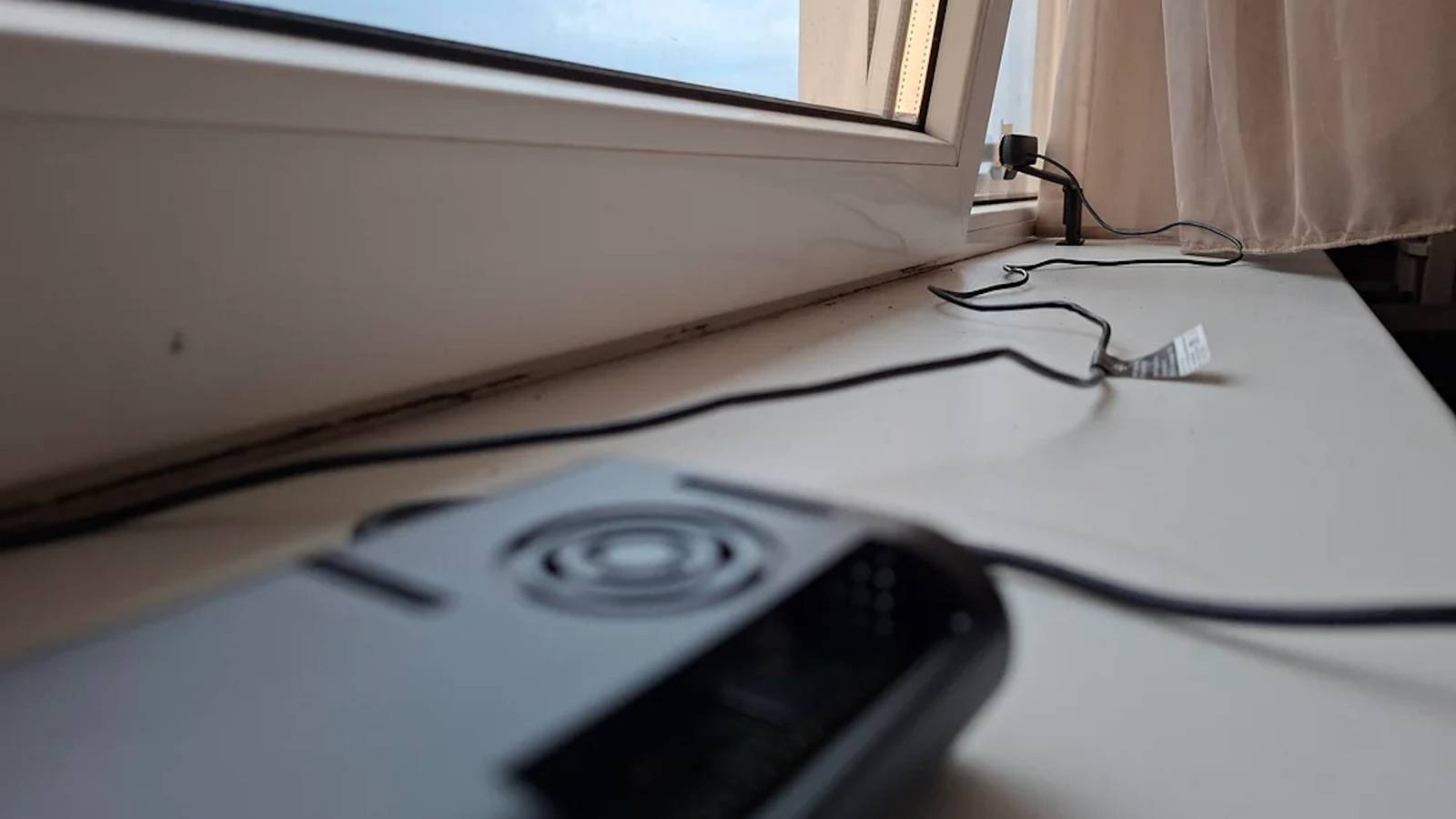
To understand why this project is so effective, one must look at the hardware requirements and the software logic. The system is remarkably lean. It does not require a Raspberry Pi 5 or high-end peripherals. In fact, many users have successfully run the software on a Raspberry Pi 4 or even a 3B+.
Hardware Requirements:
- Microcomputer: Raspberry Pi (any model with sufficient processing power for video streaming).
- Sensor: Standard USB Webcam (preferably with manual focus capabilities to lock the focal length to infinity).
- Storage: A microSD card (for the operating system and captured media) and potentially an external drive for long-term archiving.
- Power: A reliable 5V power supply to ensure the system doesn’t crash during a thunderstorm.
Software Logic:
The software, hosted on GitHub, utilizes Python-based computer vision libraries (likely OpenCV). The code performs "Motion Detection by Luminance." Instead of checking for pixel movement, it calculates the mean brightness of the entire frame. If the frame brightness increases by a user-defined threshold within a single frame update, the system flags it as a lightning strike. This approach is superior to traditional motion detection because it ignores the swaying of trees or the movement of clouds, focusing exclusively on the near-instantaneous illumination characteristic of a lightning discharge.
Professional and Meteorological Implications
While primarily a hobbyist tool, the implications of such widespread, low-cost monitoring are significant for amateur meteorology.
Historically, atmospheric data regarding localized lightning strikes was gathered by professional meteorological stations using expensive, specialized hardware. These systems are sparse. A network of amateur-run Raspberry Pi stations could, in theory, provide a crowdsourced heat map of lightning activity. If enough users report the timing and location of strikes, it creates a mesh network of data that can help track the progression of supercell storms with greater spatial resolution than traditional satellite imagery alone.
Furthermore, the "human analysis" component mentioned by the developer is key. By offloading the initial "capture" to the machine, the human photographer can spend their time analyzing the scientific properties of the captured bolt, such as the branching patterns (stepped leaders) or the color spectrum, which can indicate the temperature and the composition of the air through which the lightning passed.
Official Responses and Community Feedback
The developer, sheet315, has been active in the Reddit thread, providing support for users encountering issues with frame rates and storage bottlenecks. The community response has moved beyond simple praise; it has evolved into a collaborative engineering effort.

One user noted, "The beauty of this is that it doesn’t need to be perfect. Even if it catches only one out of every three bolts, that is still three times better than what I was doing manually." Another contributor suggested adding a "Geiger counter-style" buzzer that sounds whenever a strike is detected, allowing the photographer to know when to check their computer without needing to stare at the screen all night.
However, the project is not without its hurdles. Experienced users have pointed out that "false positives" remain a challenge—particularly from headlights passing by or distant strobing lights. Sheet315 has responded by encouraging the community to help refine the sensitivity settings in the config.json file, demonstrating the open-source spirit that defines the Raspberry Pi ecosystem.
Future Outlook: The Path Toward Automated Storm Documentation
As we look toward the remainder of the 2026 storm season, the Stormwatch-Pi project is poised to become a staple in the DIY weather-tracking community. The next logical step for this technology is the integration of cloud storage and real-time social media alerts. Imagine a system that, upon detecting a major strike, automatically uploads the footage to a public feed or a dedicated Discord channel, alerting other nearby enthusiasts to the exact location of the storm cell.
The democratization of high-end photography through code is a trend that shows no signs of slowing down. Whether it is LiDAR scanners built from Raspberry Pis or lightning triggers that react faster than the human nervous system, these tools are fundamentally changing how we interact with the natural world.
For those interested in building their own unit, the barrier to entry is lower than ever. With a basic understanding of Linux, a modest investment in hardware, and a few hours of assembly, any enthusiast can turn their home into a weather station. As sheet315 has proven, you don’t need a professional studio or a six-figure salary to produce high-quality, scientifically interesting documentation of the world’s most powerful storms—you just need a little curiosity and a Raspberry Pi.
Summary of Key Advantages:
- Cost-Efficiency: Utilizes readily available components, significantly cheaper than commercial lightning triggers.
- Autonomous Operation: Operates 24/7 without fatigue, ensuring no event is missed due to human error.
- Educational Value: Provides an accessible entry point for those interested in programming, computer vision, and atmospheric science.
- Community-Driven: Open-source code allows for continuous improvement and feature expansion by the user base.
The Stormwatch-Pi is more than just a camera trigger; it is a testament to the power of the DIY movement. By combining simple hardware with intelligent software, we are seeing a shift where technology no longer just documents our world, but actively participates in our discovery of it. Whether you are a seasoned storm chaser or a hobbyist looking for your next weekend project, the ability to "see" the unseen via the Stormwatch-Pi is a triumph of modern engineering.

 Ammar Sabilarrohman
 Jia Lissa