

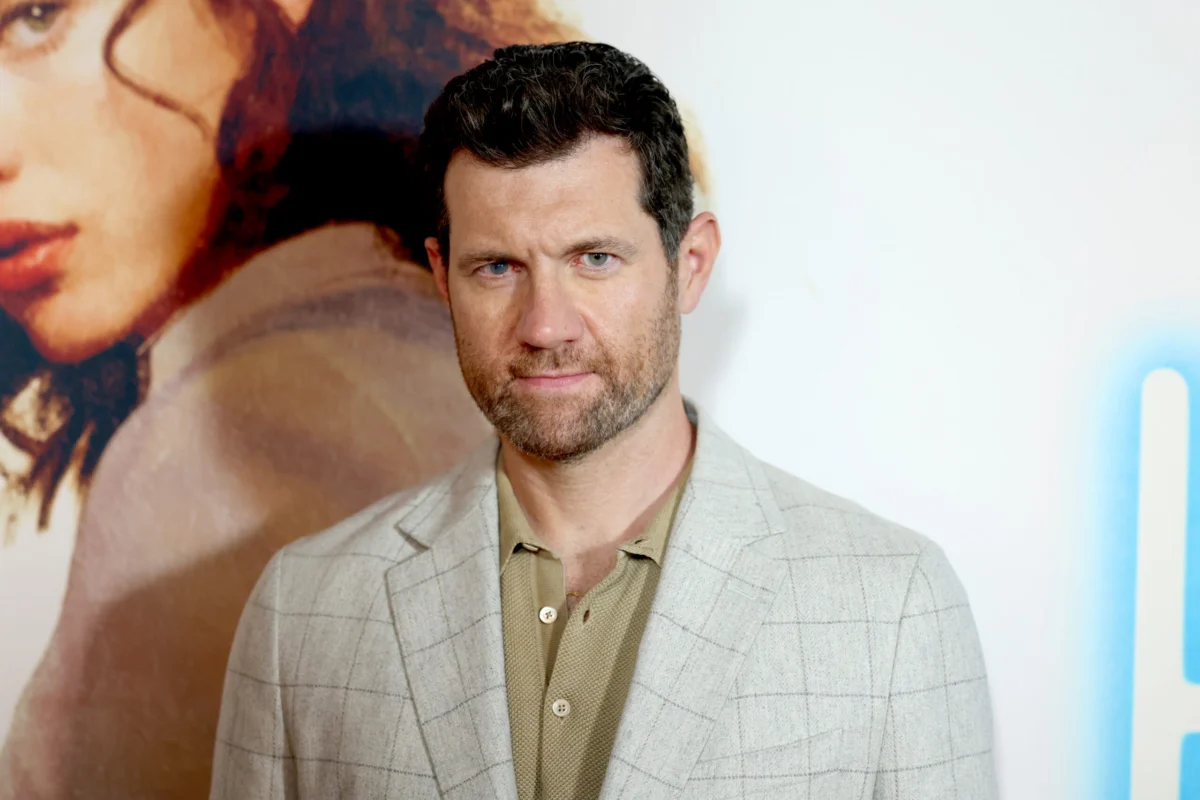
In the rapidly shifting landscape of modern entertainment, few programs have achieved the enduring, chaotic resonance of Billy on the Street. The guerrilla-style game show, characterized by Billy Eichner’s frantic, high-decibel encounters with unsuspecting New Yorkers, has long been a staple of internet culture. Recently, the comedian and actor hinted that while he once considered the project a closed chapter, he is no longer ruling out a future revival.
During a candid, wide-ranging conversation on Josh Horowitz’s Happy Sad Confused podcast—held to promote his newly released audio memoir, Billy on Billy—Eichner addressed the persistent fan demand for more of his iconic, sidewalk-based antics. His remarks suggest a newfound openness to the format, even as he navigates his desire for a more traditional artistic trajectory.
The Unexpected Second Life of a Viral Phenomenon
The resilience of Billy on the Street is a testament to the power of digital longevity. Originally a cable television fixture, the show has experienced a significant "second, third, and fourth life" on social media platforms like TikTok and X (formerly Twitter). Clips of segments such as "For A Dollar" or Eichner’s frenzied pop-culture trivia rounds continue to rack up millions of views, finding an audience that often predates the show’s original broadcast run.
"It’s crazy. It has sustained in a very unexpected way," Eichner noted during his interview with Horowitz. "It’s one of those things that you cannot plan for."
For many, the show serves as a time capsule of a specific era of New York City life and celebrity culture, yet it remains undeniably evergreen. The irony is not lost on Eichner, who has spent the last few years pivoting toward film writing and acting, most notably with the 2022 romantic comedy Bros. Despite his evolution, the cultural footprint of his loud, high-energy alter ego remains a defining element of his professional identity.
A Chronology of the Street: From Fuse to Viral Stardom
To understand why a potential revival is such a hot topic, one must look at the trajectory of Billy on the Street. The show’s journey from a niche cable experiment to a pop-culture touchstone is a study in creative persistence.
- The Early Years (2011–2014): The show premiered on Fuse, introducing audiences to Eichner’s unique brand of comedic aggression. It was here that the format was perfected: Eichner, accompanied by a cameraman and a rotating cast of celebrity guests, would storm the streets of Manhattan to quiz pedestrians on pop culture, often with surreal and hilarious results.
- The TruTV Era (2015–2017): After finding success on Fuse, the show moved to TruTV for two additional seasons. During this period, the show hit its creative peak, featuring high-profile celebrity cameos from the likes of Tina Fey, Amy Poehler, and Michelle Obama.
- The Transition to Digital (2018–Present): As cable ratings shifted, Billy on the Street moved to a web-based format, producing short-form content for Funny or Die and later, various promotional tie-ins.
- The Recent Return: Most recently, Eichner reunited with comedy legend Will Ferrell for a special, politically charged edition of the show, aimed at driving voter turnout for Kamala Harris during the 2024 presidential campaign.
Eichner’s reflection on that recent political special was characteristically dry. "That helped," he remarked with biting sarcasm. "We tried. Wish more people had tried." The special underscored how the Billy on the Street format has become a versatile tool—a megaphone that can be used for civic engagement as easily as it can be used to ask strangers about their favorite Beyoncé song.
The Creative Tug-of-War: Artistry vs. Audience Expectation
At the heart of Eichner’s reluctance to fully embrace a Billy on the Street revival is a fundamental tension between his artistic aspirations and the show’s legacy. He admits that, as an actor, the repetitive nature of the show has lost its luster.
"It does not give me, as an actor, the creative satisfaction anymore because I’ve been doing it for so long," Eichner explained. "And it’s not aligned with who I really wanted to be as an artist because it’s not acting in the traditional sense."
Eichner has been vocal about his desire for an "eclectic career." Having written, produced, and starred in Bros, he has clearly signaled that he wants to be viewed as a multi-hyphenate creative, not just a man shouting at pedestrians. However, he acknowledges that the internet’s affection for the show is a rare, precious commodity.
"The people who get it, it’s like their favorite thing," he said. "They’re always: ‘Please do more. Please bring the show back. The world is so awful. Please do this.’ And I am very touched by that, and I want to honor that. That’s a very rare thing."
The "Never Say Never" Philosophy
Eichner’s current outlook, which he credits in part to guidance from his therapist, is one of integration rather than compartmentalization. The pressure to choose between his career as a traditional actor and his role as the face of Billy on the Street is fading.
"My therapist would want me to say that. She was like: ‘You can do everything!’" he admitted.
This shift in perspective has opened the door to the possibility of a different kind of return. While Eichner is firm that he will not return to the grueling schedule of producing half-hour episodes for cable television, he is clearly entertaining the idea of what a modern iteration could look like.
Whether it manifests as more short-form digital content, special one-off events, or a new format entirely, the door is officially ajar. "I’m never going to do half-hour episodes of Billy on the Street again," he stated, "but we’re always kind of talking about what it could look like. And I don’t know what the answer to that is, but never say never."
Implications for the Future of Legacy Media
The potential return of Billy on the Street serves as a broader commentary on how legacy media properties survive in the age of social media. The show, which was once tethered to the linear cable model, has found a second life in the algorithmic feed. Its success suggests that content with a strong, distinct personality—even if it is "not traditional acting"—has a shelf life far beyond its original broadcast schedule.
For fans, the possibility of new content is exciting, but for Eichner, it represents a mature acceptance of his own brand. By acknowledging that he can balance his "serious" artistic pursuits with the high-energy comedy that made him a household name, he is effectively reclaiming control of his public narrative.
As the industry continues to pivot toward short-form, high-impact content, Eichner is uniquely positioned. He has the credibility of a writer and performer in the film space and the built-in, massive audience of a viral web series. If he does choose to bring Billy on the Street back in some capacity, it will likely be on his own terms—as a passion project, a civic tool, or simply a way to keep a beloved, chaotic tradition alive for a new generation of viewers.
For now, the streets of New York remain quiet, but the Billy on the Street signal has been lit. In the words of the man himself: "I don’t know. Never say never."











No comments yet. Be the first to join the conversation!