Asep Darmawan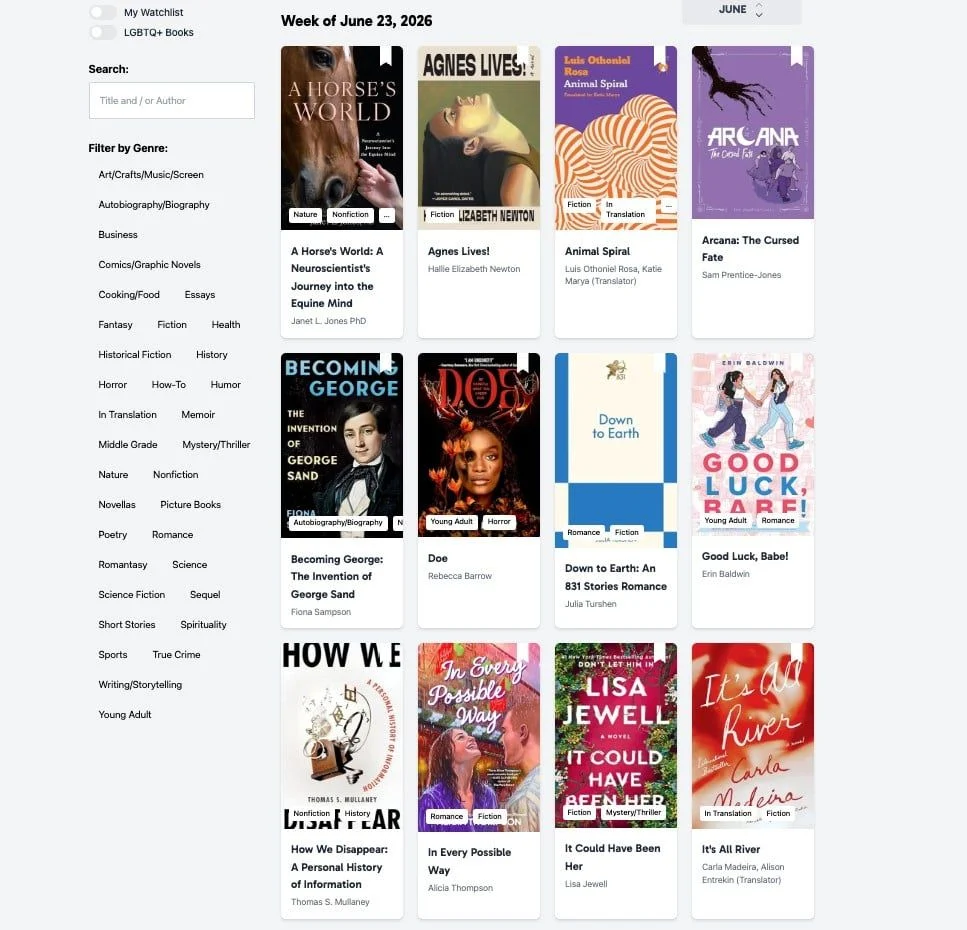
In an era defined by information saturation, the literary world faces a paradox: while access to literature has never been more democratic, the process of discovering that literature has never been more overwhelming. Every month, thousands of new titles hit the market, a relentless deluge that often leaves avid readers feeling paralyzed by choice. As algorithms prioritize high-budget marketing campaigns and viral social media trends, the quiet, mid-list, and debut gems often disappear into the digital abyss. For the modern reader, the "To Be Read" (TBR) pile has shifted from a source of excitement to a source of cognitive load.
To address this systemic bottleneck, Book Riot has introduced the "New Release Index," a sophisticated, user-centric database designed to transform how readers navigate the publishing calendar. By shifting the power from marketing algorithms back to the individual reader, the index promises to restore the joy of discovery while eliminating the administrative burden of tracking upcoming releases.
The Architecture of Discovery: Main Facts
The New Release Index is fundamentally a curated, searchable, and interactive database of upcoming literature. Unlike traditional retail platforms that function primarily as storefronts, the Index is designed as a discovery engine. It organizes vast amounts of metadata—release dates, genres, author backgrounds, and synopses—into a visually intuitive interface.
The core utility of the tool lies in its design philosophy: accessibility and curation. Instead of forcing users to sift through complex spreadsheets or obscure trade catalogs, the Index presents book covers in a dynamic, gallery-style layout. This visual-first approach allows readers to interact with upcoming titles intuitively. By clicking on a cover, the user gains immediate access to a detailed synopsis, allowing for an informed decision-making process before a book is even released. Furthermore, the platform features a "Watchlist" function, enabling readers to create a personalized, manageable queue of anticipated titles, effectively acting as a digital lighthouse in the storm of new releases.
A History of Information Overload: The Chronology of the TBR Crisis
The evolution of the "TBR crisis" is intrinsically linked to the democratization of publishing. Two decades ago, the average reader’s exposure to new titles was limited to bookstore displays, library newsletters, and Sunday book reviews. This scarcity meant that discovery was slow, deliberate, and manageable.
The rise of digital publishing and self-publishing, while undeniably positive for diversity in literature, fundamentally altered the economics of attention. As the barrier to entry for authors lowered, the output of the publishing industry exploded. By the mid-2010s, the emergence of "Bookstagram" and later "BookTok" shifted the discovery landscape again. While these platforms created vibrant communities, they also fostered a culture of extreme consumption. Readers were suddenly bombarded with thousands of recommendations, leading to a state of "analysis paralysis."
Throughout 2024 and 2025, industry analysts noted a significant decline in engagement with traditional book discovery methods. Readers were reporting burnout, citing the difficulty of tracking pre-orders and release dates as a primary barrier to their literary engagement. It was within this context that Book Riot began the development of the New Release Index. The project moved from internal conceptualization in early 2026 to its current beta iteration, aiming to bridge the gap between high-volume production and the limited capacity of the human reader.
The Data Behind the Demand: Supporting Evidence
The necessity for a tool like the New Release Index is backed by significant trends in consumer behavior within the book market. According to recent industry data, the average "active" reader is now aware of roughly three times more books than they are capable of reading within a calendar year. This gap—the distance between desire and capacity—is where the stress of the modern reader originates.
Furthermore, market research indicates that 65% of readers abandon their search for new titles when faced with more than two pages of unfiltered search results. The cognitive load associated with sorting, filtering, and cross-referencing publication dates creates a barrier that often results in the reader reverting to "safe" backlist titles or falling back on bestsellers that have already been heavily advertised.
The Index addresses this by utilizing refined metadata tags. By allowing users to filter by genre—ranging from speculative fiction and historical biography to contemporary romance—the Index reduces the "noise" of the publishing market. Internal metrics from the platform’s early testing phase suggest that users who utilize the filtering and Watchlist features are 40% more likely to follow through on a purchase or library request, suggesting that curation is the missing link in the conversion of casual interest into concrete reading action.

Industry Perspectives: Official Responses
The publishing industry has reacted with cautious optimism to the launch of the New Release Index. Publishers, who spend millions annually on discovery and visibility, view the tool as a potential equalizer.
"We have always struggled with the ‘discoverability problem,’" says a spokesperson for a major publishing house. "Our marketing budgets can only stretch so far, and the most compelling books don’t always have the largest promotional backing. A platform that prioritizes user discovery over paid placement is an asset to the entire ecosystem."
Conversely, independent booksellers have expressed interest in the tool’s ability to drive traffic. By helping readers identify specific titles before they hit the shelves, the Index creates an opportunity for local bookstores to capture pre-orders that might otherwise be lost to global retail giants. Critics, however, warn that any centralized database risks introducing its own bias. "The curation process is inherently subjective," notes a literary critic. "The key to the Index’s long-term success will be transparency regarding how books are selected for featured status."
Implications: A New Era for Readers
The implications of the New Release Index extend far beyond a simple organizational tool. By streamlining the discovery process, the Index could fundamentally alter the relationship between readers and the publishing industry.
1. The Decentralization of Influence
For years, the "bestseller" lists have been dominated by a handful of titles supported by massive marketing machines. A tool like the Index, which highlights upcoming releases across a spectrum of genres and scales, threatens to disrupt this. When discovery is based on metadata and user interest rather than marketing spend, the potential for "hidden gems" to gain organic momentum increases exponentially.
2. Combating Burnout
Reading should be a leisure activity, not a logistical challenge. By automating the tracking of release dates and providing a centralized space for a Watchlist, the Index allows readers to reclaim their time. This, in turn, may lead to higher retention rates among readers who feel overwhelmed by the current pace of the industry.
3. Strengthening the Literary Ecosystem
When readers can easily find the books that align with their specific interests, the entire ecosystem benefits. Authors receive more targeted engagement, publishers see a higher return on their mid-list investments, and libraries can better anticipate demand.
The Path Forward
As the New Release Index continues to evolve, its success will depend on its ability to maintain neutrality and expand its database to include a broader array of international and independent publishers. If it succeeds, it will move beyond being a mere "bookmarking tool" to become an essential piece of literary infrastructure.
For the reader, the goal is simple: to spend less time scrolling through spreadsheets and more time turning pages. By transforming the chaotic torrent of new releases into a curated, manageable stream, the New Release Index offers a promising vision of the future of reading—one where discovery is guided not by the loudest marketing budget, but by the personal, profound connection between a reader and a book. As we move further into 2026 and beyond, tools that respect the reader’s time and intelligence will likely become the standard for navigating the ever-expanding universe of the written word.


 Reynand Wu