Iffa Jayyana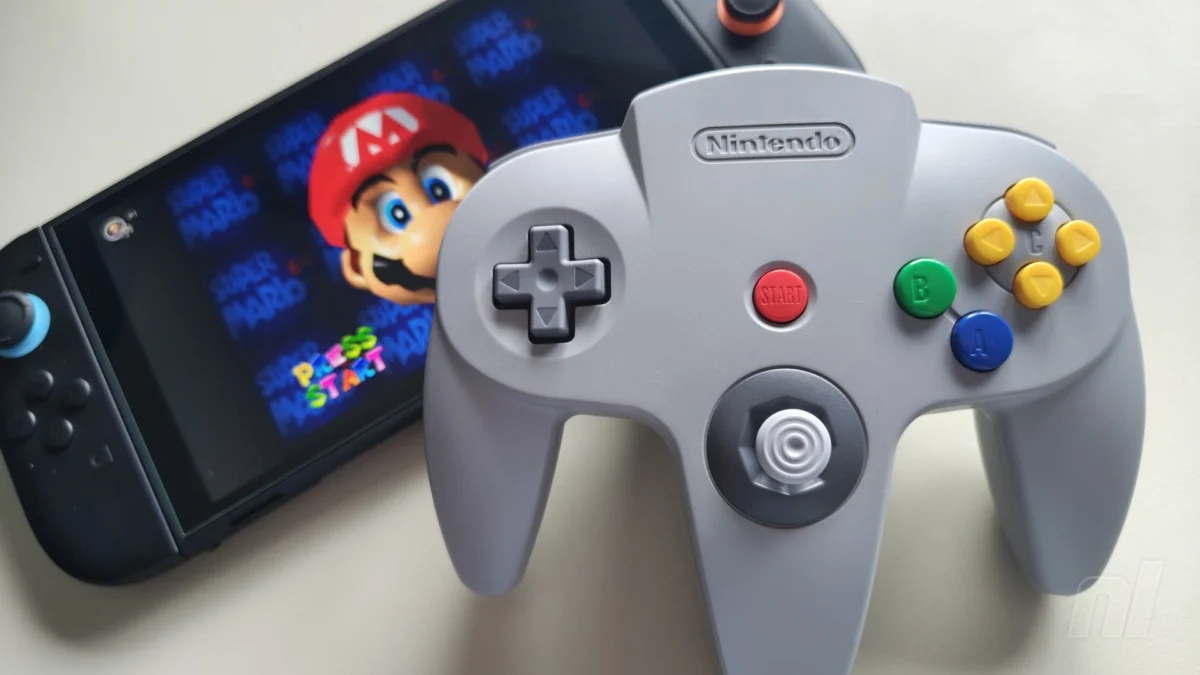
As the Nintendo 64 approaches its 30th anniversary on June 23rd, 2026, a series of articles will delve into the legacy of this iconic, 64-bit powerhouse and its groundbreaking software. This installment revisits a subject that has long divided opinion: the N64’s revolutionary, yet undeniably peculiar, controller.
For many, the Nintendo 64 remains a cherished memory, a console that pushed the boundaries of 3D gaming with titles like Super Mario 64, The Legend of Zelda: Ocarina of Time, and GoldenEye 007. Yet, its unique controller, a departure from the familiar designs of its predecessors and successors, often evokes a similar mix of nostalgia and bewilderment. For one writer, the N64’s controller was a barrier, a source of frustration that kept him at arm’s length from experiencing the console’s magic firsthand. However, time, and the advent of Nintendo Switch Online, has a way of changing perspectives.
The Road Less Traveled: A Childhood Without the N64
My childhood gaming journey, like many of my generation, was a carefully curated progression of consoles, often inherited rather than personally acquired. My entry into the world of home gaming began with the Sega Mega Drive, a hand-me-down from my elder brother who had then upgraded to the PlayStation. The cycle continued with the PS1, which I received when he moved on to the PlayStation 2. It wasn’t until the arrival of the Nintendo GameCube that I finally had the opportunity to purchase a home console for myself, a significant milestone that cemented my independence as a gamer.
This familial hand-me-down system meant that the Nintendo 64, released in 1996, was a console I largely missed during its prime. My formative years were spent with controllers that, while evolving, maintained a recognizable lineage. The transition from the Mega Drive’s straightforward gamepad to the PlayStation’s DualShock, with its innovative analog sticks and ergonomic enhancements, felt like a natural progression. Similarly, the GameCube’s distinct, yet still intuitive, button layout and joystick placement allowed for a seamless transition.

Consequently, my initial encounters with the Nintendo 64 were sporadic and confined to the houses of friends. These were often brief, multiplayer sessions fueled by the allure of titles like GoldenEye 007 and Mario Kart 64. However, these fleeting moments were invariably tinged with a sense of unease. The N64’s controller, with its unconventional "M" shape and the prominent placement of the analog stick, felt alien and cumbersome. The presence of the three distinct grips, the enigmatic "C" buttons, and the central analog stick all conspired to create a sense of disorientation. Why was the analog stick positioned in the middle? What were these strange "C" buttons intended for? The sheer visual complexity of the controller presented an immediate mental hurdle.
This unfamiliarity inevitably led to frustration. As a young teenager, navigating the intricate controls of competitive titles like GoldenEye 007 proved to be a steep learning curve. A few swift defeats in virtual firefights were often enough to shatter my resolve, leading me to suggest alternative activities, anything to escape the perplexing grip of the N64 controller. The thought of willingly engaging with it again seemed an unlikely prospect.
A Second Chance: The Nintendo Switch Online Revelation
Fast forward to the present day, and the gaming landscape has dramatically shifted. The advent of Nintendo Switch Online has offered a second life to many classic Nintendo titles, including a significant portion of the N64’s esteemed library. This platform provided an unexpected opportunity for me to revisit the console that had once eluded me, and crucially, to do so on my own terms.
The N64 app on the Nintendo Switch presented a wireless replica of the iconic controller, a chance to finally confront the ergonomic enigma that had defined my childhood gaming perceptions. Driven by a renewed curiosity and the availability of seminal N64 titles such as Super Mario 64, Star Fox 64, and the legendary The Legend of Zelda: Ocarina of Time, I decided to give the controller a proper, unhurried trial.

What followed was nothing short of a revelation. My deeply ingrained aversion to the N64 controller began to dissipate, replaced by an unexpected appreciation. The initial sessions with Super Mario 64, followed by Star Fox 64 and Ocarina of Time, were not an immediate "aha!" moment. There was an undeniable period of adjustment, a necessary rewiring of decades of muscle memory ingrained by other controller designs.
However, as I persisted, something clicked. The realization that I no longer needed to consciously consider the D-pad or the ‘L’ input – functionalities that had become secondary in my mind to the analog stick and the "C" buttons – allowed the rest of the controller’s logic to fall into place. The "M" shape, once a source of confusion, began to feel purposeful. The three grips, rather than being a sign of complexity, started to make sense in their ability to accommodate different playstyles and hand sizes.
Deconstructing the Design: Functionality and Ergonomics
The analog stick, once my primary point of contention, became the intuitive tool for precise 3D movement. In Super Mario 64, its nuanced responsiveness allowed for fluid exploration of Peach’s Castle and its many worlds. Similarly, in Star Fox 64, the analog stick provided the critical precision needed for barrel rolls and precise aiming in the Arwing.
The "C" buttons, initially a perplexing addition, transformed into essential command inputs. In Ocarina of Time, where the game’s camera control is largely automated or re-centered with the ‘Z’ button, the "C" buttons became the go-to for managing items, targeting enemies, and interacting with the environment. This was a particularly satisfying discovery, as my prior experience with the GameCube controller had led me to associate shoulder buttons with item management. Transferring that learned behavior to the "C" buttons felt surprisingly natural.

The game’s design itself played a crucial role in this newfound appreciation. Ocarina of Time, for instance, doesn’t heavily rely on complex camera manipulation via button inputs, a stark contrast to many modern 3D adventures. This design choice, coupled with the N64 controller’s strengths, meant that the "C" buttons could be effectively repurposed for other vital functions without compromising the core gameplay experience.
The transition from a teenager who "threw in the towel" to an adult who embraced the controller’s idiosyncrasies was, in hindsight, almost embarrassing in its speed. The way the analog stick facilitated Mario’s movements and the "C" buttons allowed for camera adjustments in games like Super Mario 64 now felt entirely natural, a testament to the controller’s well-thought-out, albeit unconventional, design.
The Objective Question: Is the N64 Pad "Good"?
The question of whether the N64 controller is objectively "good" is a complex one, and one that even the most seasoned Nintendo enthusiasts debate. It is undeniable that Nintendo itself never revisited this specific design philosophy for subsequent home consoles. The industry has largely converged on the dual-analog stick layout, with variations primarily revolving around the offset or symmetrical placement of these sticks. This widespread adoption suggests a general consensus on what constitutes an effective and intuitive control scheme for the majority of modern gaming experiences.
However, to dismiss the N64 controller solely on its deviation from the norm would be to overlook its intrinsic brilliance in the context of its intended hardware. For the games it was designed to facilitate, it functions exceptionally well. My personal journey through nearly every N64 title available on Nintendo Switch Online has solidified this belief. Even with the availability of third-party alternatives like the 8BitDo 64 Controller, I find myself consistently gravitating back to Nintendo’s official offering.

The controller’s "weirdness," as it was once perceived, is precisely what contributes to its charm and enduring appeal. It is a bold statement in design, a testament to Nintendo’s willingness to experiment and push the boundaries of what a video game controller could be. It is a piece of gaming history that, for a long time, I misunderstood, but now, I wholeheartedly embrace.
Supporting Data and Industry Evolution
The N64 controller’s departure from established norms was a significant risk for Nintendo. Following the runaway success of the Super Nintendo’s gamepad, which was an evolution of the NES controller, the N64’s design was a radical departure. The introduction of the analog stick was particularly groundbreaking. While the PlayStation had introduced analog sticks with the DualShock controller in 1997, the N64’s analog stick, featuring a textured grip and a central positioning, was arguably more focused on providing precise 3D movement from its inception.
The "M" shape, offering three distinct grips, was an attempt to accommodate various playstyles. The central grip, designed for analog control, was flanked by two other grips that could be used for different button combinations or even for resting the controller when not actively using all inputs. This was a clear acknowledgment that different games might benefit from different control configurations, a foresight that was perhaps ahead of its time.
The "C" buttons, arranged in a diamond pattern, were also a novel addition. Their placement and distinct feel allowed for rapid, tactile input, proving invaluable in games where quick access to secondary actions was paramount. This design choice likely influenced later controller designs that incorporated more buttons for specific functions, albeit in different arrangements.

Official Responses and Industry Trends
Nintendo’s decision to move away from the N64 controller’s unique design for the GameCube, Wii, and subsequent consoles suggests a pragmatic approach to market trends and consumer expectations. The GameCube controller, while still possessing its own distinct character with its asymmetrical button layout and the iconic "A" button, leaned more towards a conventional ergonomic design. This shift indicated a recognition that while innovation is important, accessibility and familiarity also play a significant role in a console’s widespread adoption.
The industry’s subsequent embrace of the dual-analog stick layout, as seen in PlayStation, Xbox, and eventually Nintendo’s own Pro Controllers, further cemented this trend. This configuration has become the de facto standard for 3D gaming, offering a balanced approach to movement and camera control that is widely understood and appreciated by a broad audience.
However, it’s important to note that innovation in controller design hasn’t ceased entirely. The Nintendo Switch’s Joy-Cons, with their versatile modularity, and the more recent DualSense controller for the PlayStation 5, with its advanced haptic feedback and adaptive triggers, demonstrate that the pursuit of new and engaging control experiences continues. The N64 controller, in its own way, was a pioneer in this ongoing evolution, daring to challenge established paradigms.
Implications for Gaming’s Future
The N64 controller’s legacy is a fascinating case study in the interplay between innovation, familiarity, and user experience. While its unconventional design initially presented a barrier for many, including myself, its eventual embrace through modern emulation and the Nintendo Switch Online service highlights the enduring appeal of well-crafted, albeit unique, hardware.

For developers and console manufacturers, the N64 controller serves as a reminder that true innovation often lies in daring to be different. While market trends and established conventions hold significant weight, there is always room for inventive solutions that can enhance gameplay and provide a distinct user experience. The controller’s success in facilitating precise 3D movement and offering a versatile input system for its era underscores the importance of considering the specific demands of game design when crafting control schemes.
Ultimately, the N64 controller’s story is one of delayed gratification. It is a testament to how context, perspective, and patience can transform initial apprehension into genuine appreciation. The controller that once seemed alien and frustrating has, for me, become a beloved artifact of gaming history, a symbol of Nintendo’s fearless spirit of innovation that continues to shape the industry today. It stands as a powerful example that sometimes, the most rewarding experiences are found on the path less traveled, even if it takes a few decades to navigate.


 Lina Irawan
 Sagoh
Sagoh