Raul Delapena Setiawan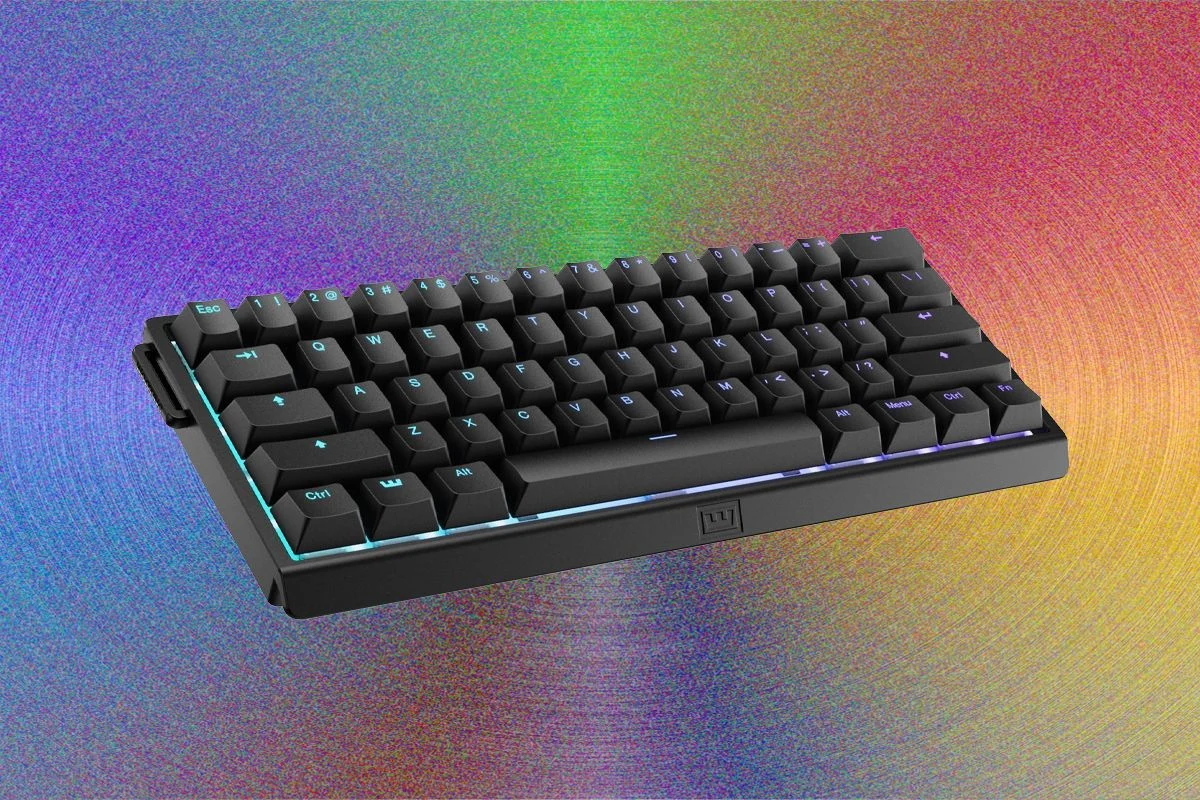
In the high-stakes world of competitive esports, where victory is often measured in milliseconds, the hardware peripheral landscape has undergone a radical transformation. For years, the mechanical keyboard market was dominated by traditional, binary switch technology—keys that were either "on" or "off." However, the arrival of the Wooting 60HE v2 represents a paradigm shift, bridging the gap between enthusiast-grade mechanical build quality and cutting-edge Hall Effect magnetic sensor technology.
As competitive shooters like Counter-Strike 2 and Valorant tighten their meta, the demand for precision has moved from the mouse sensor to the keyboard switch. The 60HE v2 is not just a peripheral; it is a precision instrument designed for those who view movement as an art form.
The SOCD Revolution: Tactical Advantage or Competitive Cheat?
The most contentious feature currently dominating the discourse surrounding the 60HE v2 is its implementation of Simultaneous Opposing Cardinal Direction (SOCD) customization. In standard mechanical keyboards, pressing both ‘A’ and ‘D’ keys simultaneously results in both inputs being registered, often leading to "dead zones" where a character stops moving entirely.
The 60HE v2’s Wootility software allows users to override this. Through SOCD, one key can take priority over another, effectively nullifying the delay associated with changing directions. In tactical shooters, this creates a "snap" movement effect that is impossible to achieve on legacy hardware.
Implications for Esports Integrity
This feature has sparked a heated debate within the competitive community. Because it reduces the delay between directional movements to near-zero levels—effectively automating what was once a high-skill movement technique—some tournament organizers and developers have labeled the feature an unfair advantage. While the feature offers unparalleled fluidity in Valorant and Counter-Strike 2, it essentially lowers the skill floor for professional-grade strafing.
Critics argue that by removing the human error associated with counter-strafing, Wooting is fundamentally changing the mechanical requirements of the genre. Supporters, conversely, argue that the hardware simply keeps pace with the modern speed of gameplay, and that "input hygiene" should not be a bottleneck for competitive success.
Engineering the Hall Effect: Beyond Traditional Mechanical Feel
Historically, Hall Effect (HE) keyboards—which use magnetic fields to detect keystroke depth rather than physical metal contacts—were criticized for feeling "mushy" or disconnected. Competitors like Keychron and ASUS have made strides in the sector, but the 60HE v2 stands apart by successfully marrying the tactile satisfaction of a traditional mechanical keyboard with the performance of analog sensing.
The Lekker Switch Ecosystem
At the heart of the 60HE v2 are Wooting’s proprietary Lekker switches. These switches provide a level of granular control that allows for "Rapid Trigger"—a feature where the reset point of a key is dynamic. If a player lifts their finger even a fraction of a millimeter, the key resets instantly.
Testing these switches across a variety of genres—from high-intensity FPS titles to precision racing simulators—reveals a level of consistency that is objectively superior to traditional mechanical setups. The switches are incredibly smooth, offering low-latency, instantaneous inputs that feel as though they are tethered directly to the game engine’s movement code.
A Masterclass in Modular Repairability
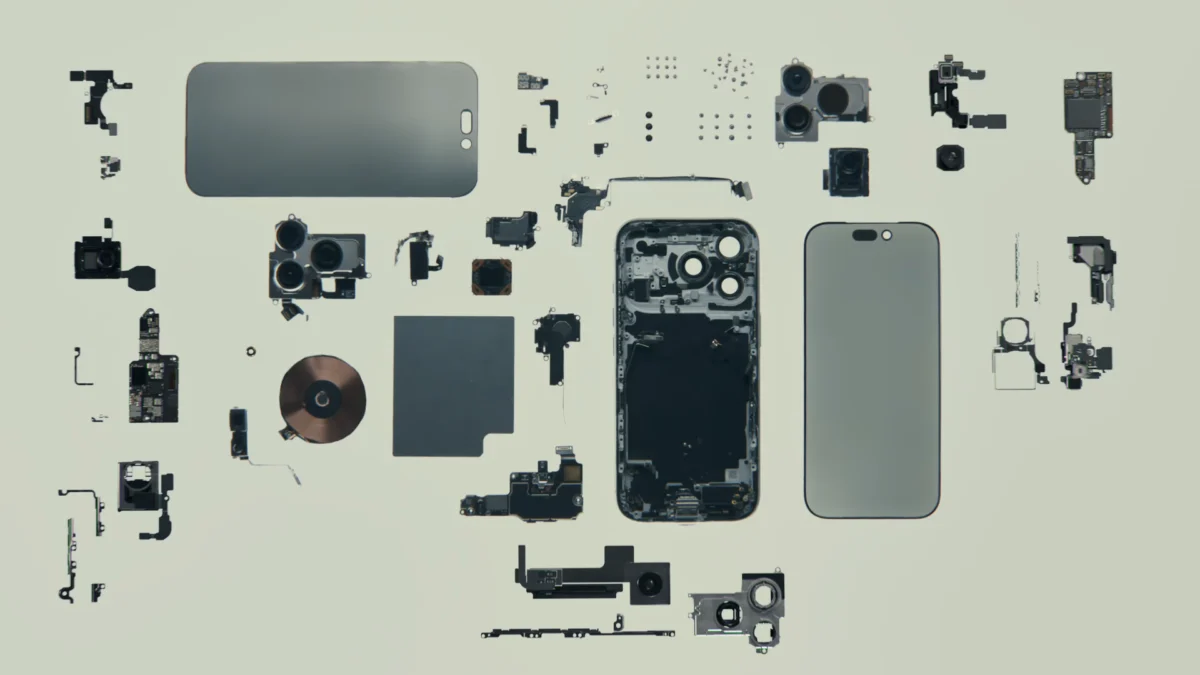
In an era of disposable consumer electronics, the Wooting 60HE v2 is a refreshing outlier. The keyboard’s internal architecture is designed for transparency and maintenance. The chassis can be disassembled in mere seconds, revealing a thoughtfully layered internal structure: a mounting plate, the magnetic switches, a high-quality silicone sound-dampening layer, and a robust PCB reinforced with rubber feet.

Expanding the Horizon of Compatibility
A common failure point for niche analog keyboards is proprietary switch compatibility. Many manufacturers lock users into a single ecosystem, forcing them to purchase replacements directly from the brand. Wooting has taken the opposite approach. By adopting the industry-standard KS-20 magnetic switch footprint, the 60HE v2 is compatible with a burgeoning market of switches from manufacturers like Gateron and Geon.
This decision future-proofs the device. Users are no longer tethered to the "out of the box" experience; they are invited to modify, tune, and repair their hardware to match their specific aesthetic and tactile preferences.
The Aesthetic and Software Experience
While performance is the primary selling point, the 60HE v2 does not neglect the visual experience. The onboard RGB lighting is vibrant and deeply customizable through the Wootility software.
Correcting the Quirk
Like many LED implementations in the industry, the 60HE v2 tends to exhibit a slight cool-blue bias out of the box. However, because Wootility provides granular control over the RGB color space, this is easily rectified. By adjusting the output values—specifically setting the R/G/B values to 203/192/180—users can achieve a perfect, neutral "true white" that complements any desk setup.
Design Considerations: The GH60 Standard
No product is without its design compromises. The 60HE v2 adheres to the standard GH60 form factor, which dictates that the USB-C port is located on the left side of the PCB.
For many power users, a centered USB-C port on a dedicated daughterboard would be preferred for both structural integrity and cable management. However, the use of the GH60 standard is a calculated trade-off. It allows the 60HE v2 to be compatible with a vast array of aftermarket cases, plates, and accessories that have been developed for the DIY mechanical keyboard community over the last decade. By prioritizing standardization over a custom, centered port, Wooting has made the 60HE v2 the most versatile 60% keyboard on the market.
Final Verdict: The Cost of Performance
The Wooting 60HE v2 is not a budget keyboard. At a price point of $240, it sits firmly in the enthusiast tier. It lacks wireless connectivity, which may be a dealbreaker for those who value a clean, cable-free desk. However, for the competitive player, wireless connectivity is often secondary to the reliability and polling rate stability of a wired connection.
Is it Worth the Wait?
The device is currently subject to significant backordering—a testament to its overwhelming popularity and the niche, high-quality manufacturing process Wooting employs. For those who view gaming as a pursuit of excellence, the 60HE v2 is an investment in consistency.
It succeeds because it respects the user. It provides a software suite that is arguably the best in the industry, a hardware architecture that is fully repairable, and a performance ceiling that is currently unmatched by mass-market competitors. Whether you are a professional looking to shave milliseconds off your counter-strafing or an enthusiast seeking the perfect "thock" combined with analog precision, the 60HE v2 is, without question, the gold standard of modern gaming hardware.
Summary of Specifications and Observations
- Switch Type: Lekker (Hall Effect/Magnetic)
- Customization: Full SOCD support, Rapid Trigger, Adjustable Actuation
- Repairability: High (Modular, standard KS-20 compatibility)
- Software: Wootility (Highly granular, cross-platform)
- Form Factor: 60% (GH60 standard)
- Connectivity: Wired USB-C
- Build: Premium, high-density construction
In conclusion, the Wooting 60HE v2 is a rare example of a product that lives up to the hype. It is a bold statement that the future of input devices lies in the marriage of analog sensing and modular design, leaving traditional mechanical keyboards looking like relics of a bygone era. If you are willing to wait for the stock, the 60HE v2 will likely be the last gaming keyboard you ever need to buy.

 Sagoh
Sagoh