Muslim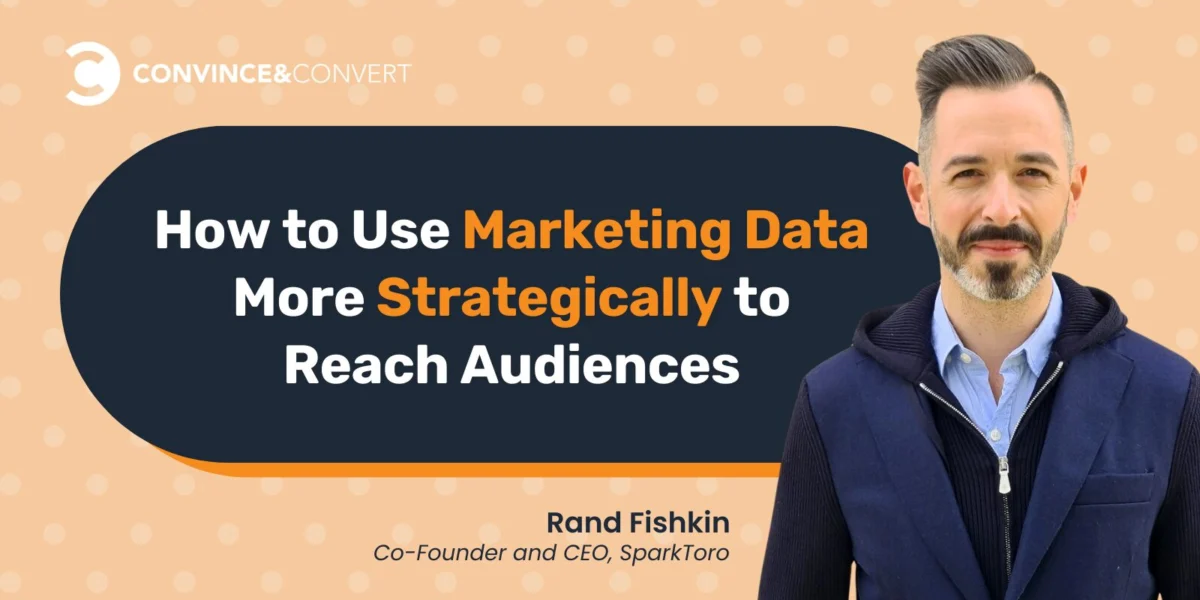
In the modern digital landscape, the marketing playbook often feels like a closed loop. Brands gravitate toward the familiar trinity of Google Ads, LinkedIn campaigns, and Facebook retargeting—not necessarily because they are the most effective conduits for human connection, but because they are measurable. They provide clean, exportable charts that satisfy stakeholders and offer the illusion of total control.
However, a growing chorus of industry experts is beginning to question the efficacy of this "safe bet" mentality. Are we optimizing for performance, or are we simply optimizing for vanity metrics that are easy to track?
On a recent episode of the Data-Driven Decisions podcast, Rand Fishkin, founder of audience intelligence platform SparkToro, challenged the status quo. His argument is simple but disruptive: by obsessively chasing attribution on platforms where users are already at the end of their buying journey, marketers are ignoring the nuanced, high-value ecosystems where their customers actually live, learn, and form opinions.
The Architecture of Modern Marketing: A False Sense of Security
For years, the industry has operated under the assumption that if an ad can be tracked, it is an ad worth buying. This has led to an explosion in spending on platforms that promise direct attribution. As Fishkin notes, hundreds of billions of dollars are flowing into channels that "claim to prove" their ads worked, regardless of whether those ads actually influenced the customer’s decision-making process.
The Myth of the "First Touch"
The central issue, according to Fishkin, is the misattribution of the customer journey. Take the common scenario of a Google search. A user performs a query, clicks a paid search result, and converts. The dashboard lights up, the ROI is calculated, and the marketing team celebrates a successful campaign.
But what happened before that click?
"A ton of what happens in Google is actually a response to something else," Fishkin explains. "People who performed a search query in Google, very rarely was that a spontaneous first-touch thing. It was like, ‘Oh, I heard about this software, so I went to Google and searched for it and clicked on it.’ And of course, the attribution looks like Google drove all the value. No, Google was just the middleman."
When marketers focus exclusively on these "middleman" platforms, they are effectively paying a premium to capture demand that was generated elsewhere. They are closing the deal, but they aren’t the ones starting the conversation.
Chronology of a Strategy Shift: From Paid Funnels to Audience Discovery
The shift toward a more sophisticated marketing model involves a move from "buying the audience" to "finding the community." This evolution can be categorized into three distinct phases of strategic development:
1. Identifying the "Where"
Before a single dollar is spent, the modern marketer must map the digital footprint of their ideal customer. This goes beyond demographics and into psychographics and behavior. Where do they consume content? Which niche podcasts do they listen to? Who are the influencers that hold their trust? Tools like SparkToro allow teams to aggregate this data, transforming "guessing" into "targeting."
2. Strategic Engagement
Once the channels are identified, the objective is to show up where the audience already resides. For a podcaster, this might mean identifying niche influencers on X or YouTube and inviting them as guests, thereby tapping into an existing, vetted community. For an event organizer, it means selecting speakers who bring their own highly relevant, engaged followings to the table.
3. The "Zero-Click" Value Exchange
The final, and perhaps most radical, phase is the adoption of "zero-click" marketing. Coined by Amanda Natividad, VP of Marketing at SparkToro, this strategy prioritizes delivering value on the platform itself—without the expectation that the user will click a link and migrate to a landing page. By providing deep, insightful content directly to a Reddit community, a LinkedIn feed, or a YouTube series, brands build authority. The goal is not the immediate conversion, but the cultivation of "top-of-mind" awareness.
Supporting Data: When Niche Beats Broad
The efficacy of this redirected approach is best illustrated through real-world applications. Consider the case of Chartr, a data-storytelling firm that turned its attention to the subreddit r/dataisbeautiful.
Instead of deploying traditional, high-pressure lead-gen ads, the team began posting high-quality, relevant data visualizations directly to the community. There was no aggressive call-to-action, no forced registration, and no landing page friction. By simply adding value to the conversation, they built a reputation for expertise. The cost was significantly lower than paid advertising, and the engagement was organic, leading to higher-quality brand recognition among their target demographic.
This approach acknowledges a fundamental truth: Trust is not gained through a banner ad. Trust is earned by showing up in the spaces where your audience seeks solutions to their problems.
Official Responses and Theoretical Frameworks
This philosophy of "Data-Driven Personalization"—a concept championed by Zontee Hou, Managing Director at Convince & Convert—suggests that audience insight is the single most important variable in marketing planning. The core of this framework is the rejection of "broad-spectrum" advertising in favor of hyper-relevant placements.
However, industry leaders are careful to clarify that this is not an indictment of paid advertising. It is an indictment of misallocated advertising.
"If you find spending money there is really valuable, don’t let me stop you," Fishkin says. "But if you think to yourself, the top 10% of spend that I do at those places is probably bringing me no incremental customers—which is almost always the case—maybe redirect that to some more creative, thoughtful, and audience data-driven forms of marketing."
Implications for Future Marketing Teams
The implications for organizations are significant. Adopting this strategy requires a fundamental shift in how teams are managed and how performance is measured.
1. The Death of the "Easy" KPI
If marketing teams shift their focus to building awareness in niche communities, they must accept that results won’t always show up in a neat, linear report. The ROI might be measured in brand sentiment, community growth, or a reduction in customer acquisition costs over the long term, rather than a direct "click-to-sale" ratio.
2. The Return to Qualitative Research
Data is essential, but it is not a panacea. A recurring theme in the Data-Driven Decisions series is that data tells you what is happening, but it rarely tells you why. Organizations must supplement their analytics with human-centric research:
- Customer Interviews: Discovering frustrations that aren’t reflected in site analytics.
- Surveys: Understanding the "why" behind purchasing decisions.
- Active Listening: Monitoring social channels to identify the problems customers are trying to solve before they ever arrive at your product.
3. Cross-Functional Collaboration
Data-driven strategy is no longer the sole responsibility of the marketing department. It must permeate the organization. When sales, product, and marketing teams share the same insights regarding customer behavior and community preferences, the entire brand message becomes more cohesive and authentic.
Conclusion: A Call for Responsible Data Usage
The ultimate takeaway from this new school of marketing thought is the need for "responsible" data usage. It is easy to hide behind the comfort of a Google Ads dashboard, but that comfort comes at the cost of potential growth. By limiting your visibility to only those who are actively searching for you, you ignore the vast majority of your market who have yet to encounter your brand.
As businesses continue to navigate an increasingly fragmented digital landscape, the winners will not necessarily be those with the largest advertising budgets. They will be the ones who use data to uncover the hidden corners of the internet where their audiences live, and who have the courage to invest in those spaces without the crutch of a "click-to-buy" guarantee.
In the words of Rand Fishkin, it is time to stop being "data-informed" in a way that blinds us to reality. We must acknowledge the limits of our spreadsheets and start focusing on the human beings behind the data points. If you can build trust where your customers are, the conversions will eventually follow—not because you forced them to click, but because you earned their attention.
For more insights on how to balance data-driven strategies with authentic human engagement, listen to the full episode featuring Rand Fishkin on the Data-Driven Decisions podcast. To explore further how data influences organizational culture and cross-functional success, discover Zontee Hou’s Data-Driven Personalization.


 Nana Wu
 Neng Nana