Raul Delapena Setiawan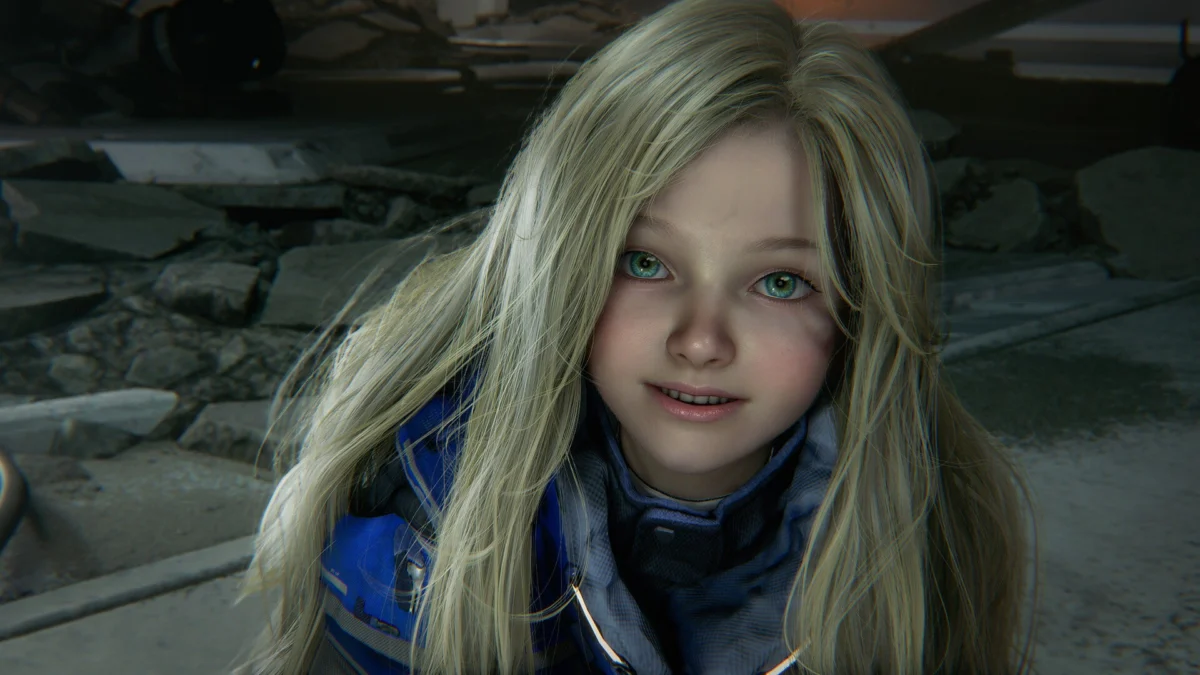
In the crowded landscape of contemporary video games, the "dad game"—a subgenre characterized by the protective, often melancholic bond between a grizzled protagonist and a vulnerable child—has become a cornerstone of narrative design. From the visceral intensity of The Last of Us to the mythological scope of God of War, these titles often grapple with the complexities of fatherhood, morality, and survival. However, Capcom’s latest sci-fi odyssey, Pragmata, has introduced a fresh, more nuanced perspective to this trope.
While players and critics have lauded the chemistry between the protagonist, Hugh, and his young companion, Diana, the secret behind their resonant relationship lies not in traditional development scripts, but in an internal, women-led initiative known as the "Diana Police."
The Genesis of a Relationship
The narrative core of Pragmata hinges on the believable evolution of trust between Hugh, a space-faring operative, and Diana, a mysterious young girl. Unlike other titles where the child character serves primarily as a plot device or a mechanical escort, Pragmata places significant weight on the emotional authenticity of the pair’s interaction.
The development team at Capcom recognized early on that the stakes of the game were entirely dependent on the player’s ability to genuinely care for Diana. If her characterization leaned too far into the "precocious child" trope or felt overly engineered to elicit pity, the emotional gravity of the story would collapse. Achieving a balance of natural, childlike innocence without falling into the trap of a "contrived" performance became the studio’s primary challenge during the production cycle.
Chronology: From Concept to "Diana Police"
The implementation of the "Diana Police" was not a reactionary measure but a strategic refinement of the game’s development process.
- Early Development: The initial concepts for Pragmata established the dynamic between the two leads, but internal feedback suggested that Diana’s characterization was struggling to find a consistent, authentic voice.
- The Mid-Development Pivot: Recognizing the potential for unintended tonal dissonance, the directors moved to assemble a specialized task force. This group, eventually dubbed the "Diana Police," was formed to oversee all aspects of Diana’s depiction, from her dialogue and facial animations to her motion capture nuances.
- The Livestream Revelation: During a recent Japanese-language livestream hosted by Capcom to celebrate the game’s success and the upcoming Father’s Day, producer Naoto Oyama publicly acknowledged the group’s pivotal role for the first time.
- The Post-Stream Expansion: Following the livestream, game director Cho Yonghee provided further context in an interview with GameSpark*, clarifying the gender-specific composition of the group and the rationale behind their selection.
Supporting Data: Why Gender Perspective Mattered
The decision to staff the "Diana Police" exclusively with women was a calculated move based on the psychology of character perception. According to Director Cho Yonghee, the team identified a distinct disparity in how men and women interpret the "cunning" or "performed" aspects of cuteness in fictional characters.
"It’s easier for women to detect the ‘cunning’ kind of cuteness in female characters," Cho explained. "Whereas men would probably go, ‘What’s the difference?’"
This observation touches on a broader issue in character design: the tendency for male-dominated development teams to accidentally sexualize or overly simplify child characters. By bringing in a group of women who could act as a cultural and behavioral filter, Capcom ensured that Diana’s actions—the way she tilted her head, the cadence of her voice, and the hesitation in her movements—remained firmly rooted in the reality of a child rather than the artistic projection of an adult.
The "Diana Police" wielded significant authority. Their influence extended to:
- Voice Acting Direction: Ensuring that line deliveries avoided the "child-voice" affectations common in anime-influenced media.
- Motion Capture Performance: Correcting body language that felt too calculated or physically impossible for a child of her age.
- Writing Nuance: Removing dialogue that felt like an adult’s interpretation of what a child would say, replacing it with simpler, more impulsive interactions.
Official Responses and Studio Philosophy
The transparency shown by Capcom regarding the "Diana Police" serves as a rare look into the iterative nature of modern triple-A game design. Producer Naoto Oyama’s openness during the livestream highlights a studio culture that values emotional intelligence as much as technical prowess.
In a recent update, the studio also unveiled a new cosmetic suit for Hugh, covered in childlike scribbles and drawings. This small detail is emblematic of the "Diana Police" approach—it is a visual shorthand for the presence and influence of the child within the world of the game. It signals to the player that Diana is not just a companion, but a presence that actively alters and "decorates" the cold, sterile world of the space-faring Hugh.
Implications for the Industry
The success of Pragmata in portraying a convincing relationship between its leads offers a blueprint for future character-driven titles. The industry has long struggled with the "Uncanny Valley" not just in graphical terms, but in behavioral terms. By creating a specialized, identity-focused oversight group, Capcom has demonstrated that diversity in the development room is not just a moral imperative, but a functional tool for narrative excellence.
Challenging the "Dad Game" Trope
The "dad game" genre often risks becoming stagnant, relying on the same beats of protection and redemption. Pragmata succeeds by shifting the focus from the man’s journey to the girl’s reality. By allowing the "Diana Police" to strip away the artifice, Capcom created a character who feels like an independent agent within the story. This shift makes the player’s role—that of the protector—feel more earned and less like a scripted requirement.
A New Standard for Authenticity
As gaming technology continues to push toward photorealism, the burden on writing and animation increases. If a character looks real but acts in a way that feels "contrived," the immersion is shattered. The "Diana Police" represents a shift toward "emotional quality assurance," a practice that will likely become standard as developers strive to create more relatable, grounded, and human-like digital entities.
Conclusion
The story of the "Diana Police" is more than just a piece of interesting trivia; it is a testament to the fact that the most complex emotional beats in gaming often require the most deliberate, diverse, and collaborative development strategies. By recognizing the limitations of their own perspectives, the leads at Capcom empowered a group of women to shape the emotional heartbeat of Pragmata.
Whether through the subtle nuance of a smile or the frantic energy of a child’s scribbles on a high-tech space suit, Diana stands as a success story for collaborative design. For players who found themselves moved by the quiet moments in Pragmata, the realization that these moments were guarded by a secret group of professionals adds a layer of depth to the experience. It serves as a reminder that behind every pixelated tear or moment of joy in a game, there is a dedicated team—sometimes a very specific one—working to ensure that the humanity of the character remains, above all else, authentic.


 Asro
Asro
 Muslim